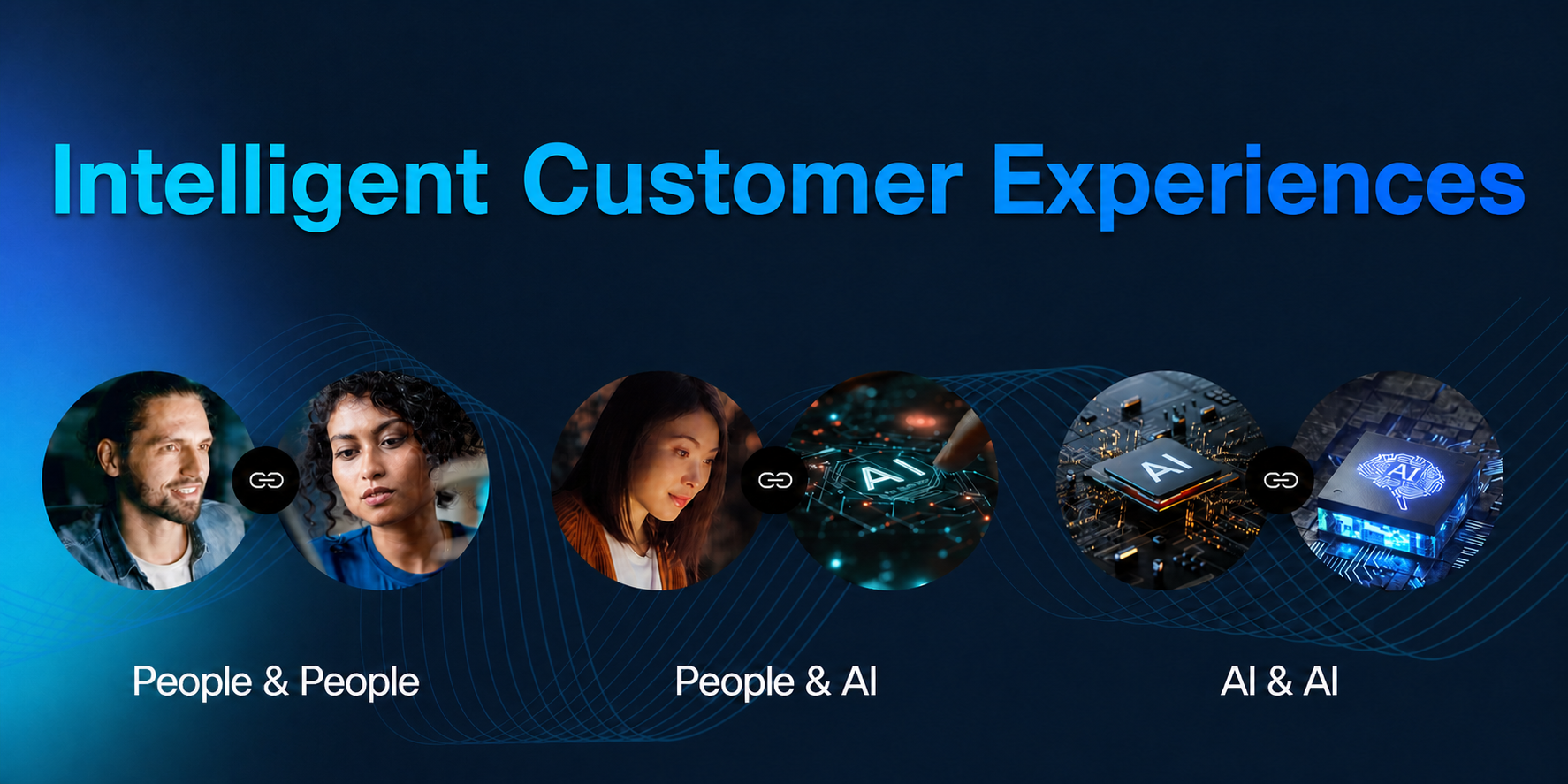
Customer experience is approaching an inflection point. As organizations add AI agents, automation, digital channels, and new sources of customer data, the experience risks becoming more fragmented—not less. Cisco’s answer is Connected Intelligence: an operating model that brings every customer interaction, every human and AI agent, workflow, and enterprise system together.
Customers already feel the cost of disconnection. They repeat information as they move between channels. Automated interactions lose context. AI agents and human agents operate with different views of the customer. Behind the scenes, businesses must manage a growing web of models, applications, workflows, and security risks and deliver consistent customer experience every single time.
AI alone will not solve this problem. Without the right foundation, it can magnify it. The next era of customer experience requires people, AI agents, channels, workflows, and enterprise systems to operate as one—carrying context across every interaction, coordinating the right response in real time, and earning the trust required to act on a customer’s behalf.
This is the promise of Connected Intelligence, and it is the operating model Cisco is building for enterprise CX. Our approach and strategy is built on four connected pillars: an intelligent front door, context-driven orchestration, an extensible AI-native platform, and trust and secure by design. Together, they transform a collection of customer-experience technologies into one connected system that remembers, learns, acts, and improves with every interaction.
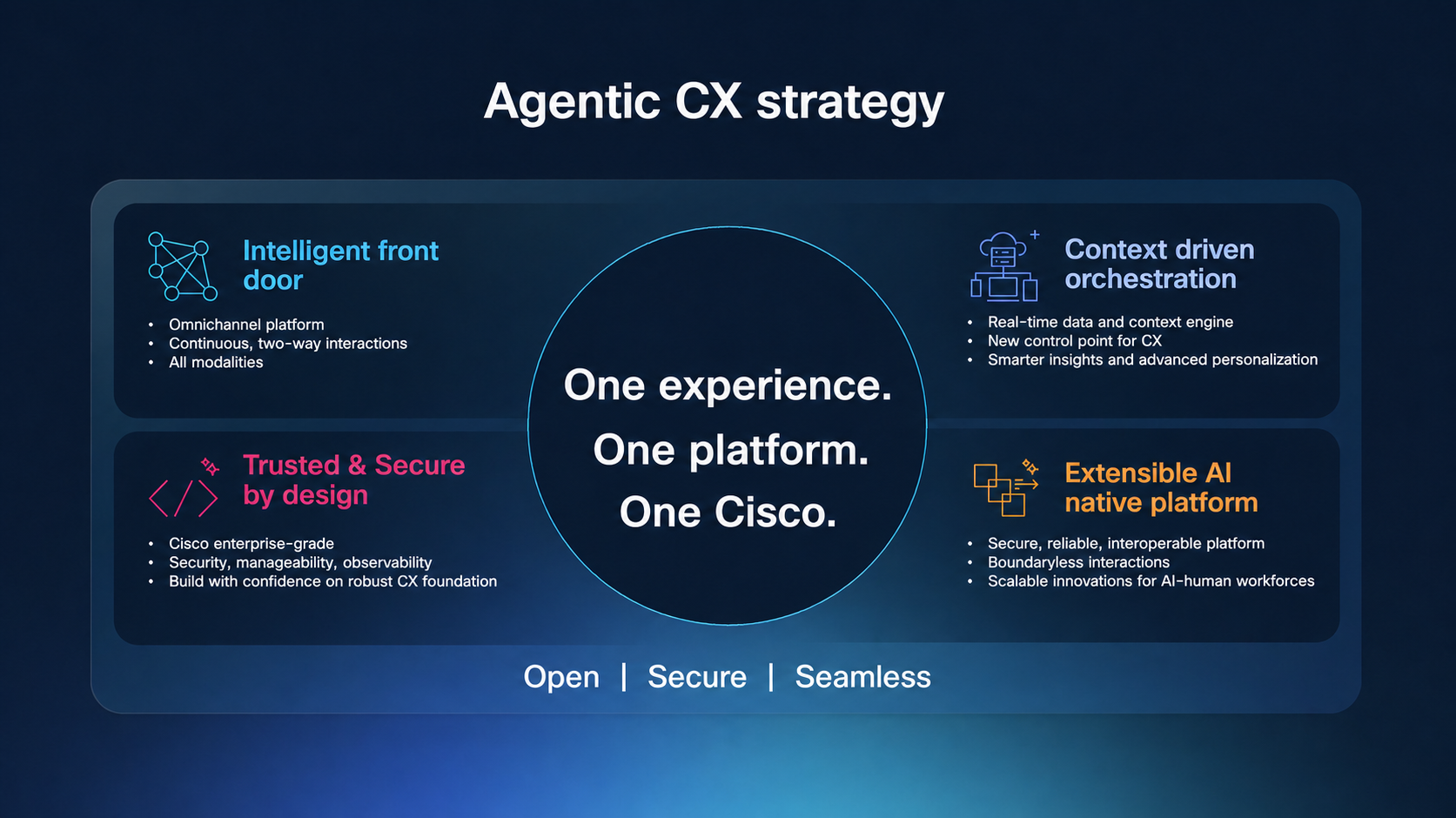
The Intelligent Front Door
The first step toward intelligent CX is not the model. It is the moment of connection.
Every customer interaction starts somewhere: a voice call, a chat, a message, a proactive outreach. The question is whether that entry point is intelligent enough to recognize intent, bring the right AI or human capability into the conversation at the right time, and preserve continuity as the customer moves across channels and modalities.
In the era of Connected Intelligence, the front door is no longer just where the customer enters. It is where the experience begins to learn. An omnichannel, always-on, bidirectional engagement layer is the foundation on which everything else is built. Get this wrong and no amount of AI investment downstream will save the experience.
Context Driven Orchestration
In legacy contact centers, routing was the control point. In agentic CX, the more strategic control point is context. That shift matters more than most people realize.
Context is not the same as data. Data is a record. Context is a living signal, and the purpose of AI in customer experience is to use it the way humans do instinctively: to thread seemingly disconnected experiences together and respond in a way that feels completely natural. Think about how a person who knows you well operates. They don’t just remember facts about you. They know when to bring those facts up, and when not to.
And this is where context gets difficult. The obvious signals are known: friction in a conversation, a repeated call, an unresolved issue. But the more powerful signals are the subtle ones. The slight hesitation before a customer answers. The pattern across five interactions that no single data point would reveal. The moment where the right response isn’t to solve a problem but to simply acknowledge it.
That context is what powers intelligent orchestration: smarter routing, next best action, human handoff decisions, agent coaching, and self-learning AI agents that get better with every interaction. That is the intelligence we are building into the contact center.
“As agents interact and pass information between one another, maintaining context becomes the difference between a system that feels intelligent and one that just feels automated. That’s why we’re investing heavily in a unified context and memory layer. It’s the foundation everything else gets built on.”
Vinod Muthukrishnan, VP & GM of Webex Customer Experience at Cisco
An Extensible AI Native Platform
Connected Intelligence cannot thrive in a box of products. It needs a platform. Boxes are meant to be closed. Platforms are meant to be open.
Integration was the standard of a previous era. Interoperability is the standard of this one. Systems that merely integrate pass data between silos. Systems that interoperate act as one. AI agents, human agents, customer context, channel workflows, CRM integrations, and enterprise systems all need to work securely and consistently across the customer lifecycle. When they do not, the customer feels the fragmentation. When they do, intelligence compounds and every interaction informs the next one.
This is what we mean by an extensible AI-native platform: a secure, reliable, interoperable foundation for the AI and human workforce. Not a closed system that forces your experience into its architecture, but an open platform that connects to the tools, systems, and partners that matter to your business so intelligence can move across all of them.
Trusted and Secure by Design
The AI era raises the stakes for trust. It is not enough for AI to answer quickly or personalize effectively. Enterprises need AI-powered CX that can be secured, observed, managed, and scaled with confidence.
It has never been easier to build an AI agent. It has never been harder to make one enterprise grade. At Cisco, security is not a feature we add on. It is foundational to everything we build, and that heritage runs through every layer of what we bring to the contact center.
An AI agent that can take action is also an AI agent that can take the wrong action. It can expose data it should not have accessed. It can make a commitment the business cannot honor. It can be manipulated into doing something it was never designed to do. These are not edge cases. They are the new reality of agentic AI, and they require an architectural response, not a software patch.
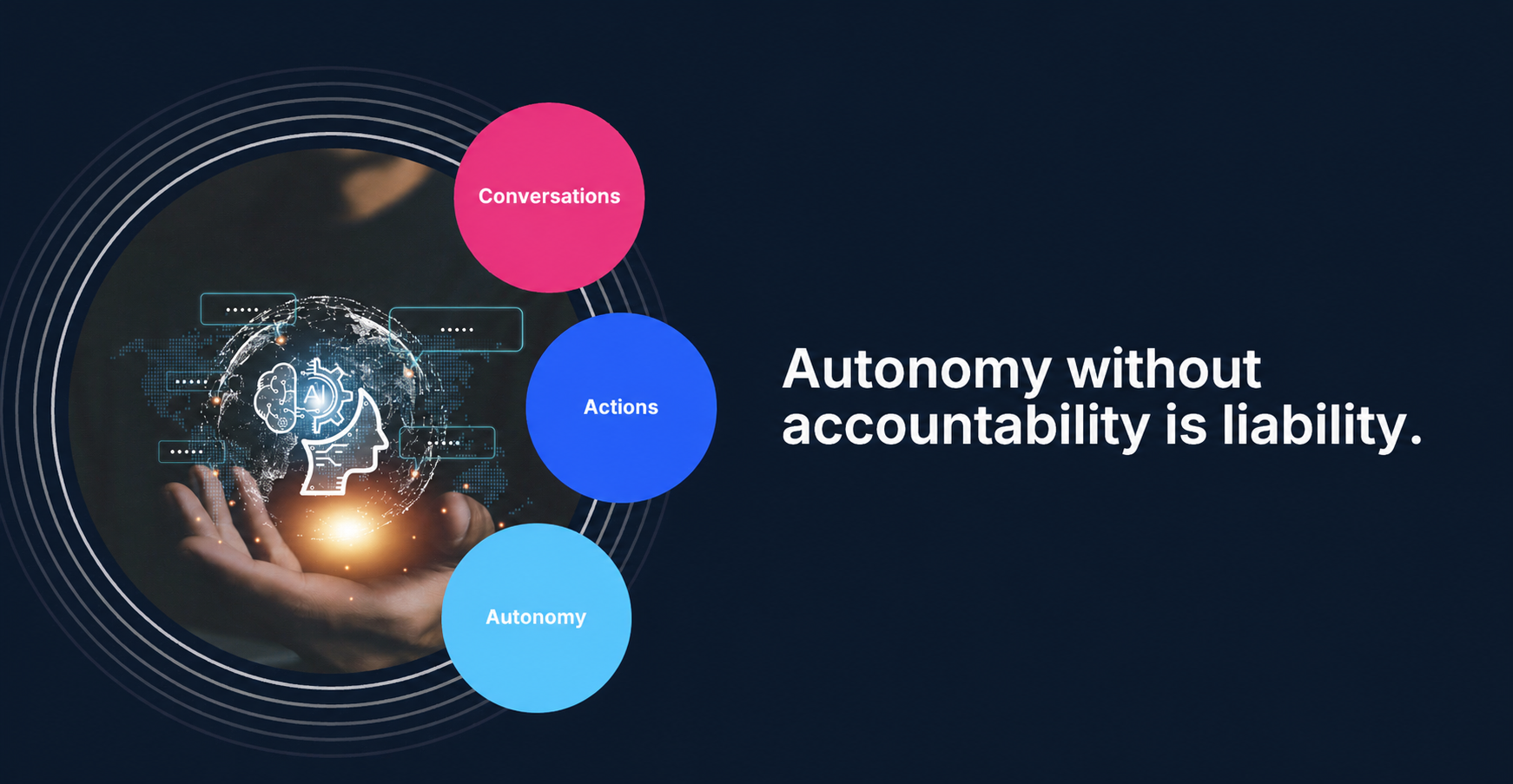
This is where Cisco is fundamentally differentiated. By integrating capabilities from Splunk’s observability with native AI Defense, we deliver real-time detection, anomaly monitoring, and native AI guardrails across the entire stack.
Enterprise-grade security, manageability, and observability are not constraints on innovation. They are what makes innovation sustainable at scale.
One Experience. One Platform. One Cisco.
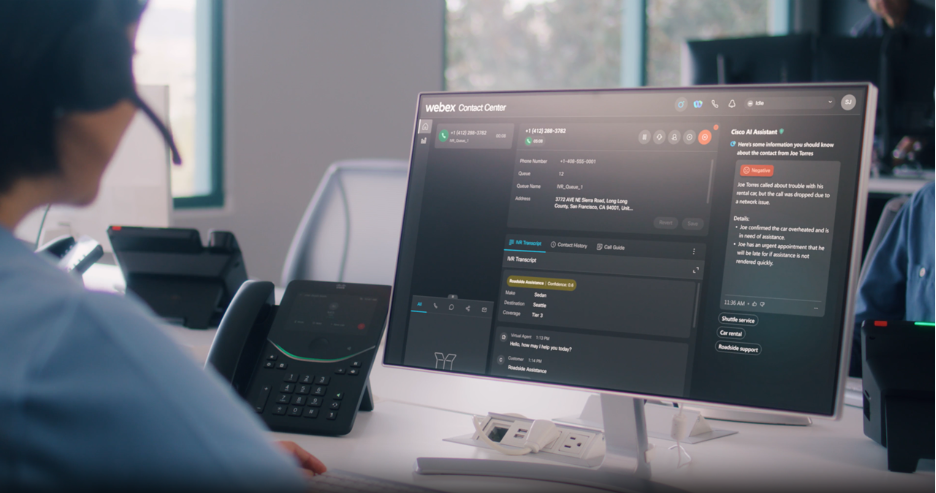
Customers do not experience a business as a collection of channels, systems, and teams. They experience one company. They know when that company recognizes them, remembers the last conversation, and gets them to the right help—and they feel the disconnect when it does not.
Connected Intelligence closes that gap. It starts with an intelligent front door that understands why the customer is there. It carries context throughout the journey, connects people and AI across an open platform, and builds in the security and trust every interaction depends on.
One platform does not mean one product. It means the people, AI agents, applications, and systems behind the customer experience can work as one. It means giving businesses a simpler way to deploy, secure, manage, and scale AI from metal to model. The goal is cohesion, not complexity.
And One Cisco means bringing the full strength of Cisco to that challenge—connecting everything from the underlying network to the applications where customers and employees engage. That is the opportunity in front of us: to move beyond disconnected moments and create experiences that feel continuous, personal, and trusted.
That is Connected Intelligence—every interaction connected to what came before, and making what comes next better.
Resources
About The Author