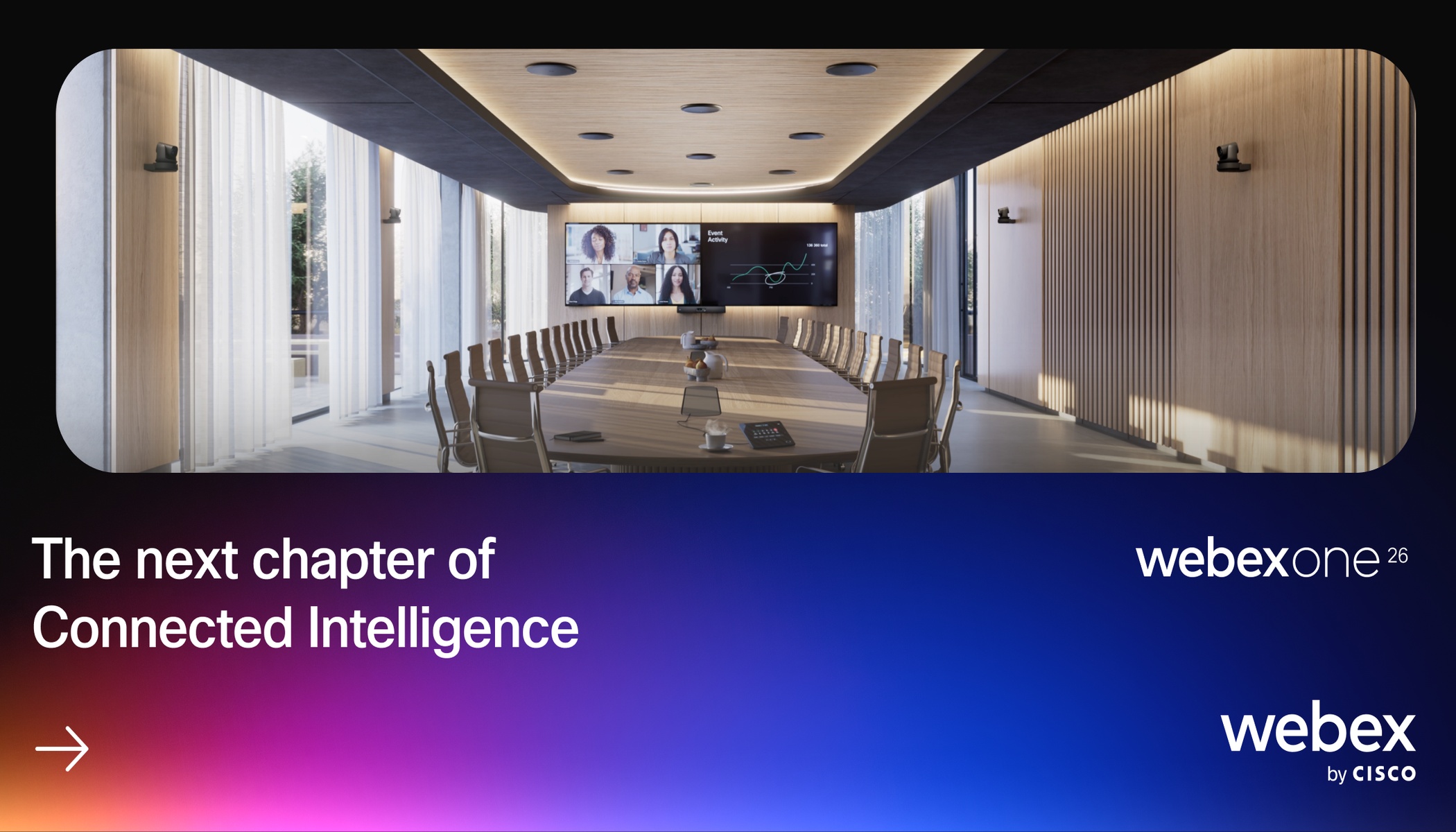
AI agents that can work alongside your team. Meeting rooms that respond more intelligently to the people using them. Customer experiences that build on relationships over time.
Here in Austin at WebexOne 2026, we’re introducing a new AI-first Webex experience, more intelligent workplaces, and new capabilities for continuous customer relationships. We’re also connecting these innovations more deeply with Cisco’s networking, security and management capabilities, giving IT teams greater visibility and control across the environments they support.
The value of these innovations grows when they work together. AI becomes more useful when it can draw on the context of a conversation, the intelligence of a workplace and the infrastructure connecting them. That’s the opportunity behind Connected Intelligence: bringing people, AI, applications, devices and infrastructure together to deliver more intelligent experiences, with the flexibility, security and control enterprises need.
A New Webex Experience Where People and AI Work Together
Our new AI-first Webex experience brings intelligence into the work people are already doing. A personalized view helps employees prepare for upcoming meetings and calls, organize priorities and focus on what needs attention, while contextual assistance and proactive guidance help them move through the day with greater clarity.
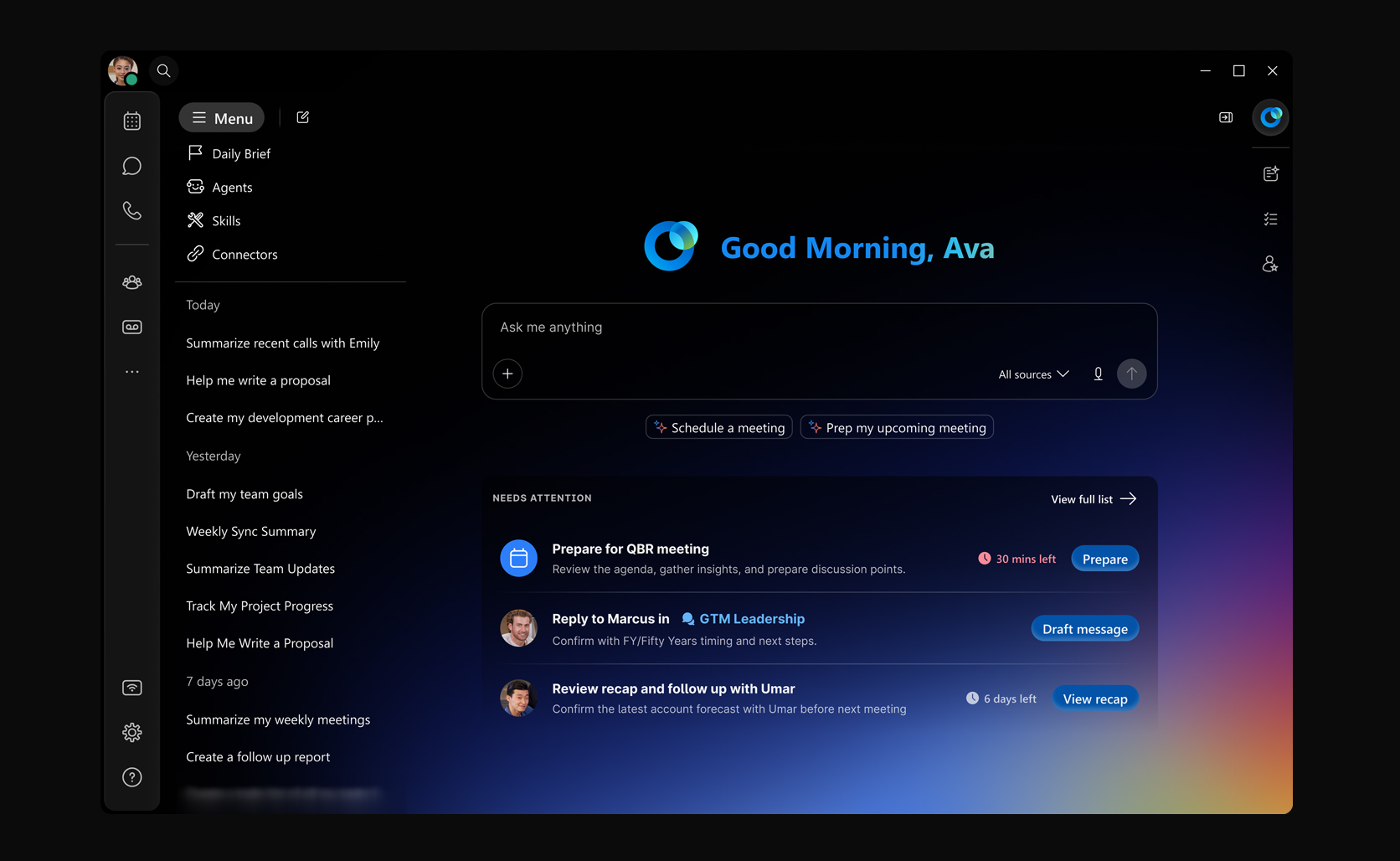
We’re also expanding the ecosystem of agents that can participate directly in Webex spaces, calls, and meetings. They can help prepare for conversations, schedule time, take notes, translate, coach, and support other activities alongside the team.
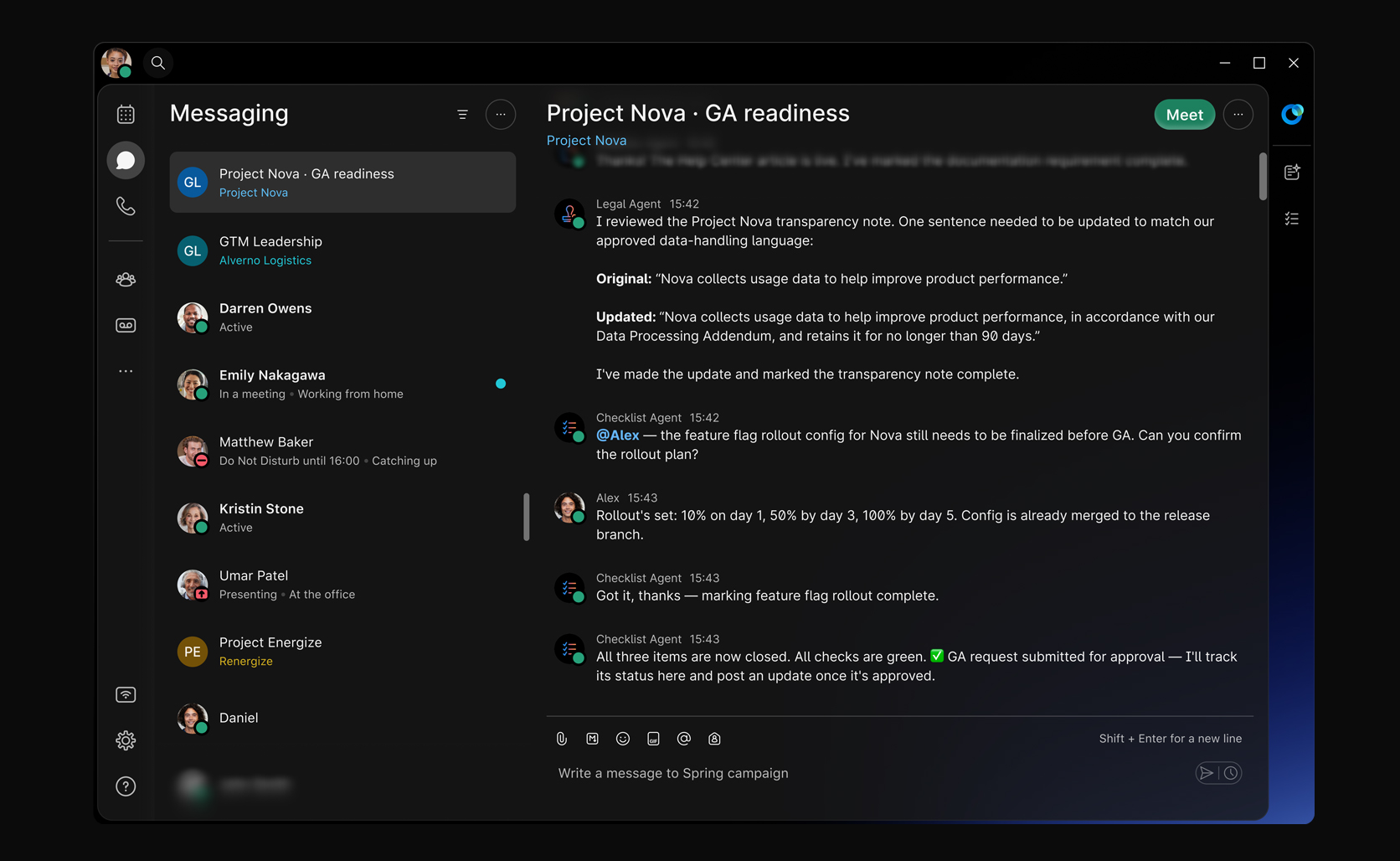
This makes AI a shared capability for the team. It can help people prepare together, carry decisions forward, and coordinate the next steps without losing the context of the conversation.
Our new Personal Agents for Webex Calling extend that experience to the phone. When you’re busy, an agent can answer, understand why someone is calling and how urgent the request is, and help with the next step, whether that’s scheduling a follow-up, sending a message or making sure you have the information you need.
Enterprises are building AI strategies around different models, platforms, and ecosystems. With our expanding MCP ecosystem and Bring Your Ecosystem, organizations can connect Webex with the AI they choose, bringing their preferred intelligence, skills and agents into the collaboration experience. This gives organizations the flexibility to build on their existing AI investments while maintaining the governance and control required for enterprise adoption.
Intelligent Workplaces That Work for Everyone
Customers have been asking us for a speaker. That request gave us an opportunity to complete something much bigger: an intelligent, integrated room architecture where cameras, microphones, speakers, and video devices work together.
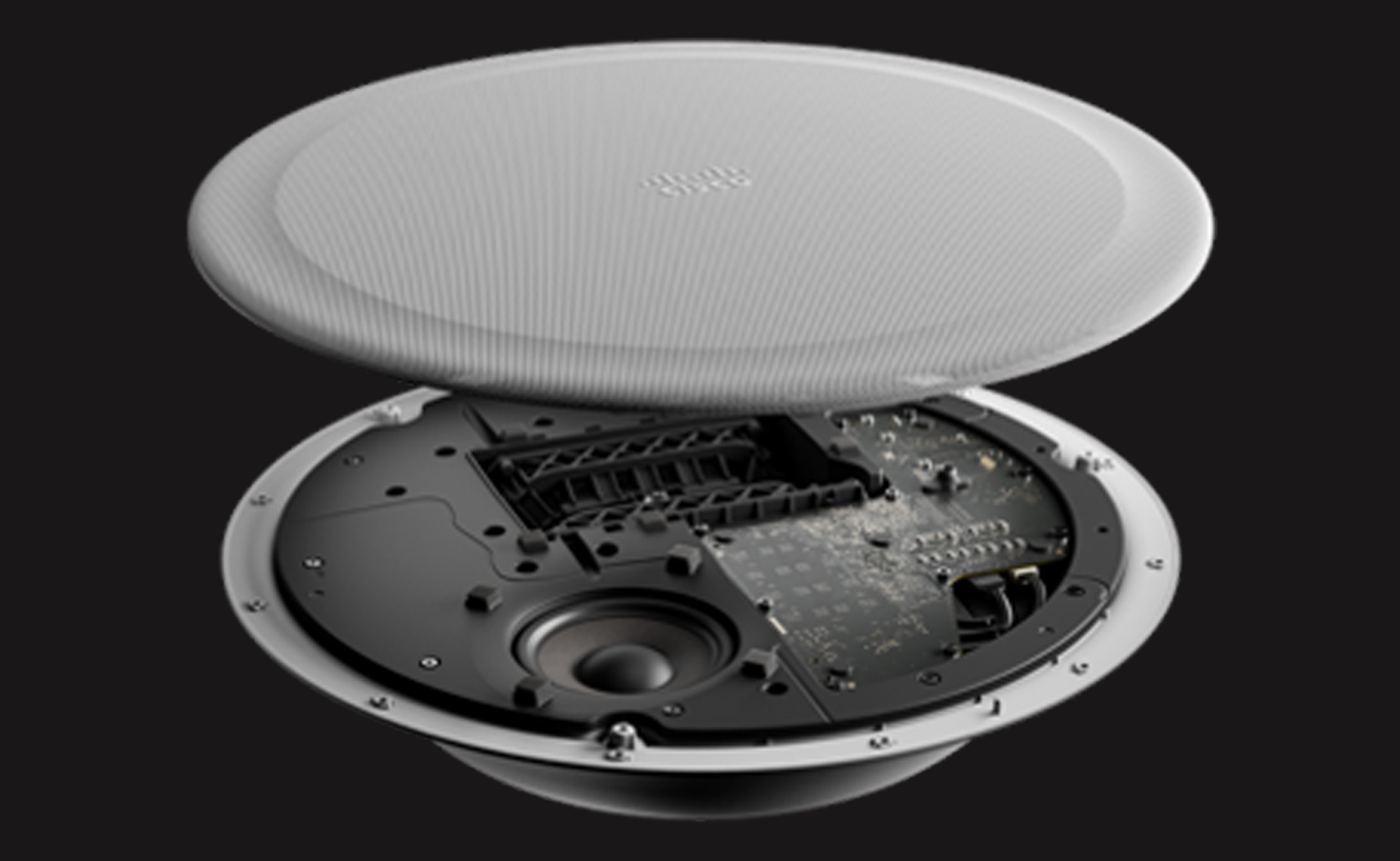
With our new Cisco Ceiling Speaker Pro, we’re completing an important part of our audio-over-IP architecture. Cisco video devices, cameras, ceiling microphones and now speakers can work together, using intelligence at the edge to understand where voices are coming from and direct sound where it’s needed. Adaptive voice lift helps people hear one another naturally, whether they’re sitting across a long conference table or listening to a presenter at the front of the room.
The engineering matters just as much for IT. Built-in processing and automatic configuration reduce the complexity of deploying room audio, while centralized management gives teams a more consistent way to operate and support spaces at scale. The result is better audio for employees and a simpler, more manageable room architecture for the organizations supporting them.
Bringing Intelligence Into the Room
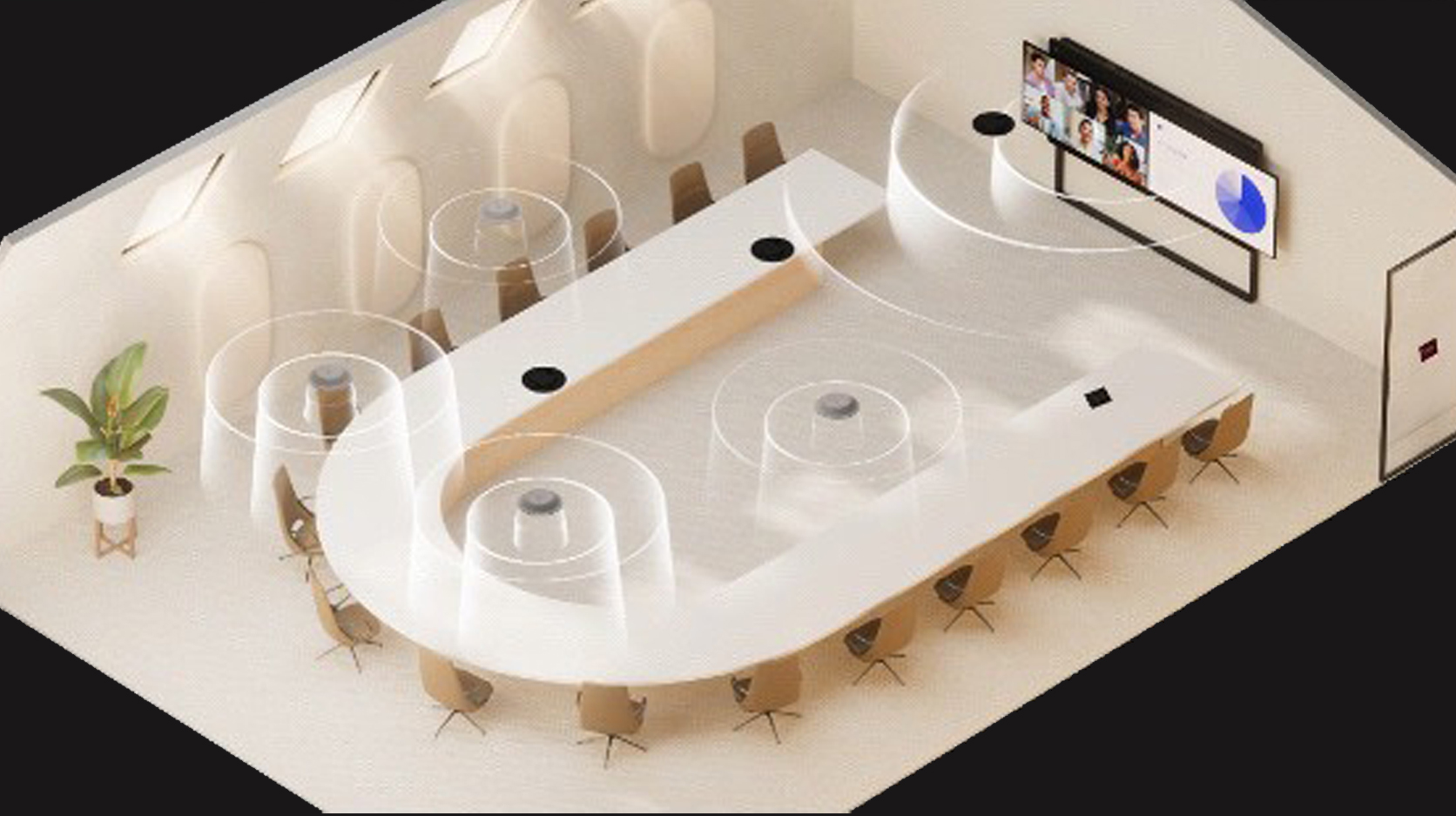
With RoomOS 27, we’re building on that integrated architecture to bring more intelligence into the physical workplace. Advanced audio intelligence includes an enhanced director agent that helps focus on the voices that matter and contextual noise removal, powered by RoomOS and the NVIDIA deep learning accelerator built into our latest devices. Conversational AI will allow people to interact with supported room capabilities using natural language, whether they’re controlling a meeting, finding and booking a space or accessing workplace services.
That intelligence should extend across the entire lifecycle of a workplace, from how a room is designed to how it performs every day. Workplace Designer helps organizations plan spaces with the technology, layout and experience considered together from the start. Smart Room Assurance helps calibrate and validate those environments, while Workplace Advisor provides insights into how spaces are performing and where they can improve.
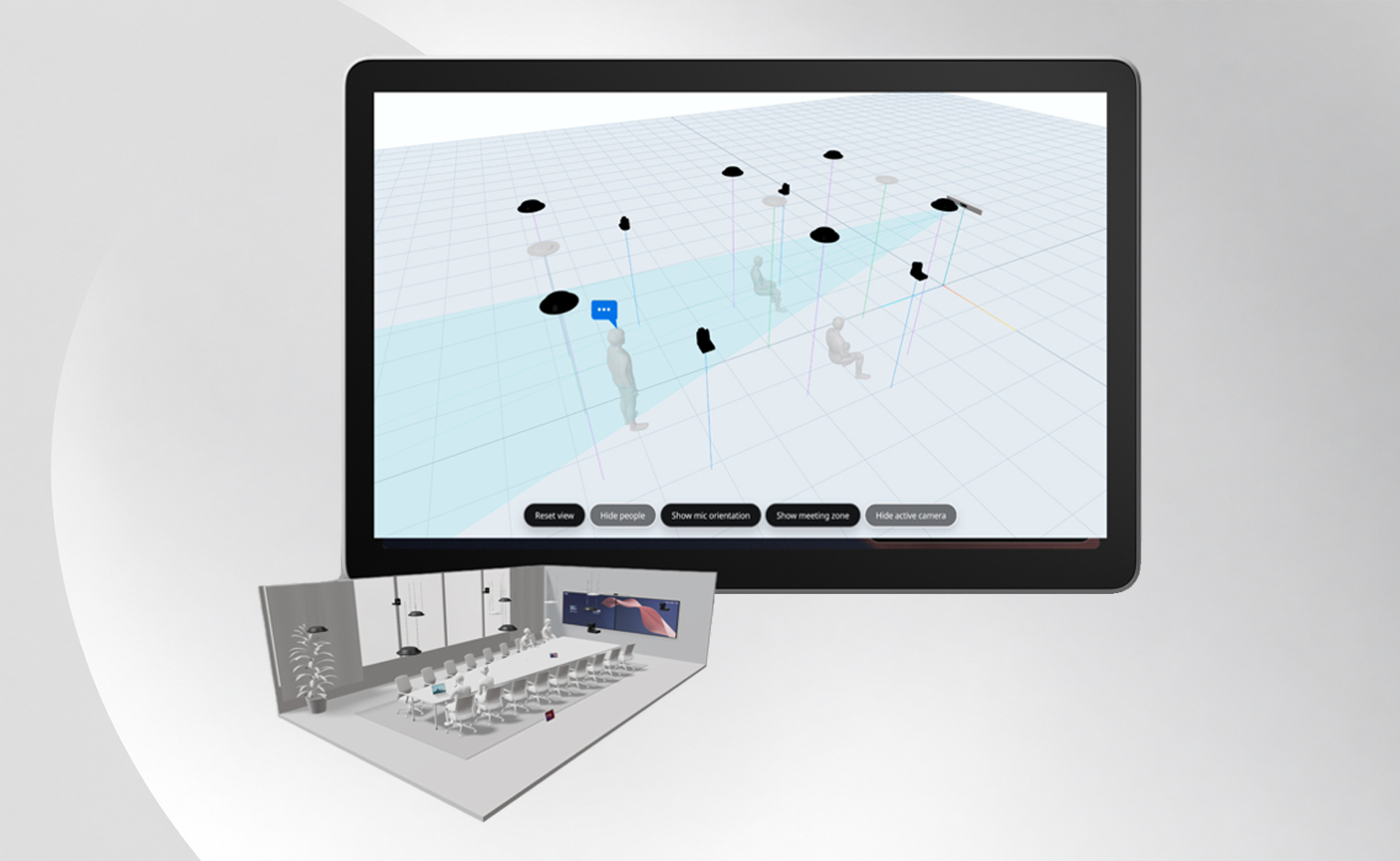
We’re also giving IT teams greater visibility into the infrastructure behind these experiences. By bringing RoomOS telemetry into Splunk and managing devices through Cisco Cloud Control, organizations can better understand room performance, identify issues and connect what’s happening in collaboration spaces with the broader enterprise environment.
Built for Interoperability and Choice
Interoperability is equally important. Customers work across different collaboration platforms, and their meeting rooms need to support that reality. With Google Meet joining Webex, Microsoft Teams and Zoom on Cisco devices, we’re giving organizations greater flexibility to connect and collaborate across platforms, while maintaining a consistent, intelligent room experience and centralized management through Cisco.
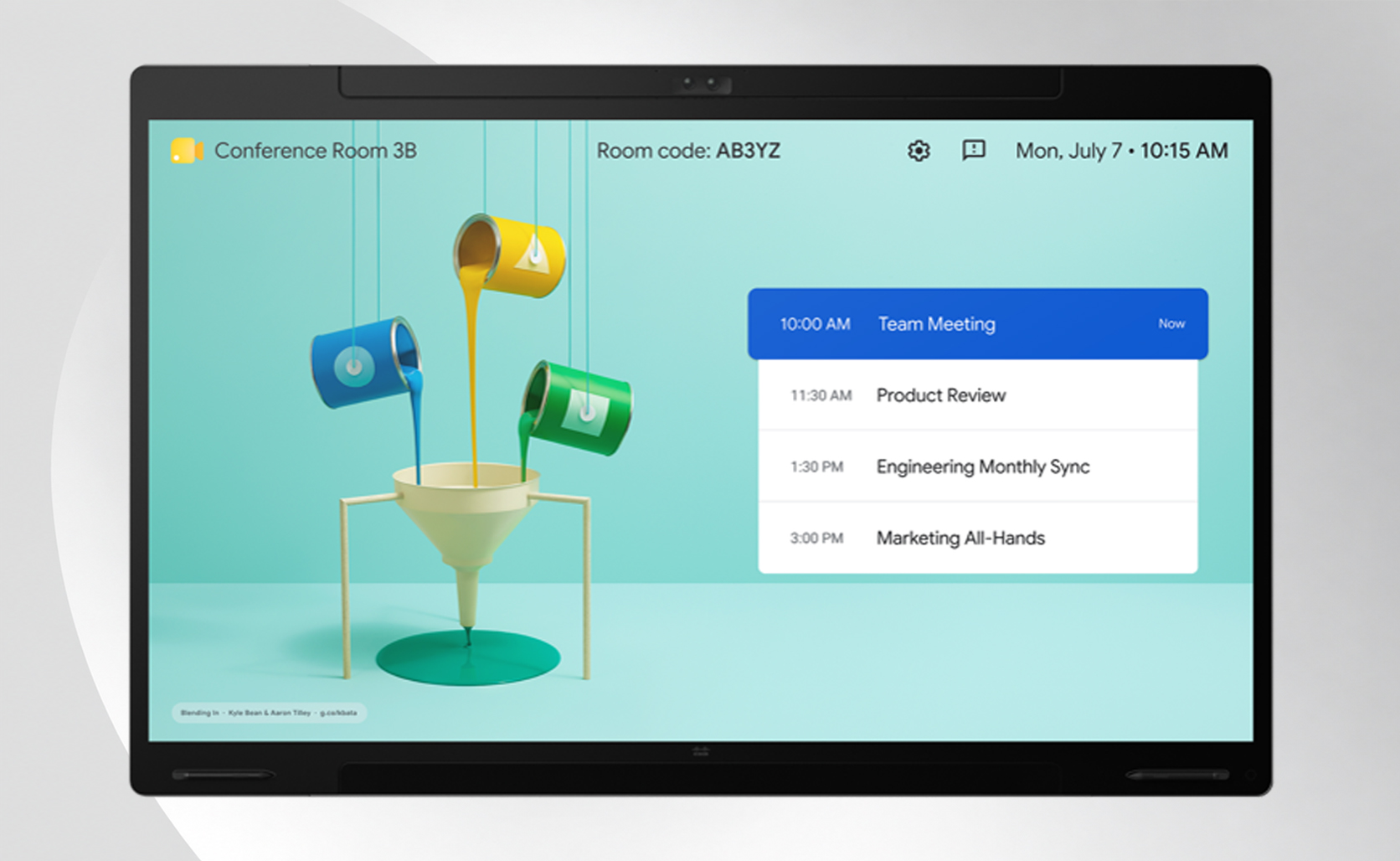
Together, these innovations make workplaces easier to design, deploy and manage while creating more intelligent, responsive experiences for the people using them. They also demonstrate the value of an integrated architecture, where the devices, software and infrastructure supporting a room work together to deliver a better experience.
From Customer Interactions to Continuous Relationships
A customer’s relationship with a business doesn’t begin and end with a single conversation. It develops across channels, teams, and systems, often long after the initial interaction. Yet too often, customers still must repeat information, follow up on unresolved requests, or navigate the gaps between different parts of an organization.
At WebexOne, we’re introducing Dialog, an agentic foundation designed to help organizations build more continuous, context-rich customer relationships. Dialog connects customer understanding with an organization’s systems, data, policies and procedures, enabling AI agents to coordinate work across people and systems, even after a conversation has ended.
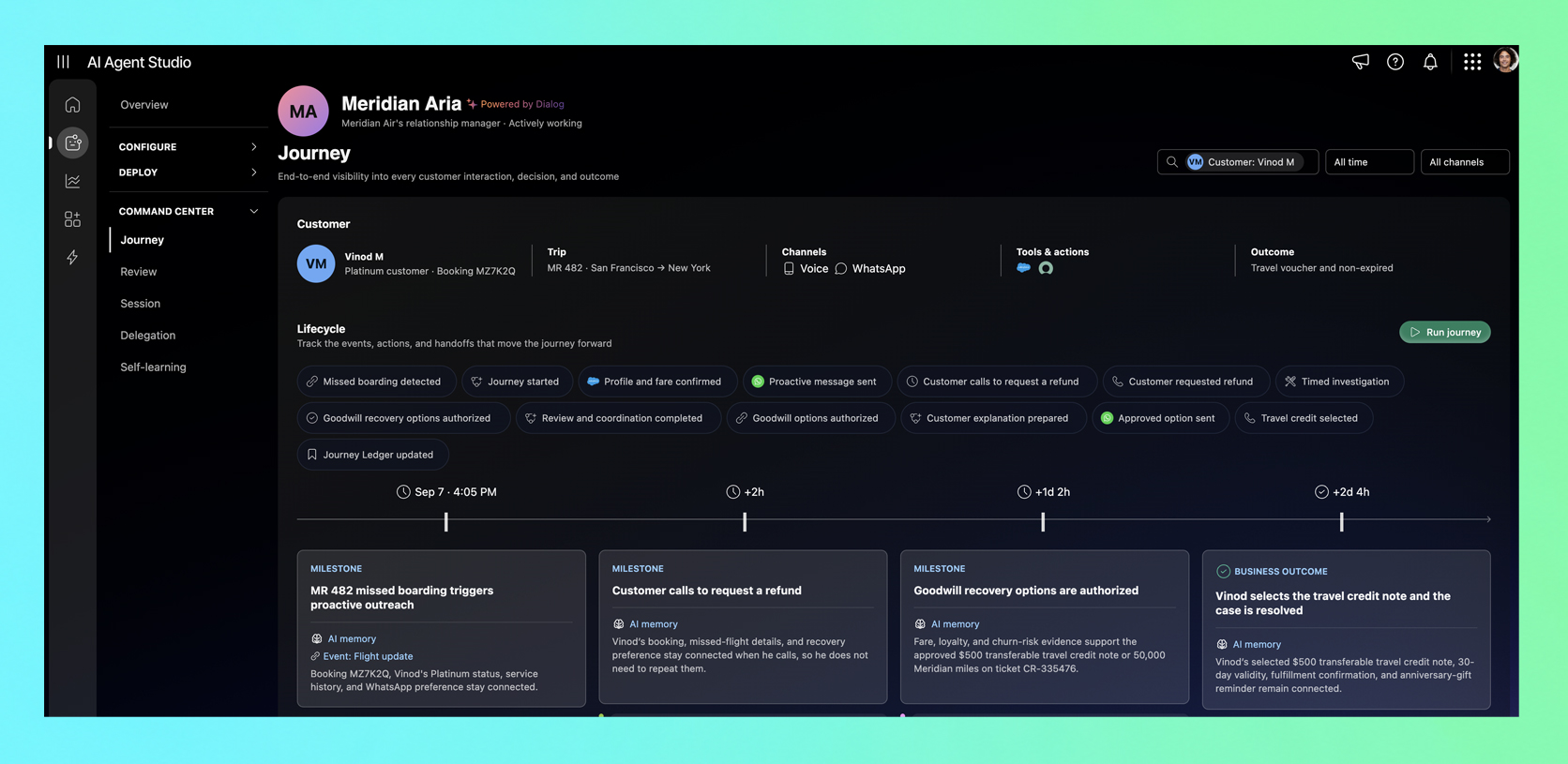
Consider a customer request that requires several teams to resolve. An AI agent can help carry the relevant context forward, coordinate the next steps, and continue working toward the customer’s outcome across channels and over time. With relationship context and the ability to learn from previous interactions and outcomes within enterprise policies, each engagement can build on what the organization already understands.
As these agents take on more responsibility, enterprises also need the ability to understand how they’re performing and maintain control. AI Agent 360, with observability through Splunk and security capabilities including Cisco AI Defense, helps organizations test, secure, monitor and optimize agents throughout their lifecycle.
We’re also expanding our customer experience portfolio with AI Concierge, new AI agent capabilities for Cisco Contact Center Express (CCX) and AI-native workforce engagement. Alongside our growing ecosystem of partners, including AWS, Google and NVIDIA, these innovations give organizations greater flexibility in how they build and evolve their customer experiences.
The opportunity is significant: to help businesses carry understanding and action across an entire customer relationship, so customers spend less time navigating an organization and more time getting what they need.
Connecting the Intelligence Behind Every Experience
Behind every great employee or customer experience is an IT team responsible for making it work. As organizations introduce more AI agents, connected devices and intelligent applications, those teams need visibility across the entire environment supporting them.
Consider a meeting that isn’t performing as expected. The issue could originate in the room device, the network, the application or a service connecting them. Understanding the experience means being able to connect signals across all of those systems, identify the source of a problem, and understand its impact.
This is where bringing more of Cisco together creates meaningful value for customers.
With Collaboration in Cisco Cloud Control, we’re connecting collaboration, networking and security in a more unified operational environment. Through AI Canvas, IT teams can bring device and workspace intelligence together with insights from ThousandEyes and Meraki, helping them investigate issues across domains, understand their impact and make more informed decisions about how to resolve them.
We’re also introducing more agentic capabilities into collaboration management. AI agents for Collaboration can connect operational context, business systems and actions to support more complete workflows. From investigating an issue to understanding the impact of a configuration change, these capabilities are designed to help IT teams manage increasingly complex environments more efficiently.
This is AgenticOps applied to collaboration: giving IT teams the intelligence and tools to move from managing individual systems toward managing the experiences those systems collectively deliver.
Built for Choice, Security and Trust
Every enterprise is approaching AI from a different starting point. Some are moving rapidly to the cloud. Others operate mission-critical environments that require on-premises infrastructure, and many will continue to work across both. Their choices of AI models, agents, and platforms will be just as varied.
We’re designing for that reality.
With Cloud Intelligence for Cisco Unified Communications Manager (UCM), we’re extending cloud-powered capabilities to organizations that depend on their existing Calling infrastructure. Combined with our Bring Your Own AI approach, expanding meeting-platform interoperability and support for cloud, hybrid and on-premises environments, we’re giving customers more ways to adopt new capabilities while building on the investments they’ve already made.
That flexibility must come with trust. As AI agents become more capable of accessing information, coordinating work and taking action, enterprises need confidence in how their data is protected, how those actions are governed and how their environments remain secure.
That’s why we’re continuing to invest in Zero Trust security, AI governance, secure communications, and observability across Cisco. Our goal is to give organizations an architecture that supports innovation while maintaining the resilience, visibility and control required to operate at enterprise scale.
Choice gives customers the flexibility to move forward. Trust gives them the confidence to do it.
Connected Intelligence, Delivering for Customers
The real measure of innovation is what it makes possible for the people and businesses using it.
An employee should be able to work alongside AI agents that help turn conversations into progress. A meeting room should bring its technology together so people can focus on one another, while giving IT a simpler way to deploy and manage the experience. A business should be able to carry understanding and action across an entire customer relationship. And the IT teams supporting all of it should have the visibility and intelligence to keep those experiences running.
Each of these advances delivers value on its own. The greater opportunity comes when they work together.
At WebexOne, we’re showing what becomes possible when intelligence works across the way people collaborate, the workplaces they use, the customers they serve and the infrastructure connecting it all.
That’s the next chapter of Connected Intelligence: helping our customers turn the potential of AI into experiences that work better for everyone.
Resources
About The Author