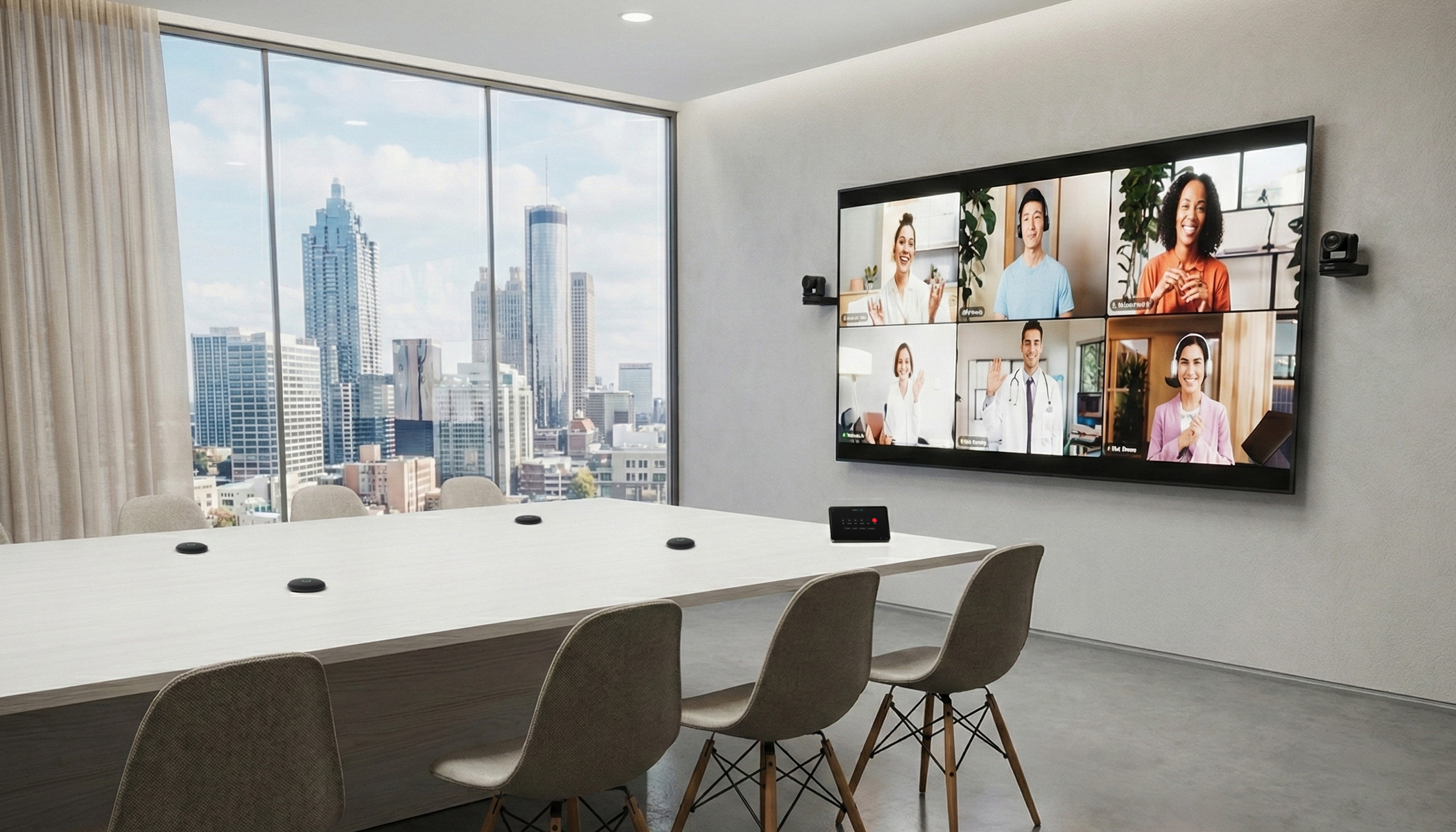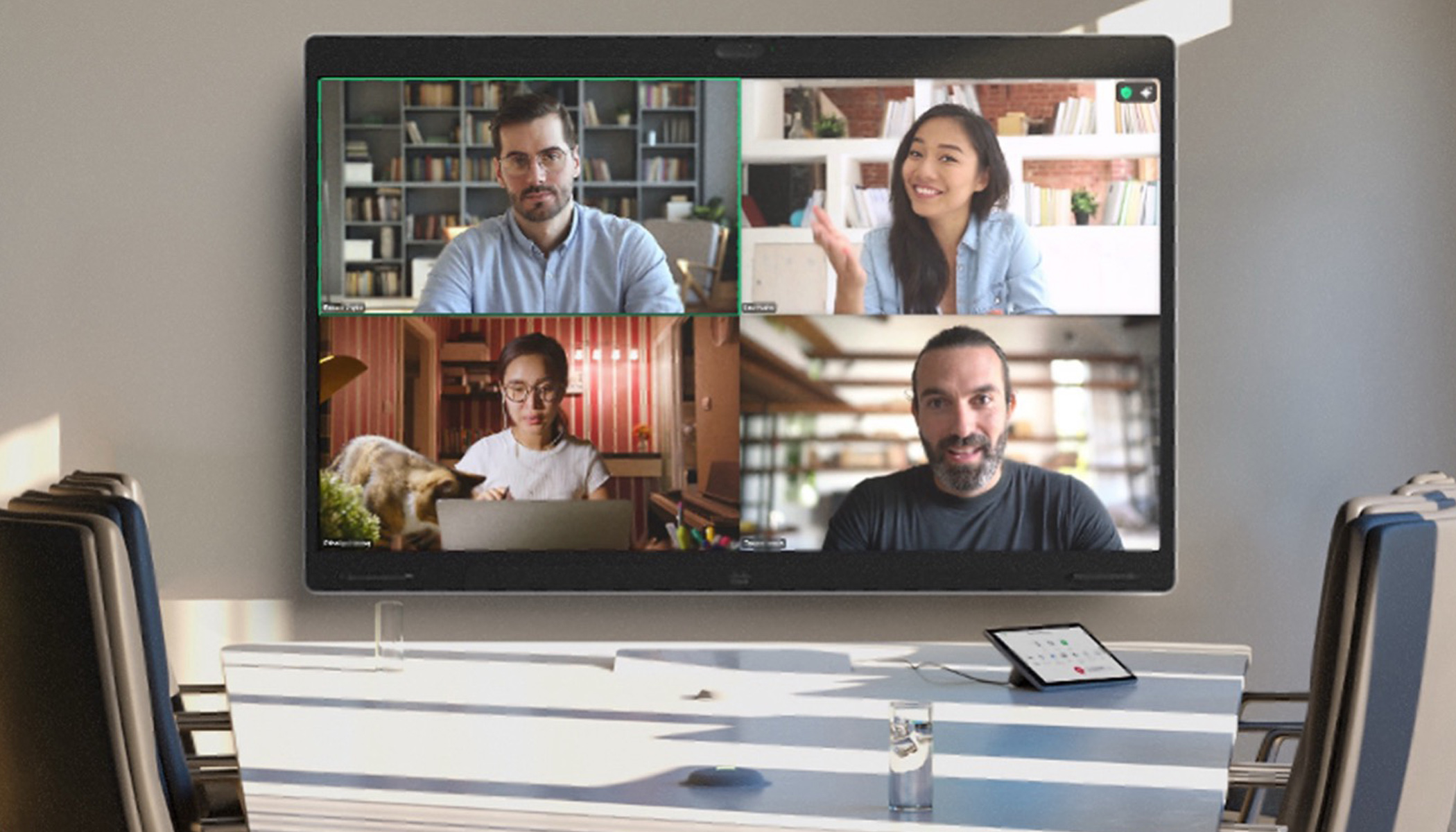
Conference room technology refers to the hardware, software, and intelligent systems that power modern meeting spaces — enabling teams to communicate, collaborate, and make decisions more effectively. From small huddle rooms to large executive boardrooms, today’s conference room technology goes beyond traditional video conferencing to support hybrid work, workplace intelligence, and seamless experiences across platforms.
Modern meeting rooms are no longer passive spaces. They’re active, intelligent environments designed to adapt to how people work — whether participants are in the room, remote, or joining from anywhere in between.
As hybrid work becomes the norm, conference room technology plays a critical role in ensuring meetings are productive, inclusive, and easy to manage — regardless of location.
If you’re evaluating or upgrading conference room technology, this guide breaks down what it includes, why organizations are investing, the most common modern solutions, and how to design the right setup for your organization.
What is included in conference room technology?
Conference room technology is not a single product — it’s a connected ecosystem of tools designed to work together seamlessly. One way to think about this ecosystem is through an eyes, ears, and brain model:
Eyes: Cameras, displays, and visual interfaces that help participants see and engage
Ears: Microphones, speakers, and audio processing that ensure every voice is heard clearly
Brain: The intelligence layer — AI, sensors, analytics, and management platforms that optimize the experience behind the scenes
Together, these components form a conference room technology stack, which typically includes:
- Video conferencing equipment: Cameras, codecs, and endpoints that support high-quality video collaboration
- Audio systems: Microphones, speakers, and advanced audio processing for clear, balanced sound
- Displays: Large-format LED displays and presentation screens for content sharing and visual collaboration
- Room scheduling panels: Dedicated panels outside rooms that show availability and integrate with calendars
- Sensors: Occupancy, environmental, and utilization sensors that inform room usage, comfort, and efficiency
- Wireless connectivity: Secure Wi-Fi and wireless presentation tools for easy content sharing
- Collaboration software: Meeting platforms, messaging, whiteboarding, and content-sharing applications
- Management and analytics platforms: Centralized tools for monitoring performance, managing devices, and gaining insight into room usage
- Security and network infrastructure: Enterprise-grade encryption, authentication, and IT controls
Together, these technologies enable meeting spaces that are not only functional, but intelligent and adaptable.
Why are businesses investing in conference room technology?
As work continues to digitize, organizations are prioritizing tools that improve retention, productivity, and collaboration. Investing in conference room technology is a direct investment in all three.
Reason #1: Employee retention and experience.
Employees expect meetings to “just work.” Poor audio, awkward camera framing, or complicated setup processes create friction and frustration — especially in hybrid meetings.
Investing in modern conference room technology helps organizations deliver consistent, intuitive experiences that support engagement, accessibility, and satisfaction, regardless of where people work.
Reason #2: Productivity and meeting efficiency.
Modern conference room technology reduces wasted time before, during, and after meetings. High-resolution displays replace outdated projectors, AI optimizes audio and video automatically, and room scheduling panels eliminate double bookings and confusion.
Behind the scenes, centralized management and analytics help IT teams proactively resolve issues and continuously improve performance across rooms.
Reason #3: Seamless collaboration across locations.
Hybrid collaboration is no longer optional — it’s the default. Conference room technology ensures in-room and remote participants can engage on equal footing.
AI-powered cameras, intelligent audio, real-time transcription, and integrated collaboration platforms work together to create inclusive meeting experiences where everyone can contribute.
9 modern conference room technologies shaping today’s meeting spaces.
Modern conference room solutions continue to evolve, offering smarter, more flexible ways to meet and collaborate. Below are nine of the most common technologies organizations are adopting today.
1. AI-powered cameras
AI-powered cameras automatically frame speakers, track movement, and adjust focus to keep meetings visually engaging. This is especially valuable in hybrid environments, where remote participants rely on visual cues to stay connected and engaged.
2. Audio systems and voice recognition
Modern conference room audio systems combine microphones, speakers, and voice-recognition technology to ensure clear, balanced sound throughout the room. AI-powered audio can suppress background noise, focus on active speakers, and even enable hands-free control of room features — improving accessibility and reducing setup time.
3. Displays for collaboration and content sharing
Large-format displays serve as the visual anchor of the conference room, supporting presentations, video meetings, and shared content. High-resolution displays help ensure in-room and remote participants can clearly see shared materials, while interactive displays add flexibility for collaboration.
4. Room scheduling panels
Room scheduling panels are installed outside conference rooms to show availability, upcoming meetings, and occupancy status in real time. Integrated with calendar systems, these panels reduce scheduling conflicts and make it easier for employees to find and book the right space.
5. Wireless connectivity and presentation
Wireless presentation technologies allow participants to share content without cables, adapters, or complicated setup. With secure Wi-Fi and wireless sharing, meetings can start faster, transitions between presenters are smoother, and collaboration feels more natural.
6. Sensors and environmental controls
Sensors play a growing role in modern conference rooms. Occupancy and environmental sensors help optimize lighting, temperature, and energy usage, while also providing insight into how spaces are actually used. These capabilities support both employee comfort and long-term workplace planning.
7. Real-time transcription and meeting summaries
AI-powered transcription captures conversations as they happen, creating searchable meeting records and automated summaries. These tools help teams stay aligned, improve accessibility, and ensure important decisions and action items aren’t lost after meetings end.
8. Centralized management and analytics platforms
Centralized platforms allow IT teams to monitor, manage, and update conference room technology at scale. Beyond basic management, analytics provide visibility into room performance, utilization, and user experience — helping organizations continuously improve their meeting environments.
9. Digital whiteboards
Digital whiteboards enable interactive brainstorming and real-time collaboration for both in-person and remote participants. Teams can annotate, diagram, and share ideas instantly, extending collaboration beyond the physical room.
Conference room technology by room type.
Different spaces require different technology setups. Designing rooms around consistent room archetypes and standards helps ensure predictable, high-quality experiences across an organization.
Huddle rooms
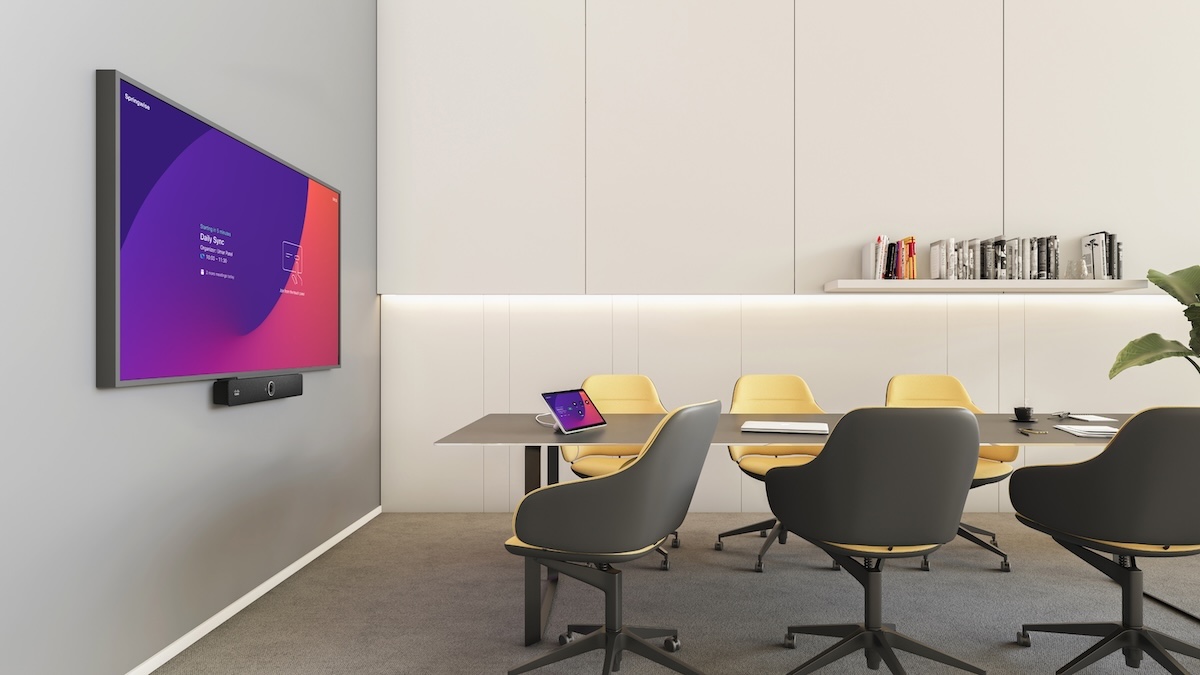
Compact spaces benefit from all-in-one video bars, simple audio, displays, and scheduling panels.
Medium conference rooms
These rooms often require dedicated cameras, microphones, larger displays, and centralized control to support hybrid meetings.
Large boardrooms
Executive spaces benefit from multiple cameras, advanced audio coverage, high-resolution displays, and AI-driven framing.
Training and multipurpose rooms
Flexible spaces require scalable AV systems, interactive displays, and easy content sharing to support a wide range of use cases.
How much does conference room technology cost?
Conference room technology costs vary widely depending on room size, functionality, and scalability. Key cost factors include:
- Hardware vs. software investments
- One-time equipment costs vs. ongoing subscriptions
- Installation and network requirements
- IT management and support needs
- Future scalability and upgrades
Organizations should evaluate total cost of ownership — not just upfront pricing — when planning their investment.
Choosing the right conference room technology: key questions to ask.
Before selecting a solution, consider the following:
Can it integrate with existing systems?
Ensure compatibility with your network, devices, and collaboration platforms.
Is it secure?
Look for enterprise-grade security features such as encryption, authentication, and regular updates.
Does it support hybrid work?
The technology should deliver an equitable experience for both in-room and remote participants.
Is it intuitive to use?
User-friendly solutions reduce training requirements and increase adoption.
Can IT manage it at scale?
Centralized management tools simplify monitoring, troubleshooting, and updates across rooms.
Powering modern conference rooms with Webex.
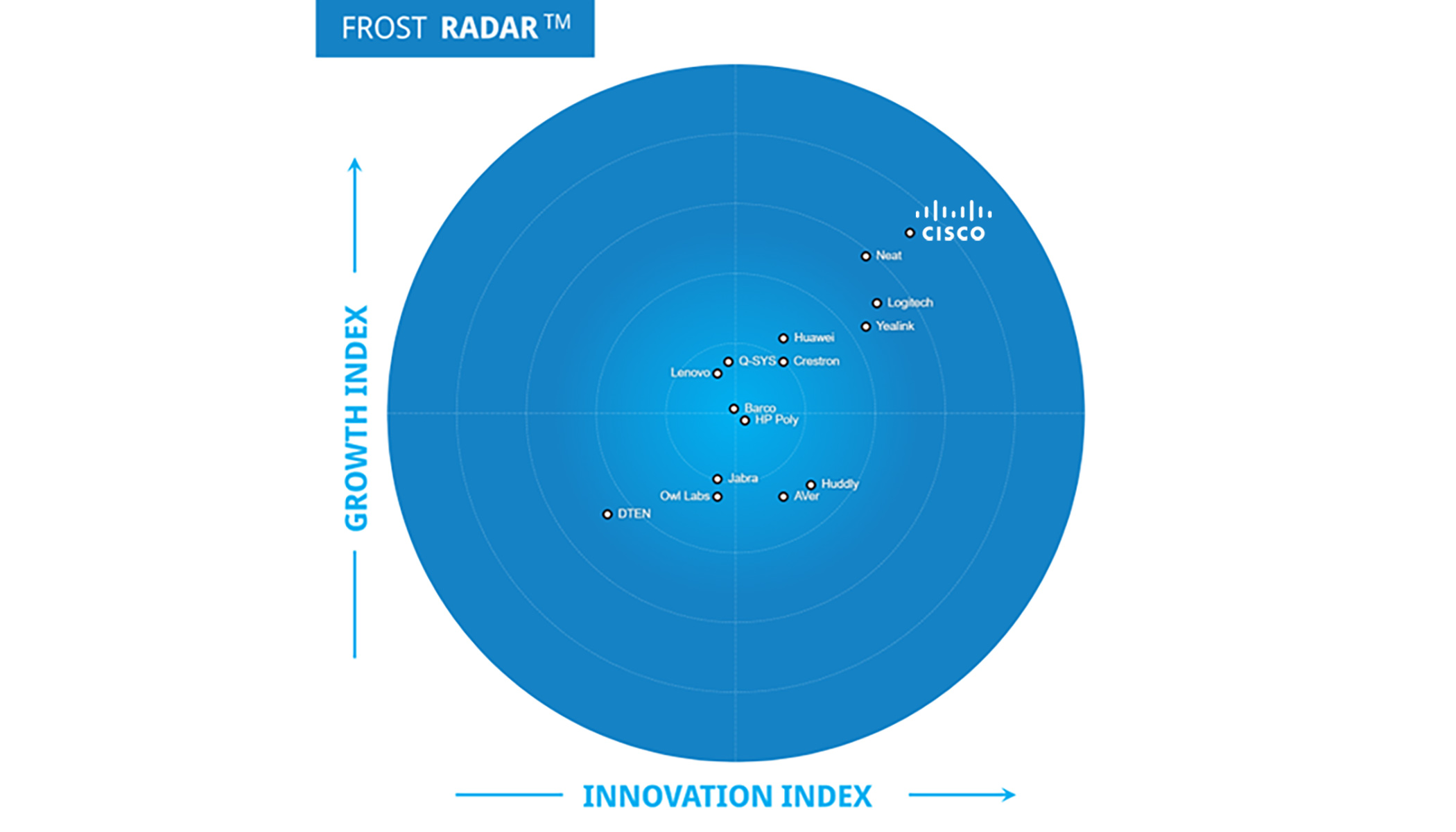
Modern conference rooms require more than traditional video conferencing equipment. Cisco Devices are intelligent workplace devices designed to support the full meeting and collaboration experience — from video and audio to sensors, analytics, and management.
The Webex platform brings together collaboration software, AI-powered capabilities, and enterprise-grade security — while supporting an open, platform-independent ecosystem, including integrations with Zoom, Microsoft Teams, Google, and more.
Together, Cisco Devices and Webex help organizations deliver consistent, intelligent meeting experiences across rooms, platforms, and work styles — now and into the future.
About The Author