
AIDS Healthcare Foundation (AHF) was founded in 1987 as a hospice foundation and has since evolved to become a global leader in the space, providing healthcare and pharmacy services to those diagnosed with HIV or AIDS.
AIDS Healthcare Foundation has operations in 48 countries, with 400 clinics, 69 healthcare centers, 62 pharmacies, and over 8,500 employees. The foundation serves over two million patients annually. Rapid growth has been a hallmark of AHF’s success, but scaling up from a $3 billion operation to $8 billion in just three years has introduced significant challenges. To meet these demands, AHF turned to Webex as a partner in its journey to modernize operations, elevate patient care, and ensure a seamless and innovative healthcare experience.
Outgrowing legacy systems
Many of the pressures facing private companies, from small businesses to multinational enterprises, are also relevant to nonprofit organizations. In the case of AIDS Healthcare Foundation, the growth mindset would help them assist more people. However, this kind of ambitious scaling is difficult at the best of times; dealing with outdated legacy systems made it all the more difficult.
AHF’s less-than-cutting-edge technology was causing five major challenges:
- Fragmented communications: Each clinic operated with its own phone number, creating inconsistencies in patient communication and a disjointed patient experience.
- A lack of scalability: Existing on-premises systems, including Avaya and 8×8 contact center solutions, were outdated and unable to support AHF’s rapid growth.
- Too many manual processes: Pharmacy refill reminders, appointment scheduling, and clinic coordination were heavily reliant on manual processes, leading to inefficiencies and delays.
- Limited data visibility: AHF couldn’t track and analyze metrics, such as call response times, patient satisfaction, and clinic performance, which hindered the foundation’s ability to improve care delivery.
- Operational challenges: Patching, security updates, and managing multiple systems added complexity and inefficiency to IT operations.
AHF sought a single, cloud-based platform that was innovative, scalable, and manageable via a single pane of glass. And crucially, the foundation needed a future-proofed solution, one that would grow along with AHF.
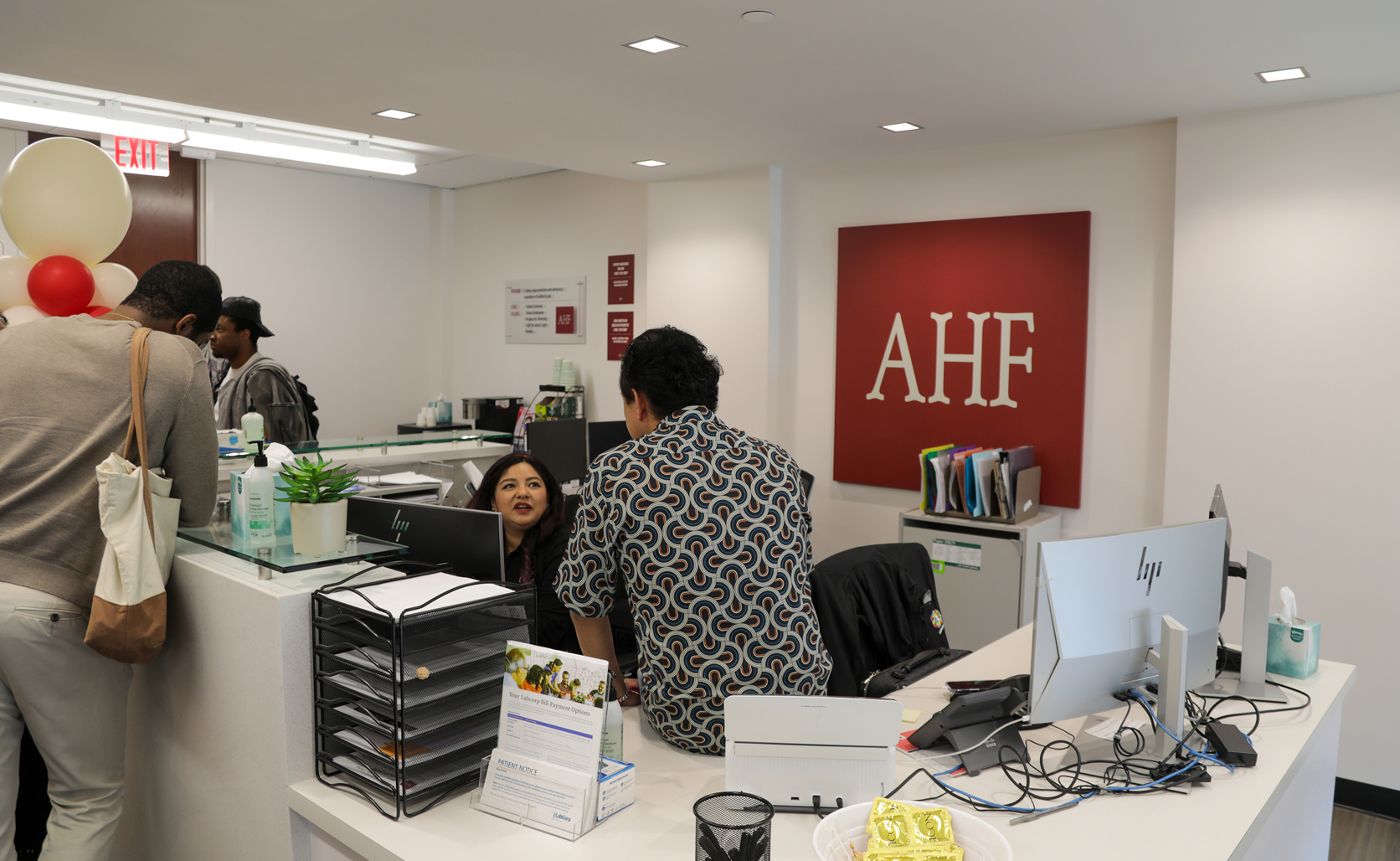
A unified, cloud-based platform
In late 2024, AHF partnered with Cisco to deploy a phased implementation of the Webex Suite, Webex Contact Center, Webex Calling, and other advanced solutions.
“The reason we chose Webex over other competitors,” explained Rudy Esfahani, IT Director of Communication at AHF, was that Webex offered “a full comprehensive platform with its UC and CC and collaboration services.”
The other reasons AHF selected Webex were that AHF knew they could trust and rely on Cisco. “We already had a close relationship with Cisco for our data, infrastructure, and security,” Esfahani said, further explaining that “Cisco is an innovative company, which puts us in good hands,” enabling rapid but stable growth.
The initial rollout consisted of:
- Webex Suite (2,200 Licenses): Replacing Zoom and consolidating collaboration (Webex Meetings, Webex Calling, and Webex Messaging).
- Webex Contact Center (360 Concurrent Licenses): Replacing Avaya and 8×8 systems.
- Webex Calling: Replacing the entire Avaya phone system to create a single, scalable calling platform across all 400+ locations.
From there, the phased implementation strategy relied on the CX Advanced Solutions team to establish interoperability between the legacy Avaya system and Webex Calling for a non-disruptive, location-by-location transition.
“Webex Contact Center allows us to communicate with our patients through SMS messaging, directly from agent to customer, for appointment reminders or for prescription refill reminders,” Esfahani explained. “This enables quicker communication with patients and better communication performance.”
Working With CXAS
AHF teamed up with Cisco partner CX Advanced Solutions (CXAS) to upgrade their contact center. As a specialized collaboration solution provider, CXAS delivered a phased hybrid migration strategy, seamlessly bridging AHF’s on-premises environment to Webex Calling and Contact Center. The CXAS AIM tool enabled an acceleration of the migration timeline from eight months to just four—successfully moving 110 locations, 2,400 handsets, 400 agents, and 1,800 numbers to AHF’s CCP provider.
This level of automation and expertise allowed AHF to modernize rapidly while minimizing operational impact. As a result, AHF greatly valued CXAS’s ability to simplify complex migrations and execute with speed, accuracy, and confidence.

Scalability, efficiency, and improved experience
The partnership with Webex has enabled AHF to enjoy operational resilience and scalability. The cloud platform eliminated the constant manual effort associated with patching and managing multiple outdated systems. Furthermore, centralized management in Control Hub simplified administration and user and location management.
Webex has also improved the efficacy and practicality of remote work, which is crucial for a healthcare organization such as AHF. Agents can now sign in from anywhere, which was impossible on the old system. “Our agents love the [flexibility] of Webex Contact Center,” Esfahani explained. “They can sign in from anywhere—from home, even.”
Supervisors at AHF have also gained the ability to run automated reports for quick, easy access, eliminating time-consuming manual processes. “One of the favorite features for the supervisors is the Contact Center dashboard. They can look over to see basic numbers at a glance. And also, they love the way they can manage the agents.”
Furthermore, AHF gained the visibility needed to pursue aggressive performance goals, specifically reducing call response times to under 1.5 minutes. The foundation tracks core metrics—“The most important metric for our contact center is the call answer rate, which has to be 85% answered within 30 seconds.”

Agent and patient experience improvement
Webex also enables seamless integration with critical business systems, such as AthenaOne and Salesforce, allowing agents to personalize patient interactions. And Webex’s AI-powered features, such as call summaries and auto-CSAT scoring, help streamline post-call work for agents, saving valuable time and allowing them to focus on more meaningful interactions.
Webex AI Agent also supports internal use cases, such as quickly responding to employee inquiries about vacation time or scheduling. By introducing AI agents to handle common inquiries, human agents can focus on more pressing or higher-touch concerns. “With the AI agent, we will improve the customer experience by multiple factors,” Esfahani said.
Building the foundation for future care
AIDS Healthcare Foundation’s strategic move to Webex by Cisco represents more than just a technology upgrade: It’s a fundamental transformation of AHF’s operational DNA. By replacing the constraints of fragmented legacy systems with the unified, cloud-based platform that is Webex Suite, the foundation has achieved the stability and massive scale necessary to meet its ambitious $8 billion growth projection.
Centralized management, data-driven improvements, and enhanced flexibility empower both supervisors and agents. AHF also has plans for Webex Contact Center’s AI features, such as call summaries and auto-CSAT scoring. Ultimately, this long-term partnership positions AHF to unlock future innovations, from AI-based routing and self-service options to automated patient engagement, fulfilling their core mission to deliver the best possible care to millions worldwide. As Esfahani stated, “I’m confident that our metrics will continue to improve,” strengthening AHF’s firm commitment to an increasingly personalized and efficient patient journey.
Discover what Webex Suite can do for your organization. Connect with a Webex team member today to learn more.
About The Author