The Landscape of Work Has Changed
If you’re like most knowledge workers today, your morning routine probably looks something like this: You open your laptop to 47 unread messages across multiple platforms. Your calendar shows back-to-back meetings, half of which you joined late or missed entirely. There are action items buried in email threads, decisions made in meetings you weren’t part of, and somewhere in that chaos, critical work that moves your business forward.
Add to this the complexity of global collaboration. Teams are spread across time zones and languages; security requirements vary by region. Add the growing presence of AI tools that promise to help but often just add another layer of complexity.
Enterprise workers constantly switch between dozens of applications throughout the day, hunting for context and trying to piece together what matters. We’re drowning in tools that were supposed to make us more productive. We’re overwhelmed, not empowered.
The Era of Connected Intelligence
The solution isn’t more tools. It’s smarter infrastructure. Organizations are moving beyond fragmented point solutions to platforms where intelligence flows seamlessly between people, AI agents, and the applications that drive business forward.
At Cisco, we call this Connected Intelligence—a continuous loop of human to AI to human interaction where technology amplifies collaboration rather than complicating it.
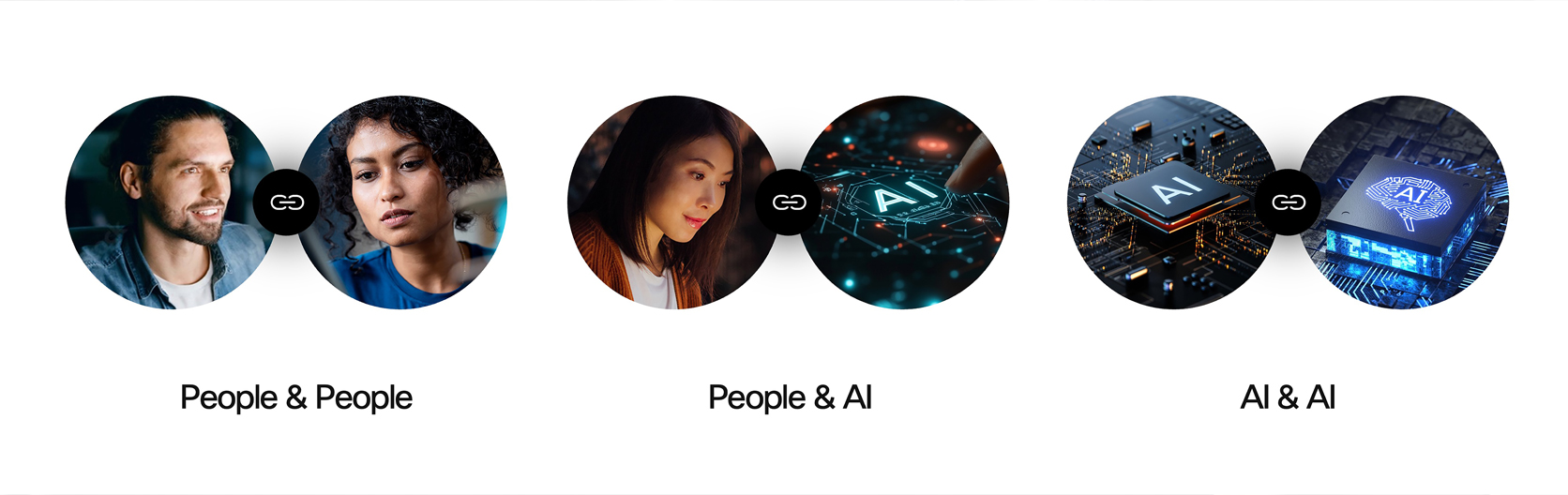
This isn’t about replacing human judgment. It’s about creating systems where AI works in the background so teams can start each day prepared, not overwhelmed. Where language barriers disappear. Where security and sovereignty enable innovation rather than constrain it. And where technology becomes invisible, allowing collaboration to feel natural and effortless.
This is built on three pillars: Connected, Agentic, and Secure. And because these capabilities share common AI infrastructure, common security architecture, and common management, they create compound value—where intelligence from one interaction enhances every other, and the system becomes more powerful over time.
Connected: AI That Brings Context to You
Imagine starting your Monday morning. While you were offline over the weekend, your team had three critical meetings, exchanged dozens of messages across multiple threads, and made several key decisions. Traditionally, you’d spend your first two hours playing catch-up—reading transcripts, scrolling through messages, asking “what did I miss?”
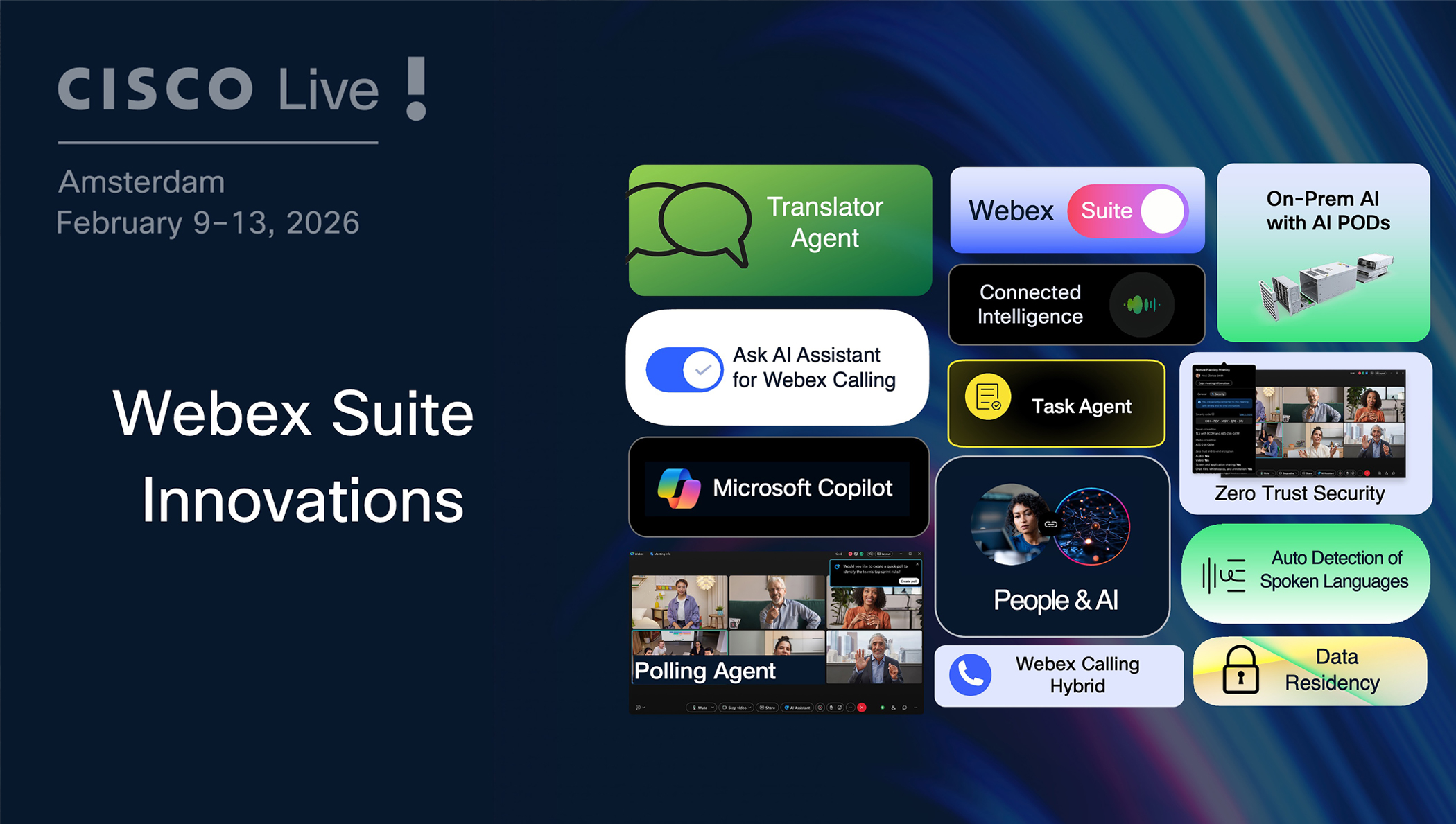
With the AI Assistant in Webex, you’ll get caught up in a few short minutes. AI Assistant is evolving from a tool that answers questions into an intelligent orchestrator that proactively surfaces what matters, when it matters, in the flow of your work. And AI Assistant doesn’t work alone. It’s supported by a coordinated system of AI agents that handle the “work about work” autonomously:
- Notetaker Agent captures discussions even when no formal meeting is scheduled: in-room conversations, impromptu huddles
- Polling Agent detects when your team is debating a decision and automatically suggests a poll to gauge consensus
- Scheduler Agent listens for scheduling cues (“let’s follow up next week”), checks everyone’s calendar, and books the meeting without interrupting the conversation
- Task Agent converts verbal commitments into trackable action items and can execute on them—creating Jira tickets, updating Salesforce records, sending reminders
- AI Receptionist is your always available virtual assistant, automating routine tasks like answering calls, responding to questions, scheduling appointments and transferring calls.

These agents don’t wait for commands. They detect, suggest, and execute—working in the background while you focus on what matters.
But there’s one barrier that no amount of intelligence can overcome through software alone: language.
Translator Agent: Preserving the Human in Translation
Today, Cisco is introducing our most ambitious agent yet: the Translator Agent, expected to launch in July. This is real-time, speech-to-speech translation that preserves the most important part of the conversation: you. Your voice, your tone, your cadence, your prosody – not robotic, flat, or monotone.
When a sales executive in London speaks English naturally with a customer in Madrid, the customer hears her voice, in Spanish, with her enthusiasm and conviction intact.
At launch, the agent will support English, French, German, Hindi, Italian, Japanese, Korean, Mandarin, Portuguese, and Spanish, with more languages to follow.
Consider the impact. A healthcare provider in one country consults with a patient in another, with medical nuance preserved. Contact centers serve customers continent-wide without requiring multilingual staff. Global teams collaborate as if they share a native language.
This isn’t just translation. It’s authentic human connection at global scale.
And because this is built into the Webex platform—not bolted on—it works seamlessly across Webex Calling, Webex Meetings, and Webex Contact Center. One platform, one architecture, consistent intelligence everywhere
Agentic: Orchestrating Action Across Your Ecosystem
Connected intelligence becomes powerful when it extends beyond Webex into the systems where work actually happens. This is agentic autonomy: AI that doesn’t wait for commands. Instead, it detects intent, orchestrates action across systems, and surfaces intelligence wherever you’re working, reducing context switching and helping to eliminate routine work.
Imagine this autonomy in action: During a sales meeting, the team is discussing a customer issue. With the AI Assistant integrations with Glean and Amazon Q index, you can ask AI Assistant to provide you the status of a Jira ticket while you are in that meeting. The ticket information is shared with you right in Webex and you are fully caught up on the customer issue in moments.
The same interoperability will soon extend to Webex Calling. Think of it like a prep partner for your next call! You can Ask AI Assistant to surface context from past conversations and enterprise applications through integrations with Amazon Q index and Glean, right before you jump on a call or even during your phone conversation.
When the sales call ends, the Task Agent has already detected commitments, created Jira tickets with details and deadlines, and updated the Salesforce opportunity—before you’ve closed your laptop. The next morning, your engineer receives the ticket with full context from the call recording. The customer receives a follow-up email confirming next steps. No manual handoffs. No reminders. Just done.
Bi-directional integration between the AI Assistant in Webex and Microsoft Copilot can make this seamless in the coming months. Webex content—meeting recordings, call transcripts, message threads—will become searchable in Microsoft Copilot, while Microsoft content—SharePoint documents, OneDrive files, Teams conversations—will be accessible in the AI Assistant. Ask either AI tool about content from either platform and get comprehensive answers.
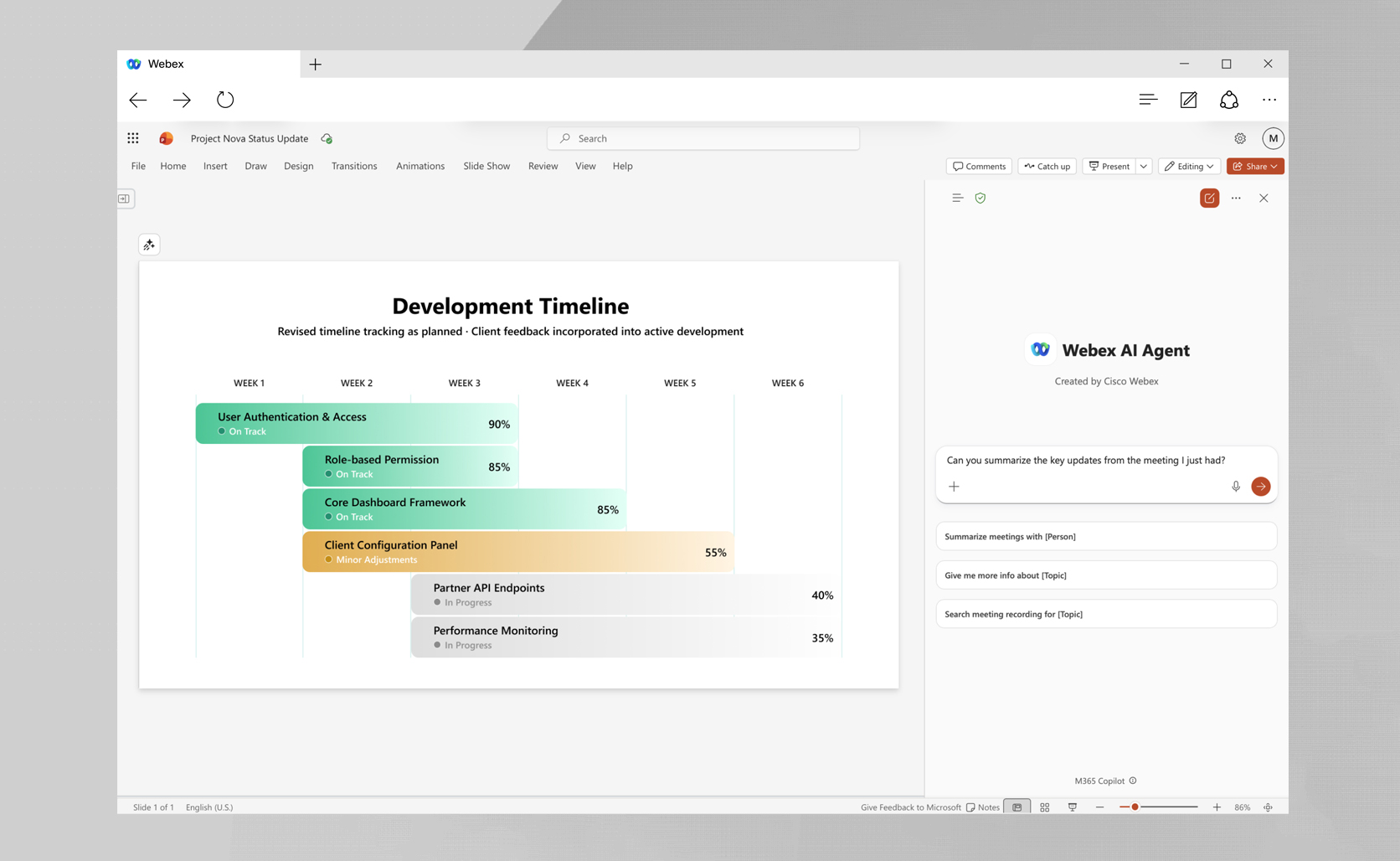
This is autonomy and integration working together. Intelligence meets you where you work. Technology fades into the background, and collaboration feels effortless.
Secure: Trust as the Foundation
None of this matters if it’s not secure. As we connect more agents, more systems, more workflows, the attack surface grows. And in the age of AI, threats are evolving faster than ever. Deepfakes, synthetic voices, AI-generated phishing attacks—the tools that make collaboration intelligent can also be weaponized.
This is why security is the foundation of everything we build, not an afterthought. Webex security doesn’t just defend—it learns, adapts, and evolves in real time. We’re continuously leveraging behavioral analytics and contextual intelligence to counter new risks as they emerge.
That’s why we’re announcing several critical security enhancements:
Enhanced End-to-End Encryption
We’ve strengthened our zero-trust architecture with standards-based MLS (Messaging Layer Security) and S-frame encryption. Recordings, chats, whiteboarding – everything you need for rich collaboration – is supported by our enhanced end-to-end encryption. This helps your conversations remain private, tamper-proof, and auditable—without compromising collaboration features.
Deepfake Detection with Pindrop
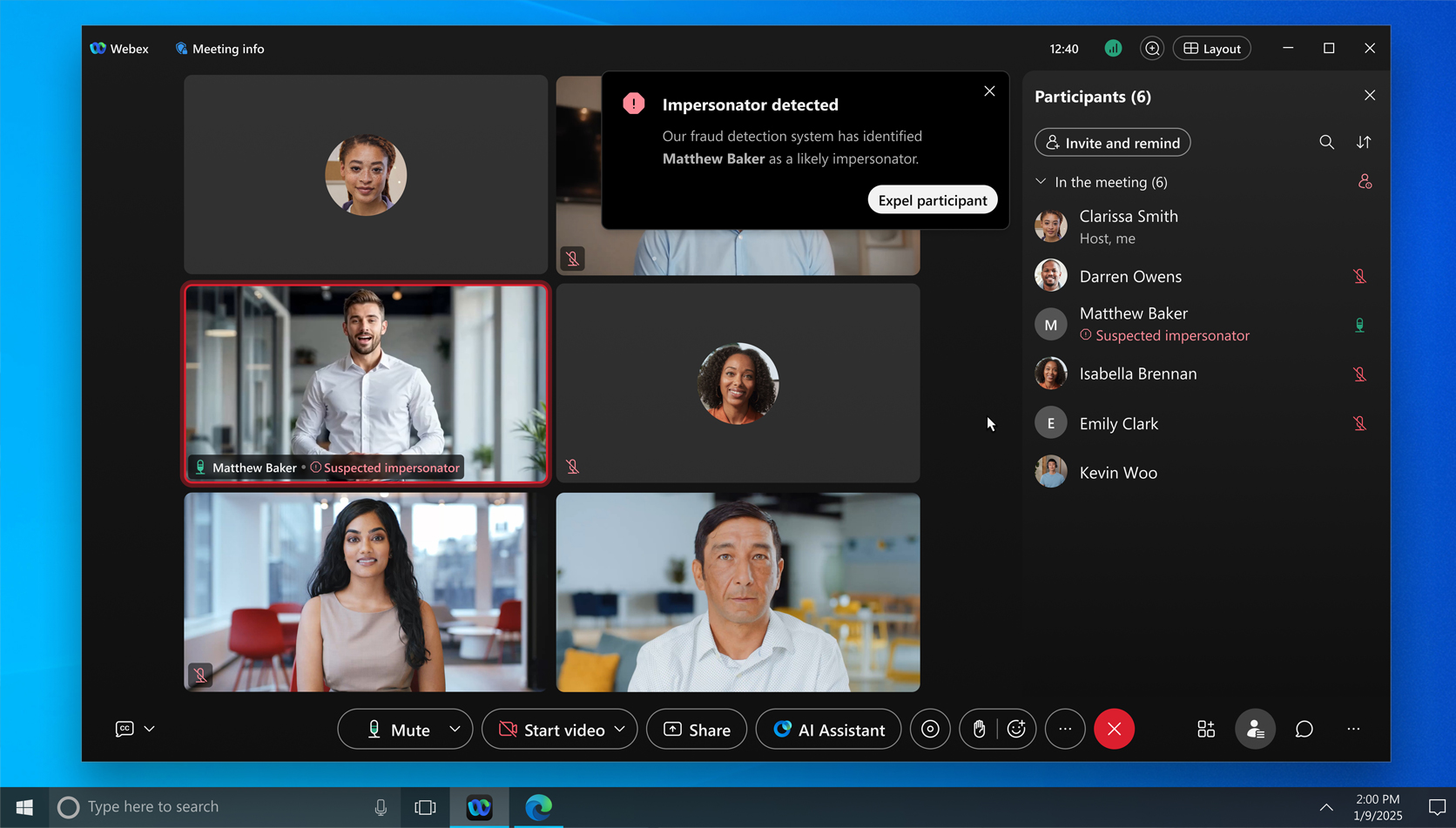
As AI-generated content becomes more sophisticated, authenticity becomes critical. We’re collaborating with Pindrop, the industry leader in voice security, to detect deepfakes and synthetic voices and videos in real-time. Whether it’s a video meeting or an audio call, if you choose to integrate Pindrop with Webex, you’ll know if you’re talking to a real person or an AI impersonation. This capability is available in Meetings now and is anticipated to extend to Calling in July.
Quantum-Safe Cryptography
We’re preparing for tomorrow’s threats today, investing in post-quantum encryption to help ensure that data protected now can remain protected, even as quantum computing advances.
But security isn’t just about technology—it’s also about control.
Flexible Deployment for a Sovereign World
Organizations worldwide are reassessing their digital infrastructure. Data sovereignty requirements are tightening. Regulatory complexity is increasing. And the need for digital resilience—keeping critical systems running even when connectivity fails—has never been more urgent.
The questions are fundamental: Where does our data live? Who has access to it? What happens when the network goes down? For hospitals, government agencies, financial institutions, and critical infrastructure operators, “move everything to the cloud” isn’t an answer. It’s not realistic, and in many cases, it’s not allowed.
This is why Webex Suite offers true deployment flexibility: cloud, hybrid, and on-prem, with consistent AI capabilities across all of them.
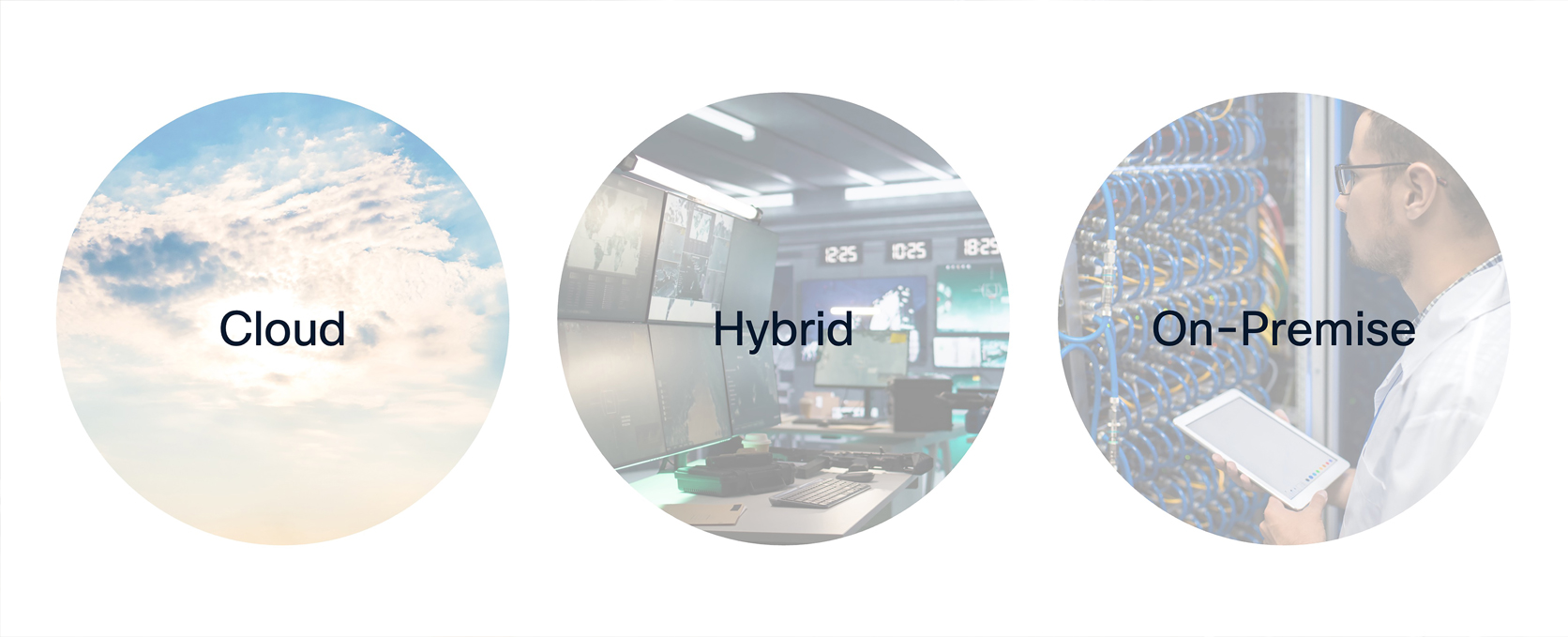
Cloud when you want it. We continue pushing the envelope with new Webex Calling innovations, global scale, and 99.999% uptime SLA across 195+ markets.
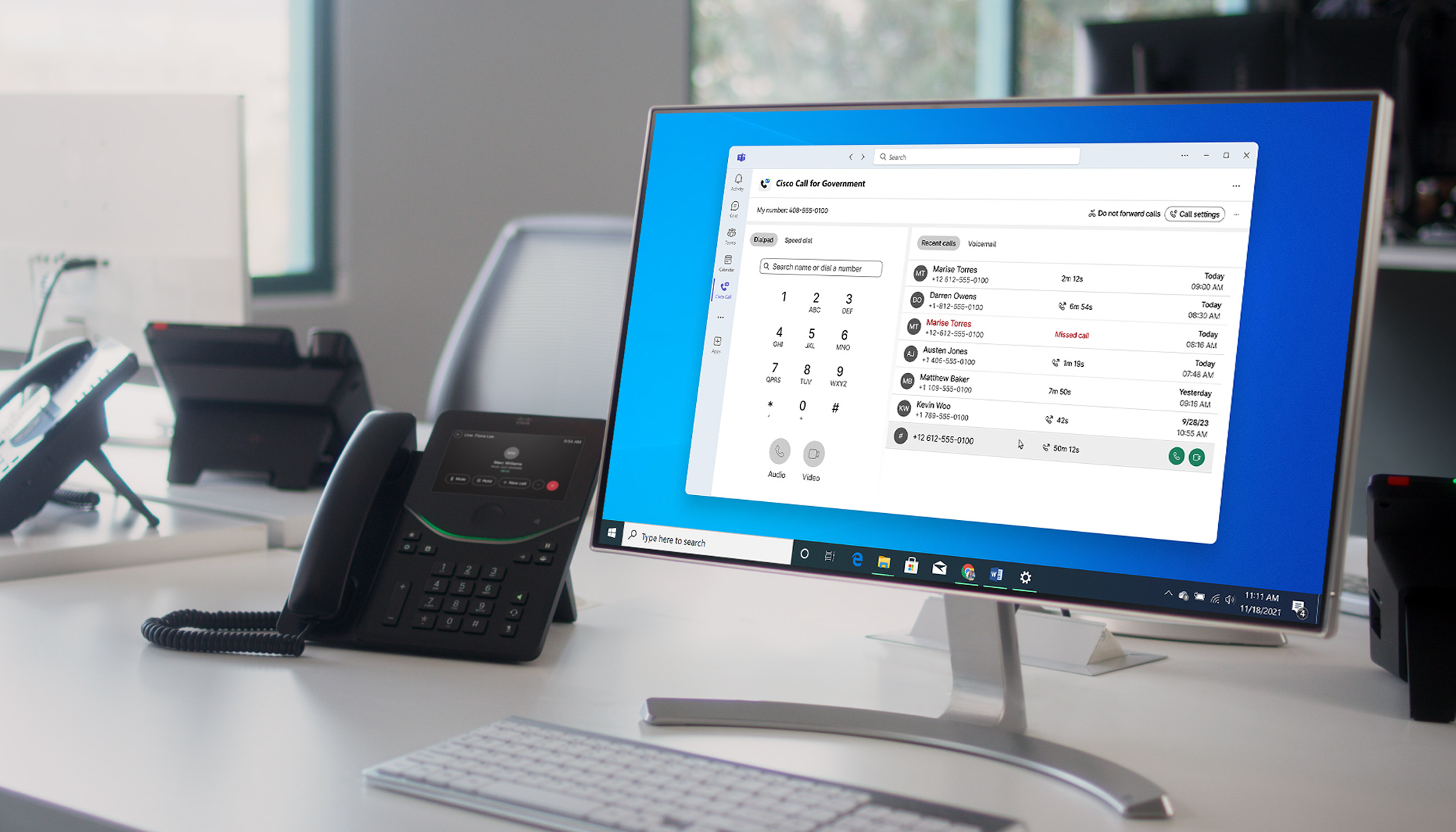
On premises when you need it. We serve over 30 million users on Cisco Unified Communications Manager (UCM), and we’re committed to their success. With UCM 15, we’ve delivered hypervisor flexibility (Nutanix, VMware or Cisco NFVIS), federal security certifications (FIPS 140-3, FedRAMP), and AI capabilities that run locally—without sending data to the cloud.
Hybrid when it makes sense. With Webex Calling Hybrid, organizations can keep call control on-premises while accessing cloud innovation—AI Receptionist, intelligent routing, real-time analytics—when ready. Sovereignty without sacrificing agility.
Air-gapped when required. Cisco AI PODs bring AI to the Cisco Meeting Server (CMS), delivering transcription, summarization, and intelligent assistance to your most sensitive environments. Accelerated by NVIDIA and architected by Cisco, AI PODs enable air-gapped organizations to access AI experiences, with zero cloud dependencies and total data control.
Sovereignty Without Compromise. For organizations navigating complex regulatory frameworks, whether GDPR in Europe, NIS2 for critical infrastructure, or sector-specific compliance requirements, flexibility is non-negotiable. Webex Suite provides sovereign cryptographic control, data residency, local support with in-country expertise, and the ability to deploy based on your security posture, not vendor limitations.
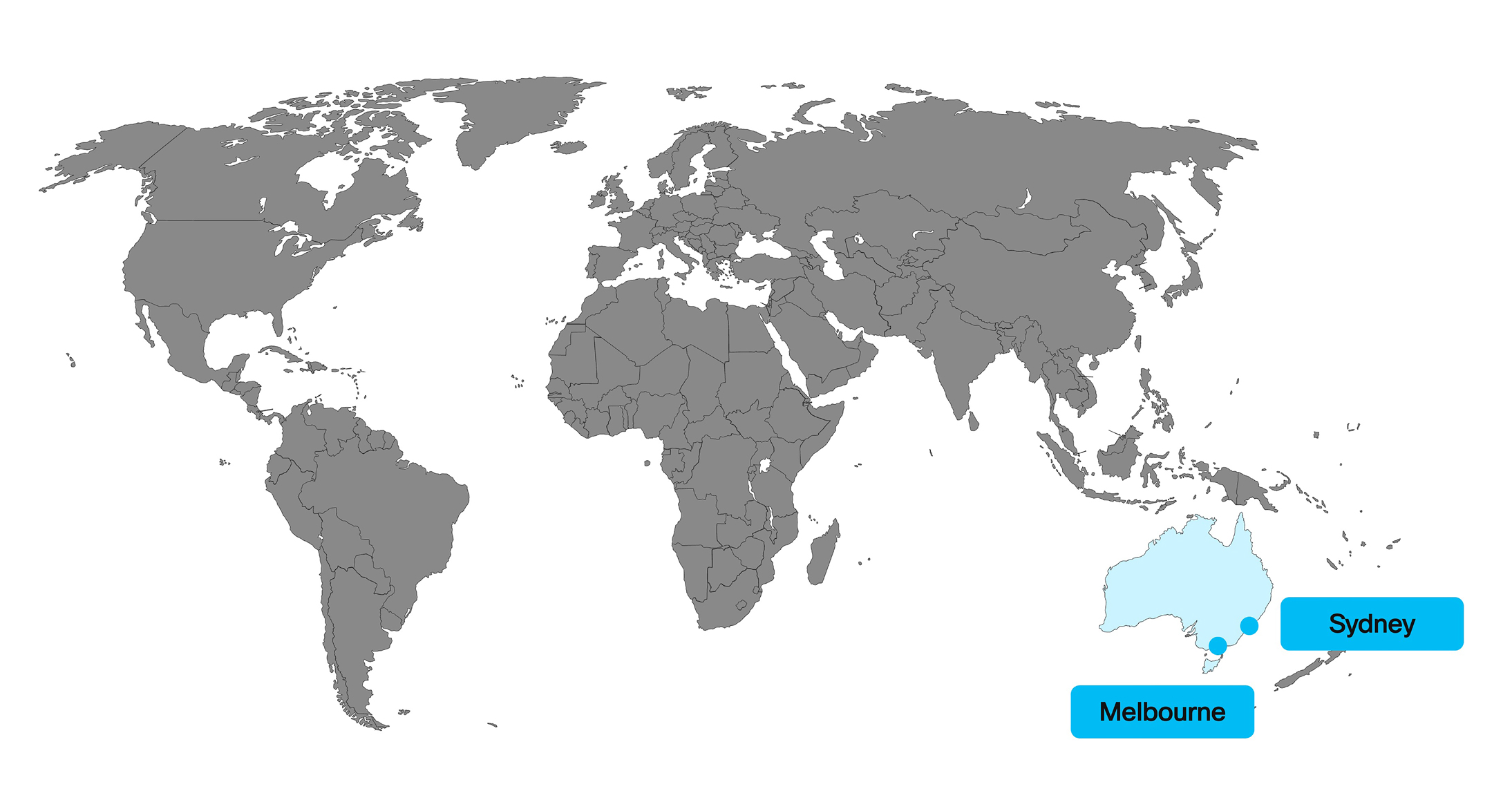
To further our commitment to sovereignty, we are excited to announce the expansion of Webex Suite data residency in the United Kingdom. This provides in-country data processing and storage for Meetings, Messaging, Calling, Slido, and the AI Assistant across dedicated Webex cloud locations. This investment ensures our public sector and enterprise customers in England, Scotland, Wales, and Northern Ireland can meet stringent compliance requirements while enjoying reduced latency and enhanced digital sovereignty.
Our approach to sovereignty inverts the traditional model: instead of forcing your data to travel to intelligence in the cloud, we bring intelligence to your data, wherever it lives. Control stays with you.
The Future is a System of Interactions
Collaboration infrastructure is becoming as critical as power or water—essential, always-on, invisible when it works, catastrophic when it fails.
The future belongs to organizations that recognize this shift. Where AI agents work alongside humans as teammates, not just tools. Where language barriers disappear. Where security and sovereignty enable innovation rather than constrain it. Where technology fades into the background, allowing people to focus on what matters most—the human work of building, creating, healing, teaching, and connecting.
Platforms aggregate features. Systems create value that compounds over time.
Webex Suite is such a system—the intelligent infrastructure connecting people, agents, and workflows securely across any deployment model. It meets organizations where they are, whether that’s in the cloud, hybrid, on-premises, or air-gapped.
One system. Any deployment. Secure by design. This is Connected Intelligence for the future of work.
About The Author