AI can’t transform work if it stops at the Cloud. At some point, intelligence has to enter the physical world. It has to be in the room, hear the conversation, understand the space, and respond to the people inside.
That’s why Cisco collaboration devices are the last mile of secure AI infrastructure.
We’ve spent a decade building intelligence into that last mile, making individual workspaces smarter with AI at the edge. Now we’re connecting that intelligence across the entire workplace.
It’s not just smarter rooms. It’s an intelligent workplace that can be designed, deployed, operated, and continuously optimized as one connected system.
It starts with the blueprint.
Designing the intelligent workplace as one connected system
For years, workplace technology has been planned one space at a time. Facilities thinks about the floor plan. IT thinks about connectivity. Real Estate thinks about space. Collaboration teams think about the meeting experience.
Then everyone hopes it comes together.
The intelligent workplace demands a more connected approach.
With Workplace Designer, we’re taking the intelligence we’ve brought to individual rooms and applying it across the entire floor, building and campus. Teams can import floor plans and generate intelligent recommendations for room configurations, Wi-Fi infrastructure and collaboration devices across every space in a single click.
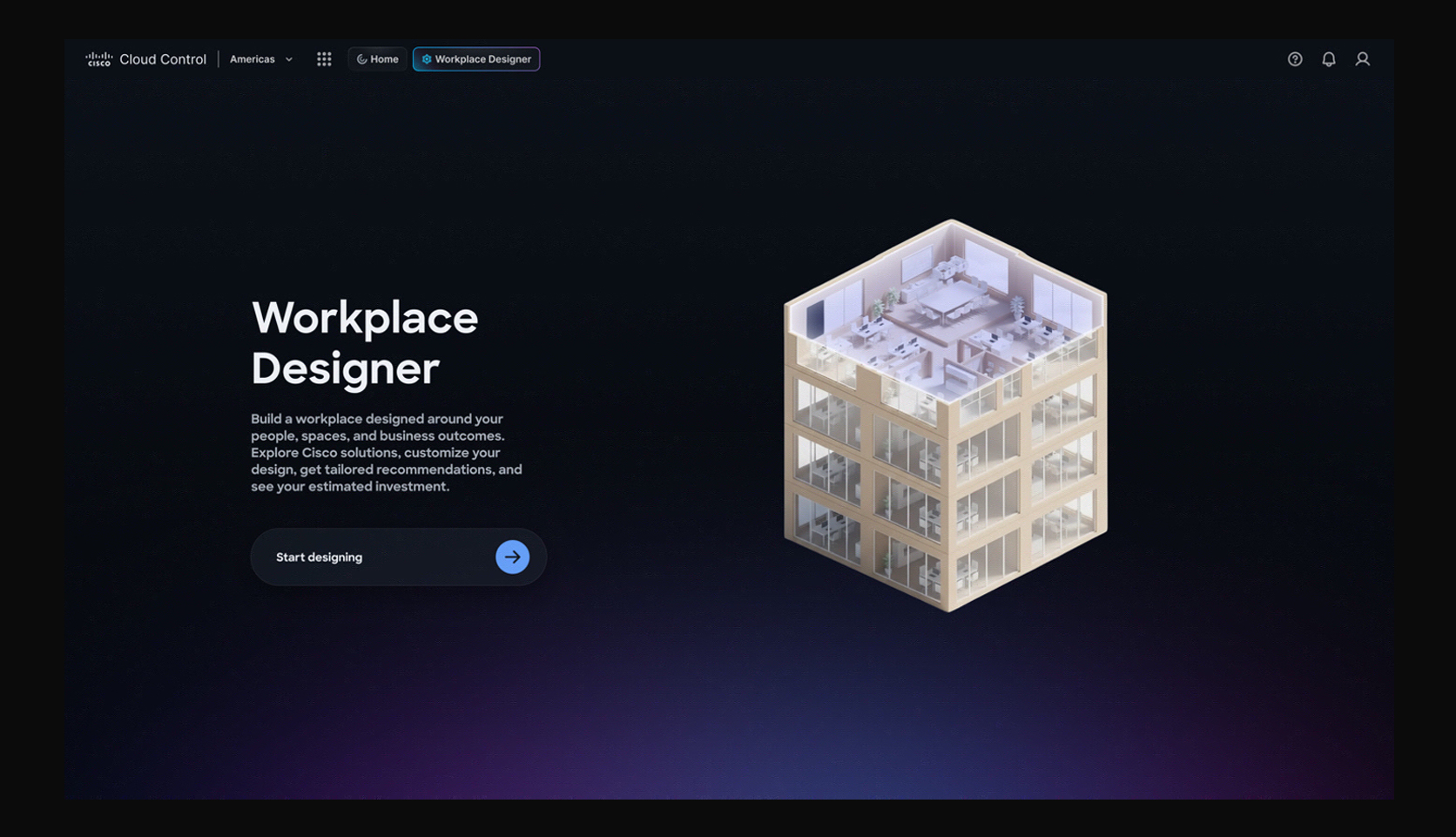
This is more than a faster way to design rooms. It creates the foundation for a connected workplace lifecycle: design the environment, deploy the technology, operate it, and continuously improve it.
The intelligent workplace needs a trusted operating system
Design creates the blueprint. But intelligence has to live somewhere.
For the workplace to behave like one connected system, it needs an operating system that understands workplace context and can adapt to what people need.
RoomOS 27 is that operating system.
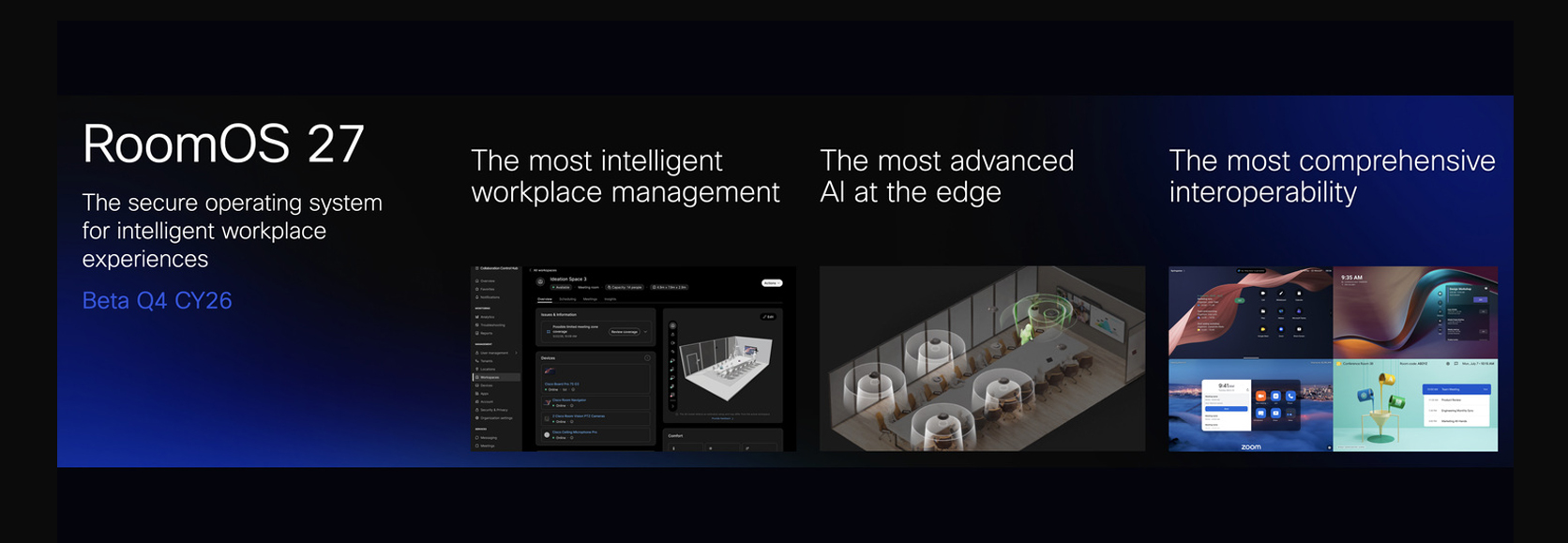
It’s built for the enterprise: secure, manageable and designed to operate at scale. And it’s built around a principle we believe deeply: the room should adapt to the user, not force the user to adapt to the room. That includes adapting to how people choose to meet.
With Webex, Microsoft Teams Rooms, Zoom Rooms, and our newly announced Google Meet, Cisco devices is the only devices vendor with native meeting experiences from every meeting service platform. It also means we can extend Cisco edge AI and intelligent workplace capabilities across every meeting.
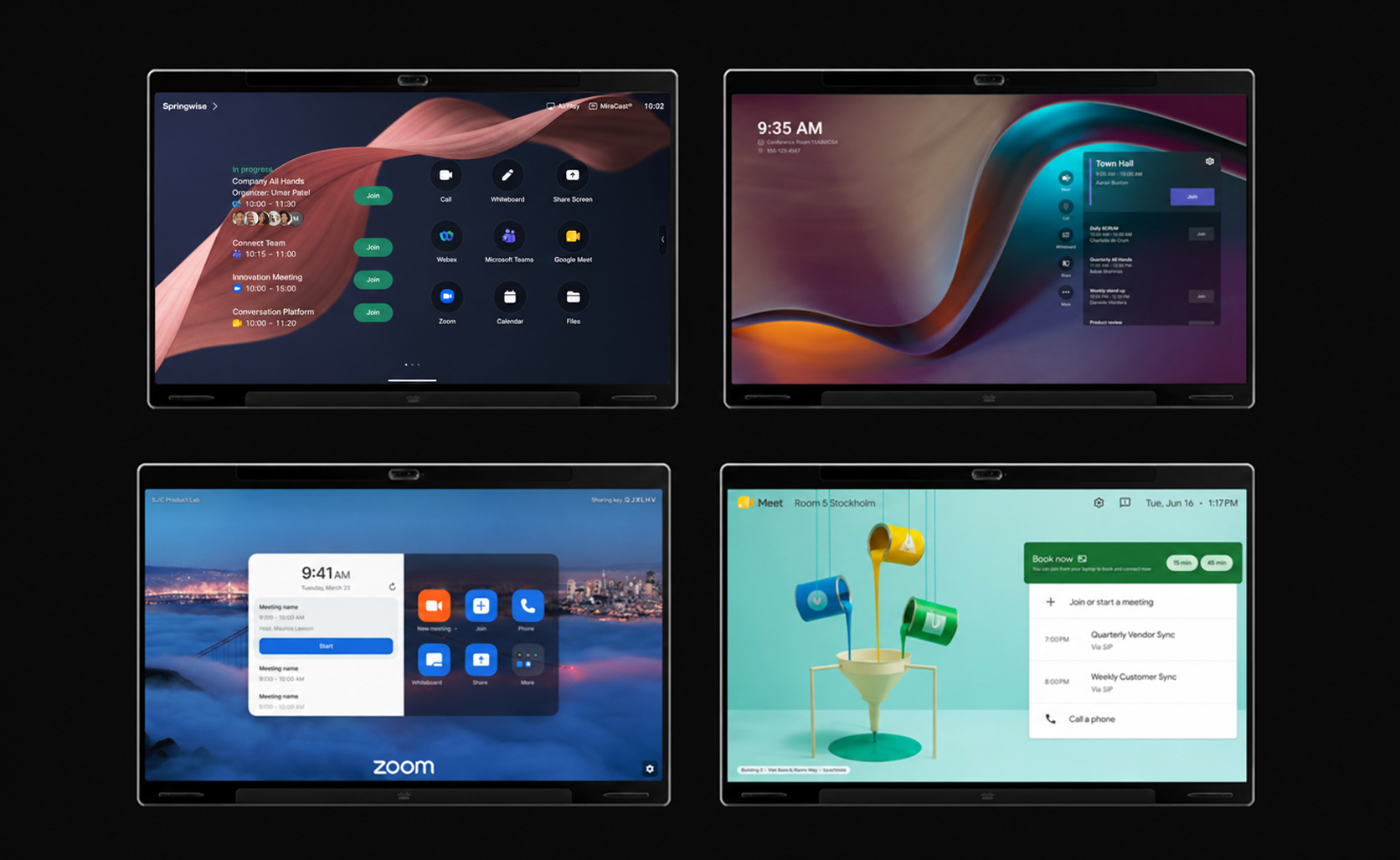
Whatever platform people walk in expecting to use, the intelligence of the workplace goes with them. But an operating system for the workplace has to do more than power the meeting. It has to help you understand what’s happening everywhere else.
From managing rooms to understanding the workplace
The days of managing a handful of video rooms are over. IT teams are now responsible for hundreds, sometimes thousands, of spaces. At that scale, knowing whether a device is online isn’t enough. You need to know how the workplace is actually working.
RoomOS 27 expands our intelligent workplace management capabilities, while Cisco Cloud Control gives IT visibility across the physical estate. Workspace Advisor brings data together in a real-time digital twin, and AI Canvas helps teams understand what’s happening across an entire floor, building, or campus.
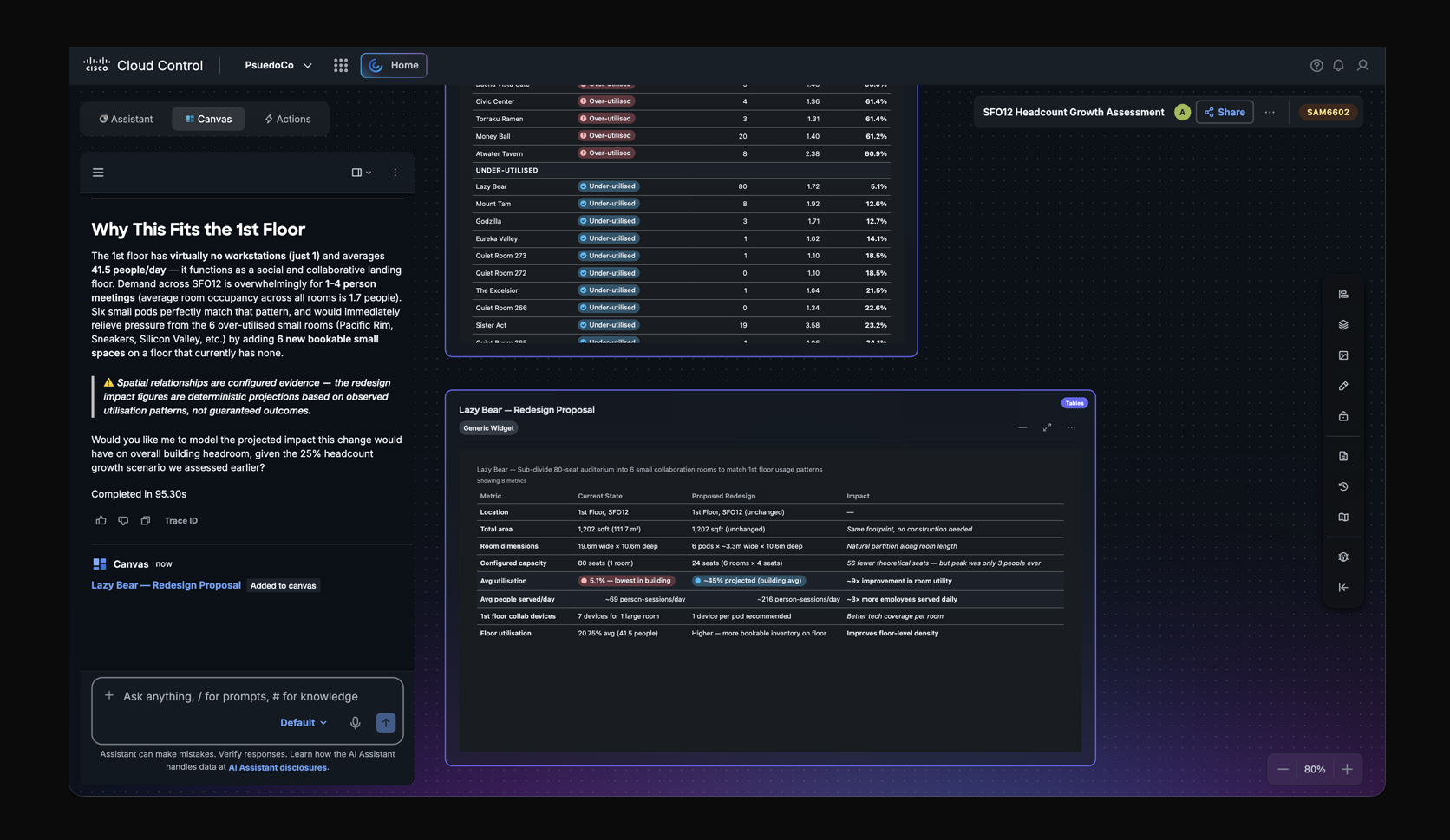
We’re also extending that intelligence into tools people already use, including Microsoft Copilot and Google Gemini.
Instead of digging through dashboards to discover the insights, teams can use natural language to understand space utilization trends, identify over- or under-utilized rooms and get recommendations for what to change. What once could have taken days or weeks to answer can become insight and action in seconds.
That moves workplace operations beyond reactive maintenance toward an environment that can continuously adapt. That’s the difference between installing smart technology and building an intelligent workplace.
When the room understands what you need
AI isn’t a new feature for Cisco devices. We’ve been building AI into our devices for a decade, bringing intelligence to the edge to make meetings smarter, clearer and more natural.
With RoomOS 27, we’re taking that intelligence further.
The Cisco AI Assistant allows people to interact with their environment using natural language instead of rigid or memorized commands. RoomOS 27 understands the context of the space and acts on the user’s intent.
That may sound simple. It should.
The best workplace technology shouldn’t require people to understand the technology. The technology should understand them, and that intelligence extends to optimizing the audio experience.
Rooms aren’t static. People move, different people speak, and noise appears and disappears. The audio should adapt too.
The Director Agent in RoomOS 27 leverages the NVIDIA Deep Learning Accelerator within our devices to remove distracting noise and elevate voices in real time. By processing signals through deep learning at the edge, it can distinguish human speech from environmental clutter without manual tuning.
Audio and video work together as one coordinated experience, adapting as the conversation changes. The room adapts to the people inside it, instead of asking people to adapt to the room.
Devices are the last mile of AI infrastructure, but security is the first milestone. As AI becomes more deeply embedded in the workplace, security at the device level matters more than ever. RoomOS 27 is built for the enterprise, with security built into the platform. This allows organizations to bring more AI into their meeting spaces while maintaining the control and trust they expect from Cisco.
Making every voice part of the room
There are some problems software alone can’t solve. Sometimes a truly intelligent experience requires rethinking the physical architecture of the room itself.
That’s where Cisco Ceiling Speaker Pro comes in.
Customers asked us for a speaker. We took the opportunity to complete an intelligent acoustic system.
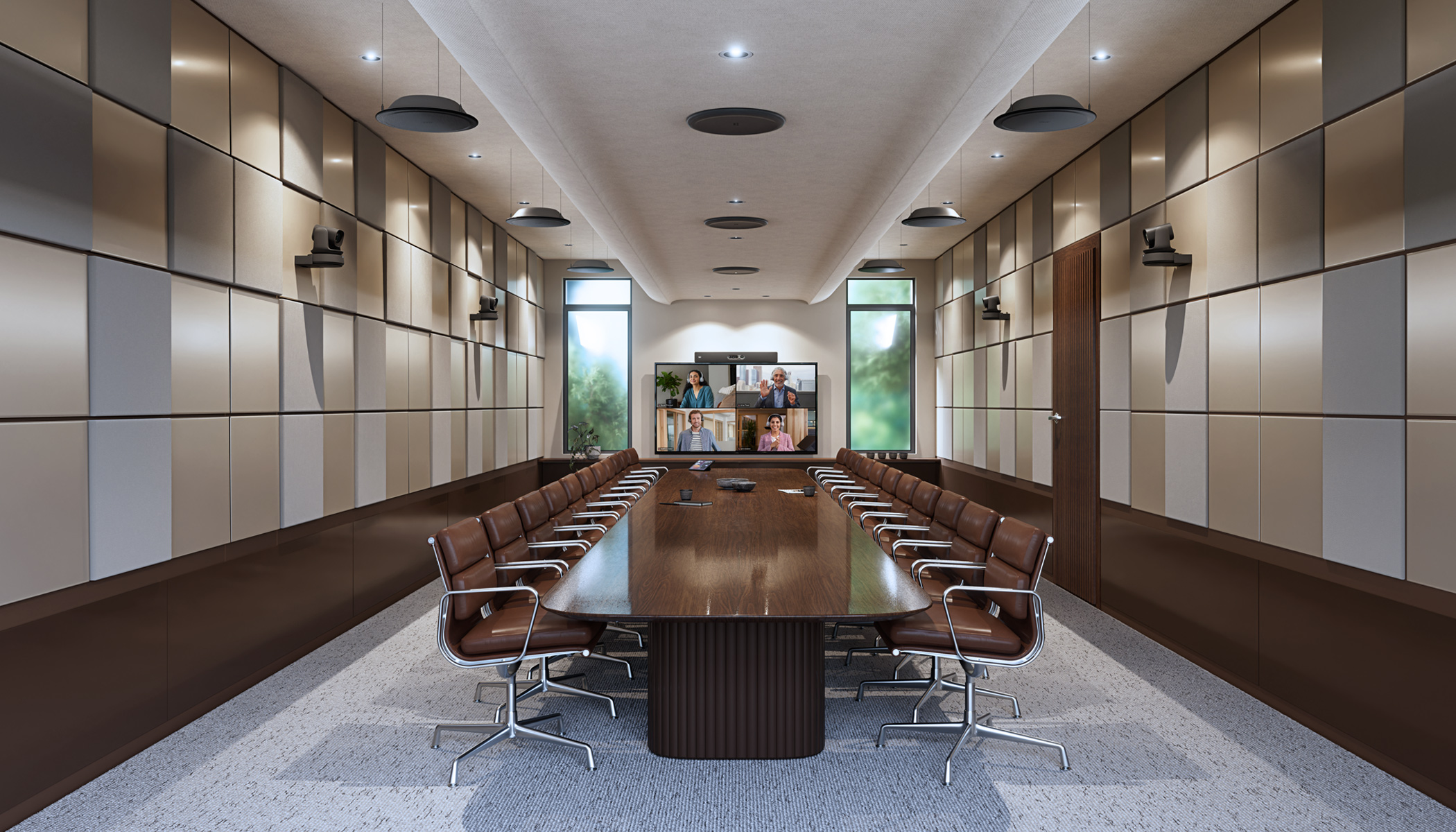
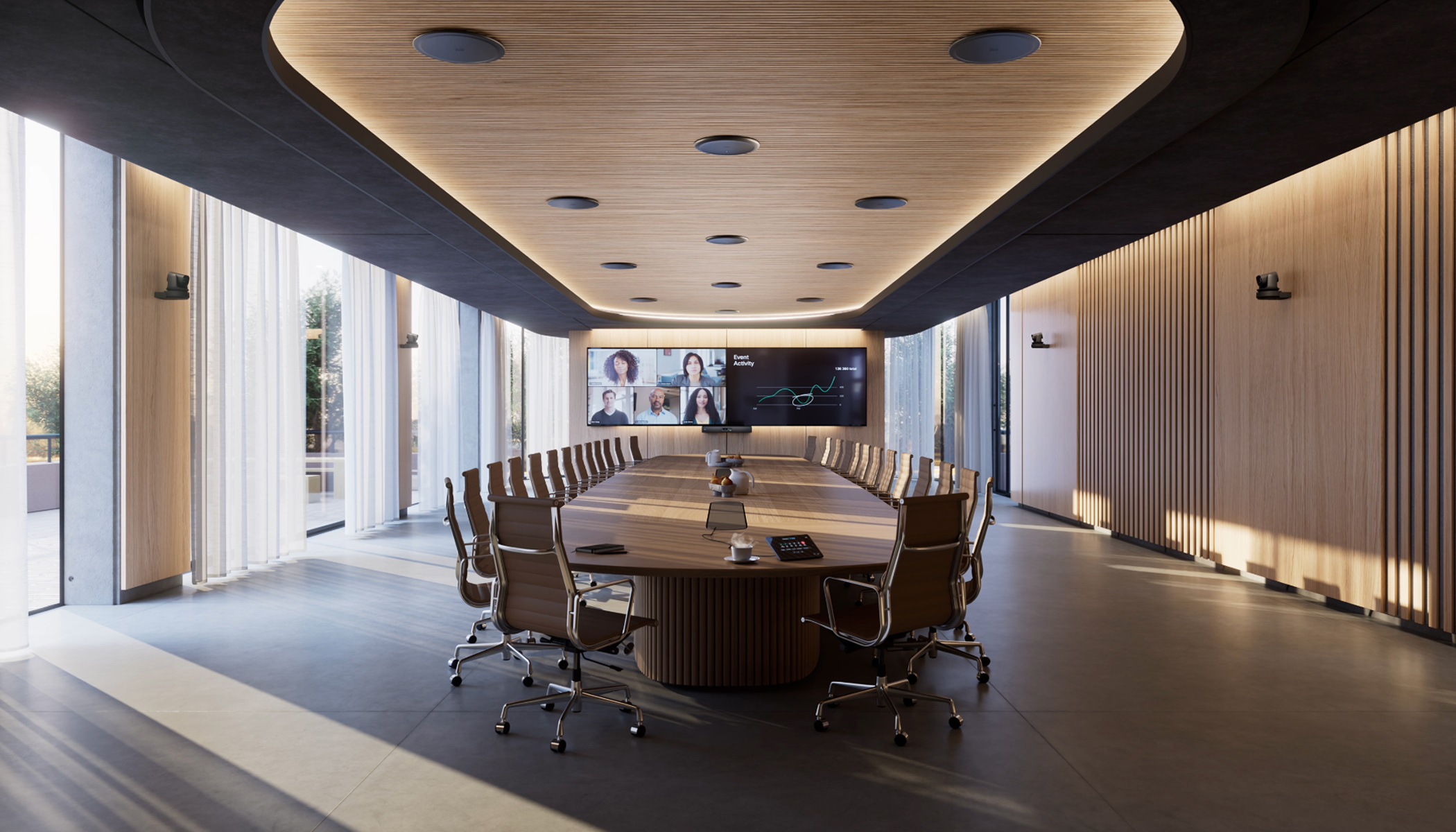
Cisco Ceiling Speaker Pro works in concert with Ceiling Microphone Pro and the rest of our portfolio to create a coordinated audio-over-IP architecture where sensing, processing and output work together.
The most interesting part isn’t what happens above the ceiling tiles. It’s what happens in the room.
Our AI-powered spatial voice lift uses the sensor array to understand exactly where someone is speaking and deliver that voice spatially throughout the room.
Whether you’re at the head of the table or sitting in the back, your voice carries with the same clarity and presence. Distance starts to matter less, the technology recedes, and the conversation comes forward.
We’ve also removed much of the complexity traditionally associated with room audio. A single Ethernet cable carries power, audio and control. The system automatically configures and calibrates itself, and IT can manage it through Cisco Cloud Control alongside the rest of the room fleet.
What used to require weeks of manual tuning can now happen in minutes through AI-assisted calibration. That’s what intelligence at the edge should do: take complexity away from the people deploying the technology and friction away from the people using it.
Cisco Ceiling Speaker Pro isn’t simply another device in the room. It helps create a space where every voice can truly be heard.
The last mile is where AI becomes real
The future of the workplace isn’t about filling buildings with more technology. It’s about creating workplaces intelligent enough that the technology almost disappears, and the experience is what remains.
That future is possible with Cisco collaboration devices.
About The Author