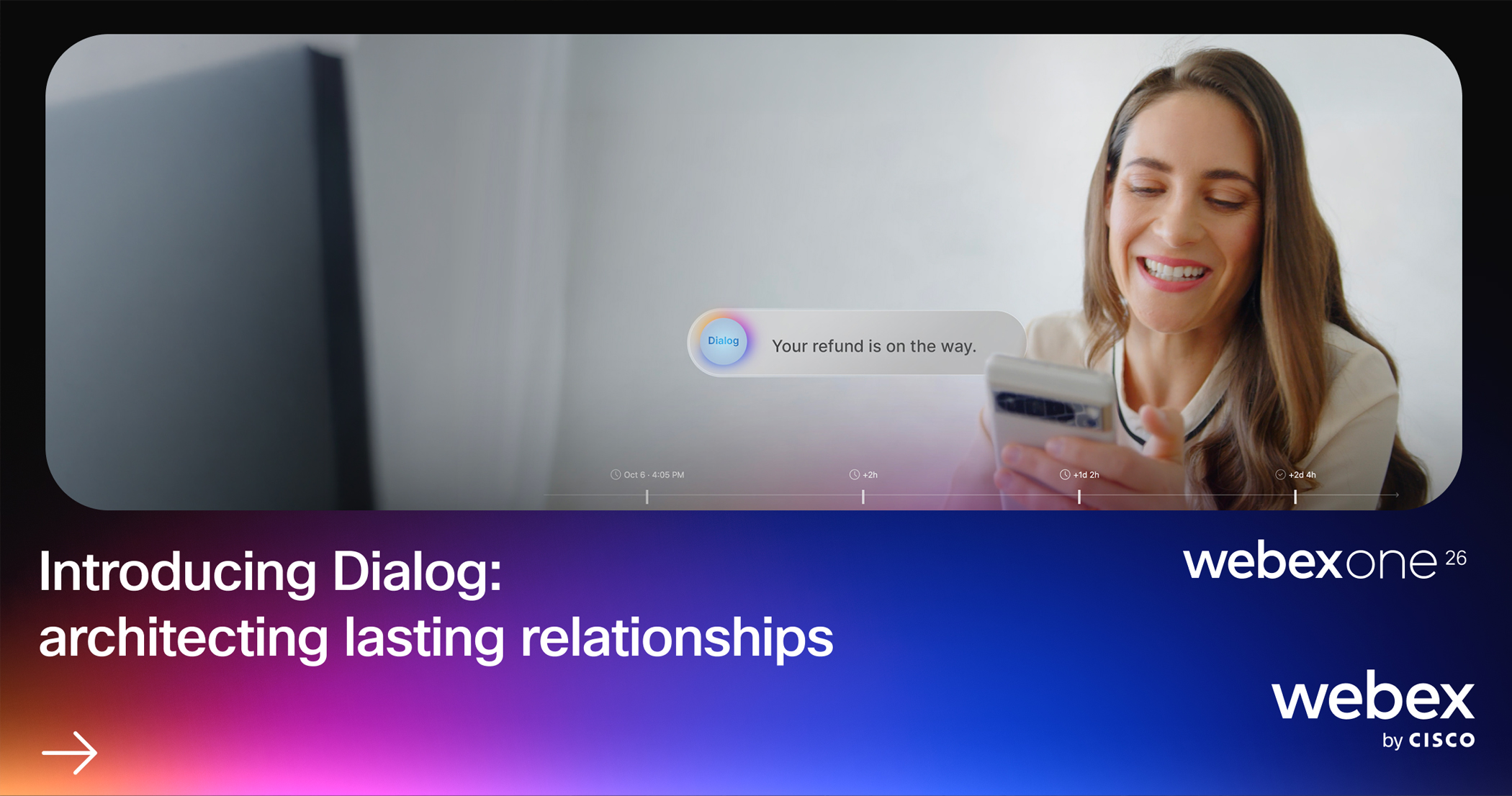
At WebexOne in Austin, Cisco introduced what becomes possible when people, AI agents, devices and systems work together around the outcomes that matter most.
Hello from Austin!
Walking through WebexOne this week, one idea keeps surfacing in conversation after conversation: AI is no longer something we simply consult. It is beginning to understand context, coordinate work, and act alongside us, with our direction, and on our behalf. That shift brings the future of work much closer, and it is changing what organizations can deliver for their employees and customers.
Across Webex, that shift is taking shape in collaboration, customer experience, intelligent workplaces, and devices. The goal is simple: fewer fragmented moments, more coordinated action, and more time for people to focus on judgment, creativity, and empathy. In Webex Customer Experience, this means moving AI beyond isolated interactions to help organizations build continuous customer relationships.
Customers shouldn’t have to connect the dots
Customer journeys rarely end in a single interaction. They move across digital and voice channels, AI agents, people, teams and systems. When those groups lack a shared view, customers repeat information, reconcile conflicting answers, track progress and figure out who owns the next step.
That is the coordination tax, the work customers have to do because the enterprise remains fragmented behind the experience.
Historically, dedicated relationship managers could connect the dots for a small number of customers. AI creates the opportunity to coordinate across fragmented teams and systems at scale. As personal AI agents gain traction and begin carrying a persistent understanding of customers’ needs, preferences and goals, the organizations that can recognize that context and act on it will be the ones that shape the relationship.
Introducing Dialog, the agentic harness to create lasting customer relationships
Dialog, the all-new agentic CX harness powers the Webex AI Agent platform and transforms customer-facing conversational AI agents into high-impact relationship managers at scale.
As the connective layer between enterprise systems and AI agents, Dialog turns fragmented interactions into one cohesive brand experience enabling organizations to manage hyper-personalized, longitudinal customer journeys.
Dialog also serves as a common operating system for AI agents, from AI Concierge and AI Receptionist to third-party conversational experiences. It provides an agentic foundation that continuously learns and adapts. And because it runs on Cisco’s industry-leading networking and security infrastructure, it is designed to orchestrate interactions with enterprise-grade security and governance controls.
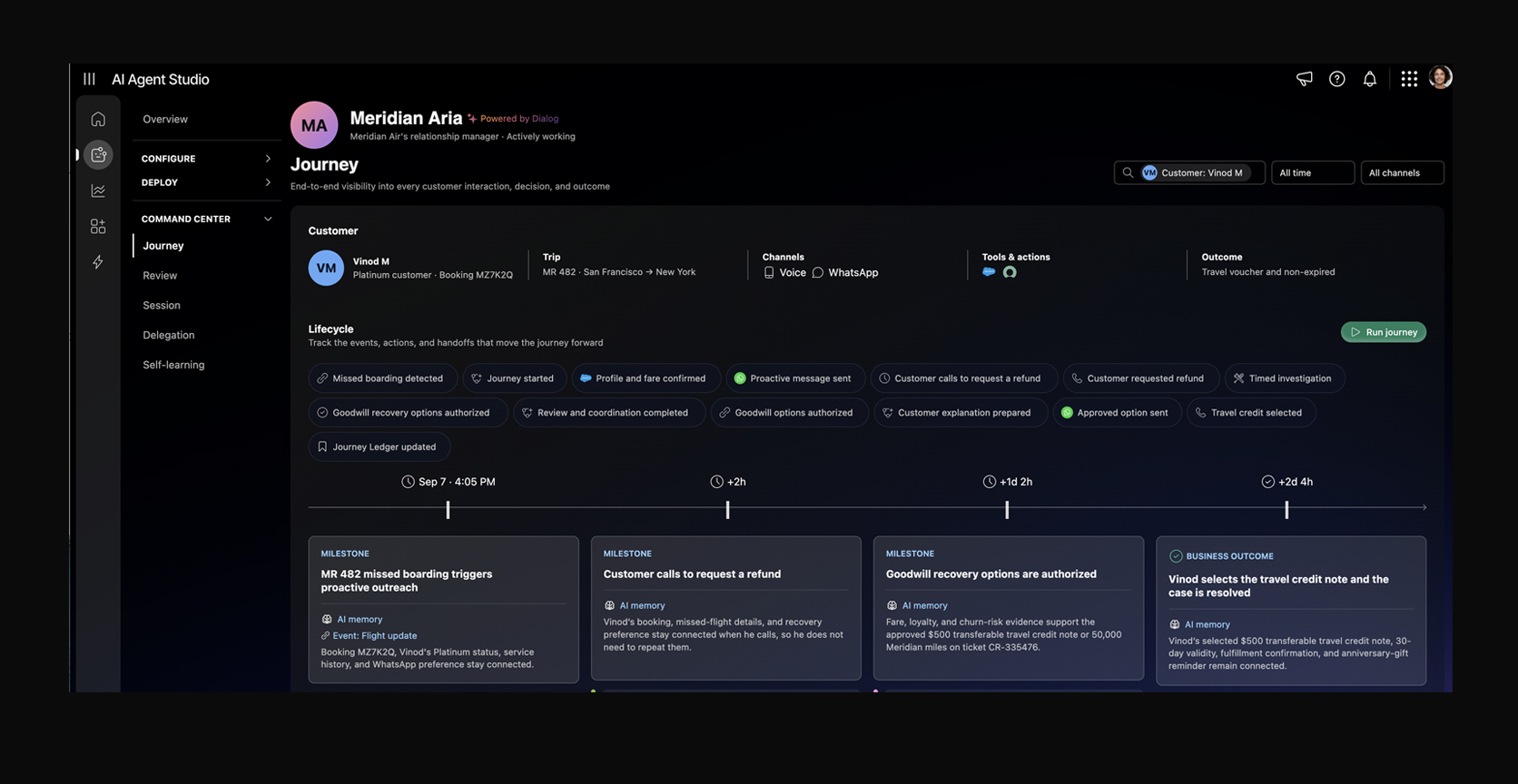
Core new capabilities are:
- Long-horizon agentic execution: Keeps working long after the interaction ends by coordinating with people, agents and systems until the customer’s outcome is reached.
- Relationship context: Carries one persistent understanding of the customer across channels, teams, systems and time.
- Self-learning: Improves with every customer outcome, learns from journeys, human judgement and exceptions while adhering to enterprise policies.
- Rapid onboarding: Onboard an AI agent just as you would a new teammate. Starts with the conversations, policies and procedures the enterprise already has.
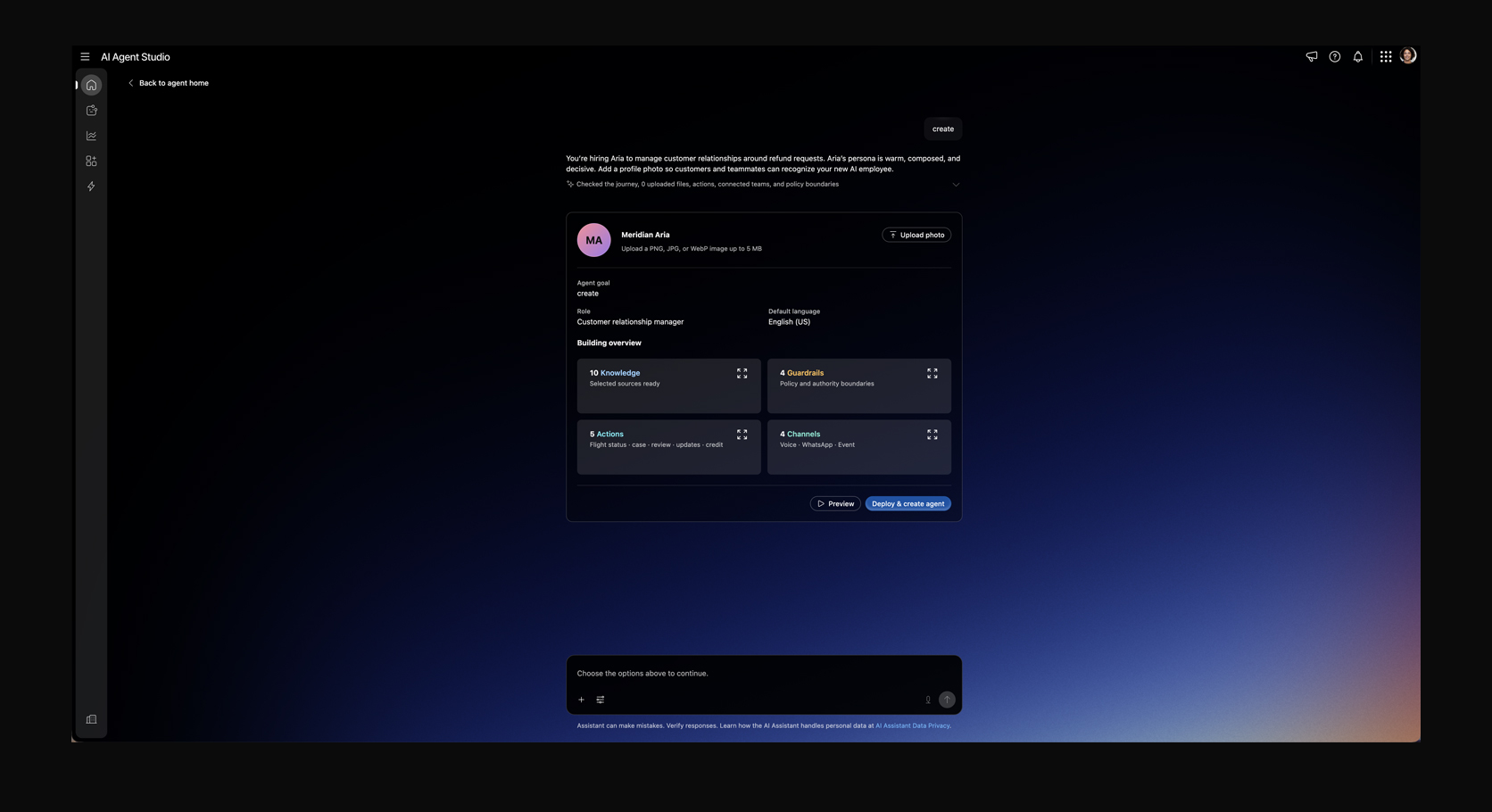
The result is a new approach to customer engagement: AI agents that do more than respond. They learn, remember, act, follow through, and advocate for the best customer outcome. This is how organizations move from siloed interactions to continuous relationships that build lasting loyalty. With Dialog, every customer can feel like your only customer. We anticipate beta availability in Q1 CY27.
AI Agent 360 with Splunk and security enhancements
As organizations bring customer-facing AI agents into their operations, governing them becomes just as important as building them, because AI without accountability is a liability.
Enterprise AI adoption depends on more than whether an agent can resolve customer needs. Leaders across the organization need visibility into how an AI agent behaves, whether it operates within policy, how its performance changes over time, and whether it delivers measurable value.
Earlier this year, we announced AI Agent 360. Now we are expanding it with Agent Observability with Splunk. This new capability extends Cisco’s foundational principles of visibility, protection and operational control to AI agents. It connects agent performance with enterprise operational data, giving teams a shared view of agent health, customer experience trends, escalation patterns, and business impact. Planned generally availability December 2026.
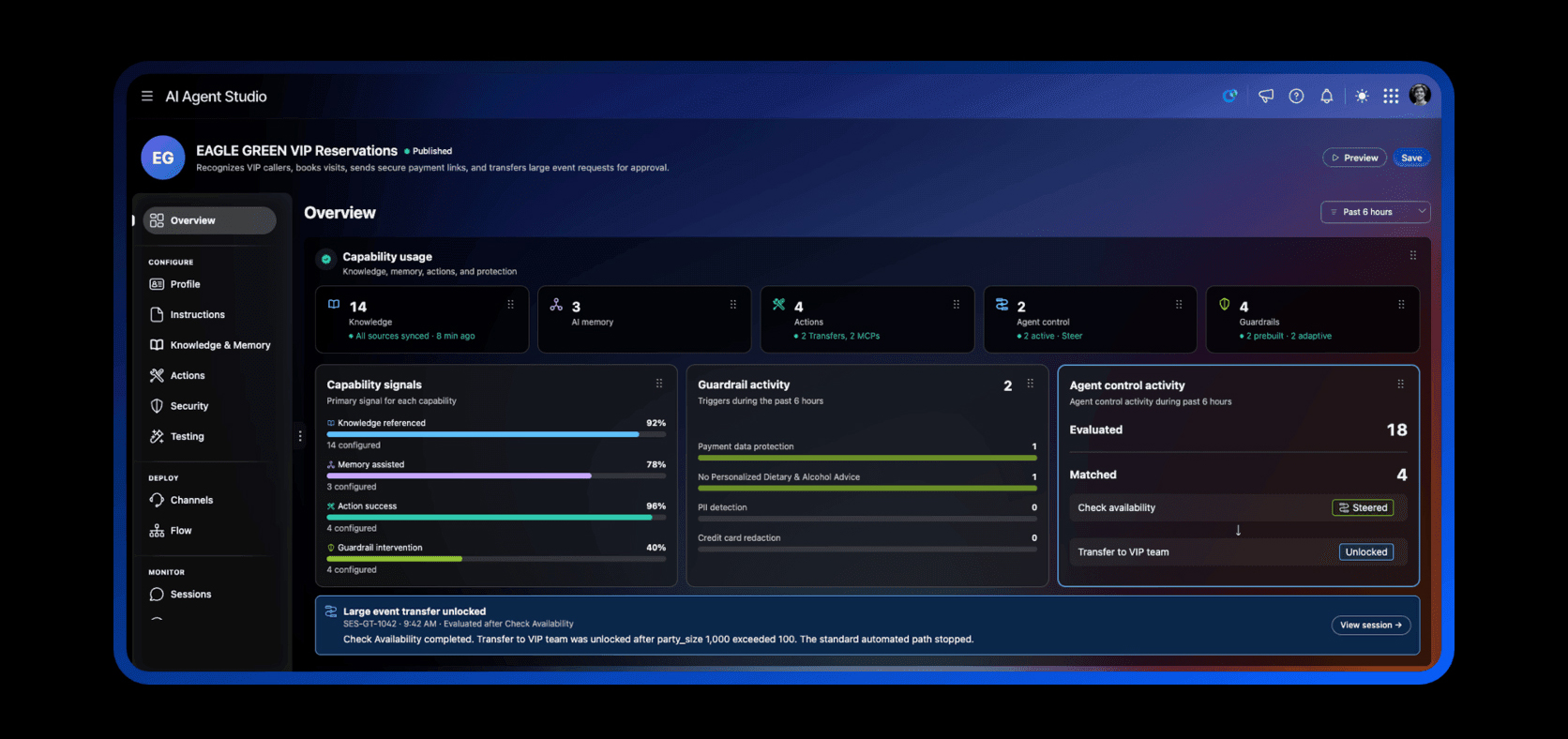
Together, these capabilities help enterprises move beyond asking whether they can a deploy AI agents to operating, governing, and improving them in production with confidence. Cisco Cloud Control provides the management foundation for these experiences, helping IT teams oversee agents, systems, security, observability and governance.
An expanding ecosystem, built around customer needs
AI in CX will not be built around a single model, agent, or system. Organizations need the freedom to bring the AI investments they trust, the knowledge their employees rely on, and the systems where work gets done into the same customer journey. That is why Webex is continuing to expand its ecosystem, helping these agents and systems genuinely interoperate.
Expanding agentic interoperability with Agent-to-Agent and MCP protocols
No single agent can know or do everything. Agent-to-Agent support enables AI agents to coordinate with specialized agents (General availability planned for December 2026) while MCP servers connect them to the enterprise systems where information lives and work gets done. Together, they help agents retrieve the right information, take action across workflows and carry relevant context forward when a human needs to step in.
The Webex Contact Center MCP Server gives organizations a direct way to connect AI tools and external AI agents to the Webex Contact Center. With this, administrators can also use natural language via agentic applications to manage supported configuration, build and update flows, monitor live operations, and explore historical insights. Currently in Beta, general availability planned for October 2026.
Enabling Webex AI Agent with richer knowledge, enhanced EHR integrations and stronger voice capabilities
An AI agent can only be as effective as the information it can access and the actions it can take. The new Microsoft SharePoint integration for Webex AI Agent provides access to the internal knowledge employees already rely on. Agents can work from evolving policies, procedures and updates, making organizational knowledge easier to use while reducing the risk of relying on outdated information. General availability planned for November 2026.
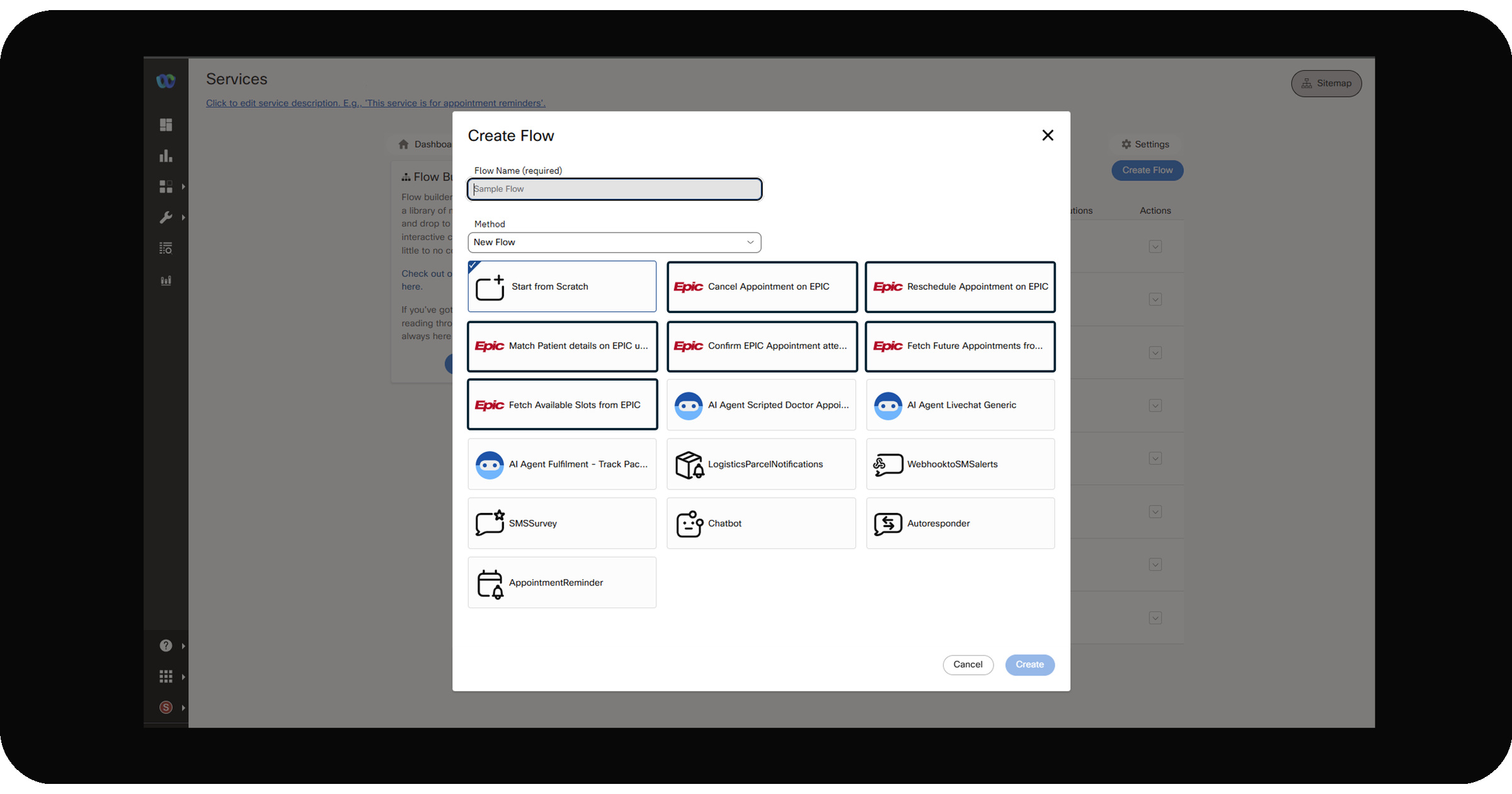
For healthcare organizations, our generally available AI Agent pre-built templates for Patient Authentication and Appointment Confirmation, Cancel & Reschedule, deliver enhanced integrations with EHR systems such as Epic, bringing AI closer to the workflows where domain context, industry knowledge and precision matter most. These capabilities give organizations a more practical starting point for deploying AI in moments where simplicity, accuracy and trust are essential.
Webex is deepening its collaboration with NVIDIA to advance Cisco-native speech recognition using NVIDIA Nemotron speech models, including Parakeet for multilingual automatic speech recognition (ASR), strengthening its core voice services across multiple languages. We are also expanding agentic voice experiences with Amazon Nova 2.5 Sonic, a speech-to-speech model for natural, real-time voice agents. Early access planned for December 2026.
Expanding Webex Contact Center’s Bring-Your-Own Virtual Agent (BYOVA) ecosystem
Webex is continuing to expand our BYOVA ecosystem through new connections with NVIDIA and Google Cloud.
Organizations will be able to connect voice agents built using NVIDIA Nemotron to Webex Contact Center, expanding their options for integrating third-party virtual agents into customer service workflows. General availability of this integration is planned for November 2026.
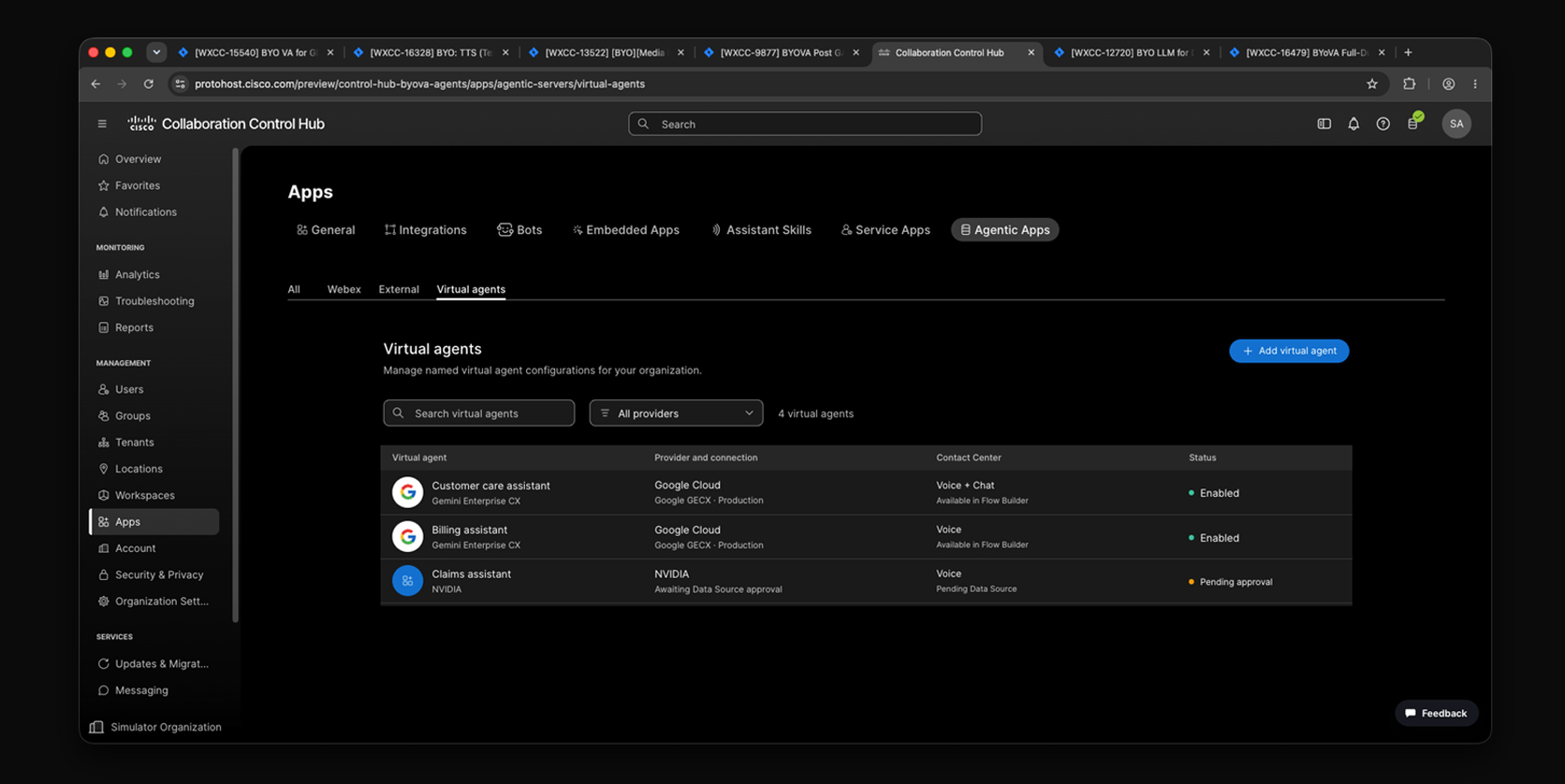
In addition, with the new native integration with Google Cloud Gemini Enterprise for Customer Experience (GECX), organizations can bring the advanced reasoning and multimodal capabilities of Google’s Gemini models into voice and digital interactions with their Gemini Enterprise for CX AI agent. Bi-directional conversation flows and automated session signaling support autonomous self-service. When a human needs to step in, a context-rich handoff helps ensure customers do not have to repeat themselves. General availability is planned for Q4 CY26.
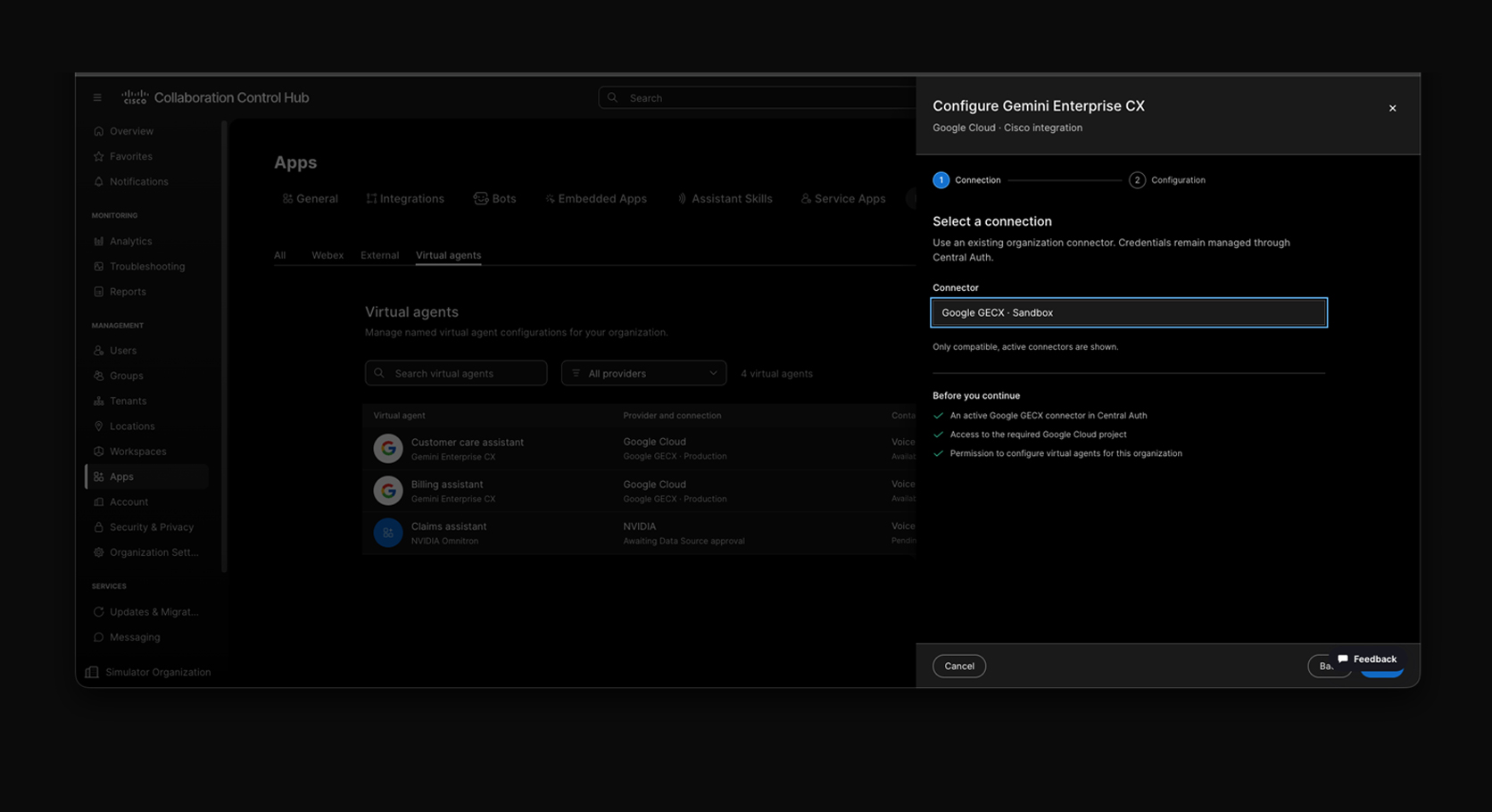
These partnerships put Cisco’s belief in open ecosystems into practice. Customers should be able to choose and connect the systems, data, agents, and models that are right for their business without creating yet another disconnected experience.
Modernizing the on-premises contact center with AI innovations
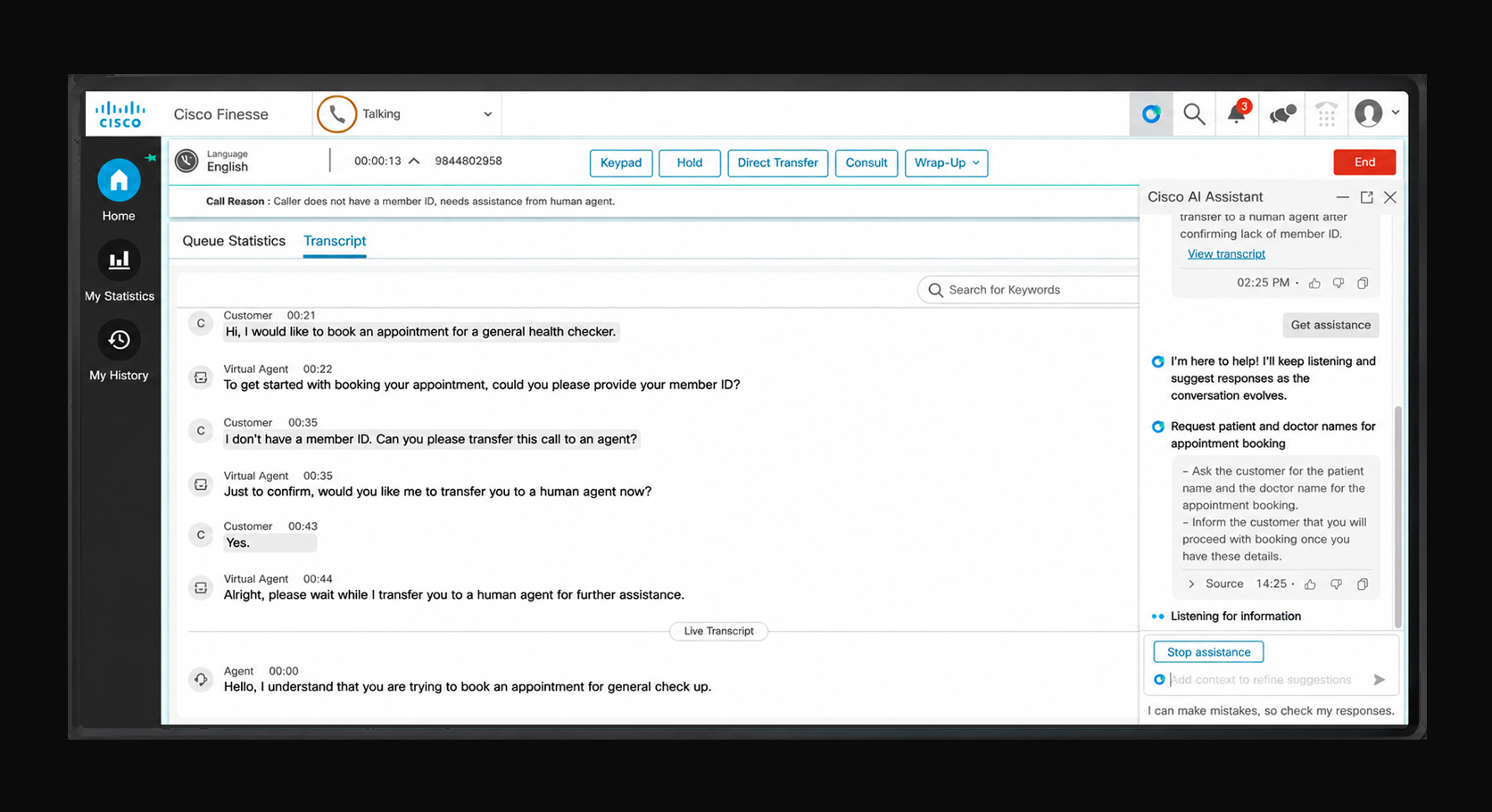
Organizations adopt AI at different speeds and in different environments, and they should be able to advance without abandoning the platforms, controls or investments that matter to them. For on-premises contact center customers, Webex AI Agent is now generally available for Contact Center Enterprise (CCE), bringing intelligent, conversational AI to those environments, with plans to expand Webex AI Agent for Voice to Cisco Contact Center Express (CCX) in October 2026. With the latest Release 15 updates, on-premises customers have also gained access to Cisco AI Assistant capabilities such as transfer summaries, real-time transcription and wrap-up summaries.
Cisco has also introduced Universal Harness On-Premises, a single integration layer that unifies APIs, SDKs and authentication to simplify AI orchestration while enabling enterprises to host and integrate third-party AI models locally—an important capability for organizations with data sovereignty and compliance requirements. Anticipated GA Q1 CY27.
Together, these innovations extend the momentum of AI to on-premises environments, giving organizations a path to modernize through hybrid cloud while maintaining control over where their data, models and workflows operate.
Experience AI in action at WebexOne

If you are joining us in Austin, we invite you to experience this vision through our trainings, sessions, keynotes, demos, and immersive experiences across our expo floor. Check out the full session catalog here.
Throughout WebexOne, you’ll see Webex AI Agent brought to life across interactions, environments, and workplace experiences across the show floor. Chat with the WebexOne AI Concierge (located within the WebexOne App), grab a coffee or dirty soda at our famous Webex Café and Fizz Bar, and experience real-life AI Agent industry use cases within the Quiet Cube.
These experiences show how AI can support the flow of work as a part of a more intelligent, connected, and human customer experience, rather than as a collection of disconnected features. We hope they challenge you to imagine what this future could look like in your own business.
For the full list of Webex innovations, check out our What’s New Page.
The next chapter of CX will not be defined by one more chatbot or one more automation. It will be defined by how well organizations create continuous, intelligent, and human relationships at scale.
Many of the products and features mentioned are still in development and will be made available as they are finalized, subject to ongoing evolution in development and innovation. The timeline for their release is subject to change.
Resources
The Next Chapter of Connected Intelligence
About The Author