Voice is critical to business, making protection from fraud, spoofing, spam, and other threats essential. Cisco is dedicated to making every call more trusted and secure. As part of this commitment, we’re excited to announce a new integration between Webex Calling and the SecureLogix Nova Cloud Platform API, bringing enterprise-grade voice security and inbound call authentication directly to Webex Calling through Collaboration Control Hub, with no on-premises hardware required.
The phone remains an unauthenticated front door
Voice calls remain a significant attack vector for the enterprise. TDoS attacks, robocalls, spoofing, fraud, account takeover, toll fraud, and social engineering can disrupt operations, expose sensitive information, and put users at risk.
Many enterprises have spent years building sophisticated protections against these threats into their on-premises infrastructure. As calling moves to the cloud, the challenge is clear: How do you modernize without compromising the voice security posture you’ve already built?
Extending enterprise voice security to Webex Calling
SecureLogix brings enterprise voice security and call authentication to Webex Calling through two core capabilities: Call Defense and Orchestra One Inbound Call Authentication. Together, they help organizations stop malicious call traffic and establish greater confidence in the identity of inbound callers before calls reach users.
Delivered through the SecureLogix Nova Cloud Platform API and activated through Collaboration Control Hub, these protections require no on-premises SecureLogix hardware and have no SBC dependency. Security policies remain independent of the underlying calling infrastructure, allowing organizations to modernize their environment without rebuilding their voice security layer.
Call Defense: Stop malicious calls before they reach your users

Call Defense provides voice firewall and intrusion-prevention capabilities for inbound calls, inspecting traffic before it reaches users and applying enterprise security policies in real time. Based on those policies, calls can be allowed, blocked, redirected, or flagged.
This helps protect Webex Calling environments against TDoS floods, robocalls and voice spam, fraud, account takeover attempts, call pumping, toll fraud, and social-engineering attacks, reducing disruption while enforcing consistent voice security across the organization.
Orchestra One: Add identity assurance to inbound calls
Beyond blocking malicious traffic, enterprises need greater confidence in who is calling. Orchestra One Inbound Call Authentication establishes identity assurance before users answer, using tiered identity sources to generate a call trust authentication score for inbound calls.
Standard authentication resolves the majority of traffic using lower-cost metadata, while Advanced authentication escalates to carrier API validation when greater assurance is needed. This tiered approach makes authenticating inbound traffic economically viable at enterprise scale. Each call receives a risk score from −5 to +5, with +5 representing carrier-API-validated identity, +4 indicating a valid STIR/SHAKEN Attestation A, and −5 indicating a spoofed or invalid number.
Organizations can use these scores to determine how calls are handled, applying different policies based on the level of trust associated with each inbound call and adding another layer of protection for users and business communications.
Continuing to innovate for trusted calling
This integration is the beginning of a broader roadmap for trusted enterprise calling. The initial release focuses on protecting inbound calls, with additional innovation planned for early calendar 2027 to extend protection to the calls Webex Calling customers make.
Planned capabilities include Number Reputation Management to help protect legitimate business calls from fraud and spam labels, Outbound Call Spoof Protection to prevent bad actors from impersonating enterprise numbers, and Authenticated Branded Calling to display a verified company name, logo, and reason for calling.
Together, these capabilities will help establish trust on both sides of the conversation, giving businesses greater confidence in the calls they receive and giving customers greater confidence in the calls businesses make.
Bringing trusted voice security to the cloud
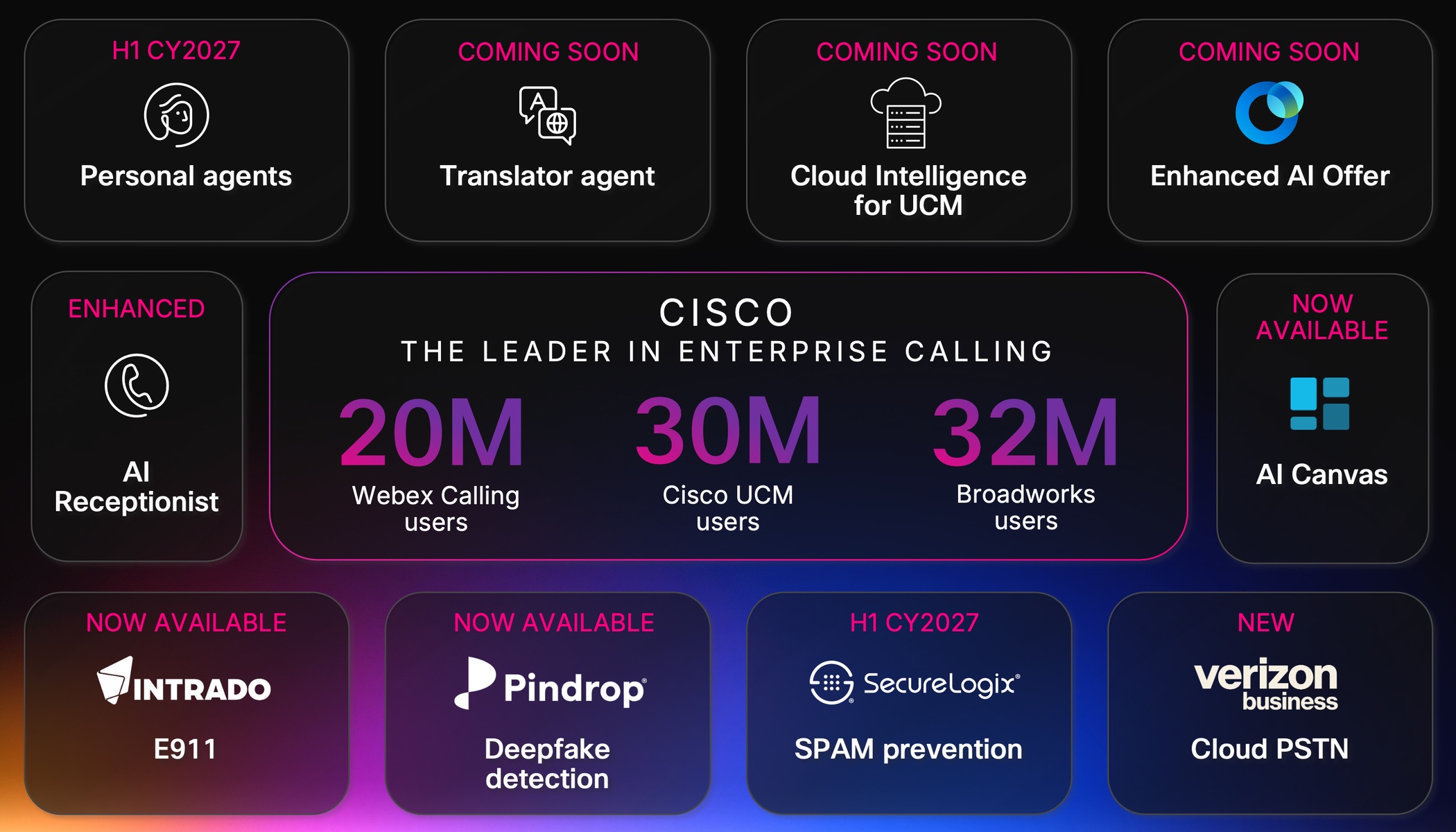
For organizations moving from Cisco Unified Communications Manager to Webex Calling, modernization shouldn’t mean starting over on security. Cisco and SecureLogix have worked together to protect enterprise voice environments since 2012, and this integration extends that longstanding partnership and security expertise to the cloud.
By delivering SecureLogix capabilities as a cloud service, voice security is no longer tied to an on-premises appliance or SBC. Organizations can modernize their calling infrastructure while maintaining the security policies and protections they rely on, helping make the transition to Webex Calling simpler and more secure.
Modernize calling without leaving security behind
With SecureLogix and Webex Calling, organizations can bring advanced threat protection and call authentication with them as they move calling to the cloud, helping protect users and strengthen trust in every call.
The SecureLogix integration with Webex Calling will be generally available beginning October 15, 2026, with ongoing innovation to follow. Visit SecureLogix at WebexOne 2026 to see the integration in action, experience the latest voice security and call authentication capabilities, and connect directly with SecureLogix experts.
Learn more:
About The Author