Important customers, partners, and colleagues expect a great experience whenever they call. But you can’t always answer. When you’re in a meeting or already on another call, important conversations can be missed, callers are left waiting, and you may not know which calls need your attention most.
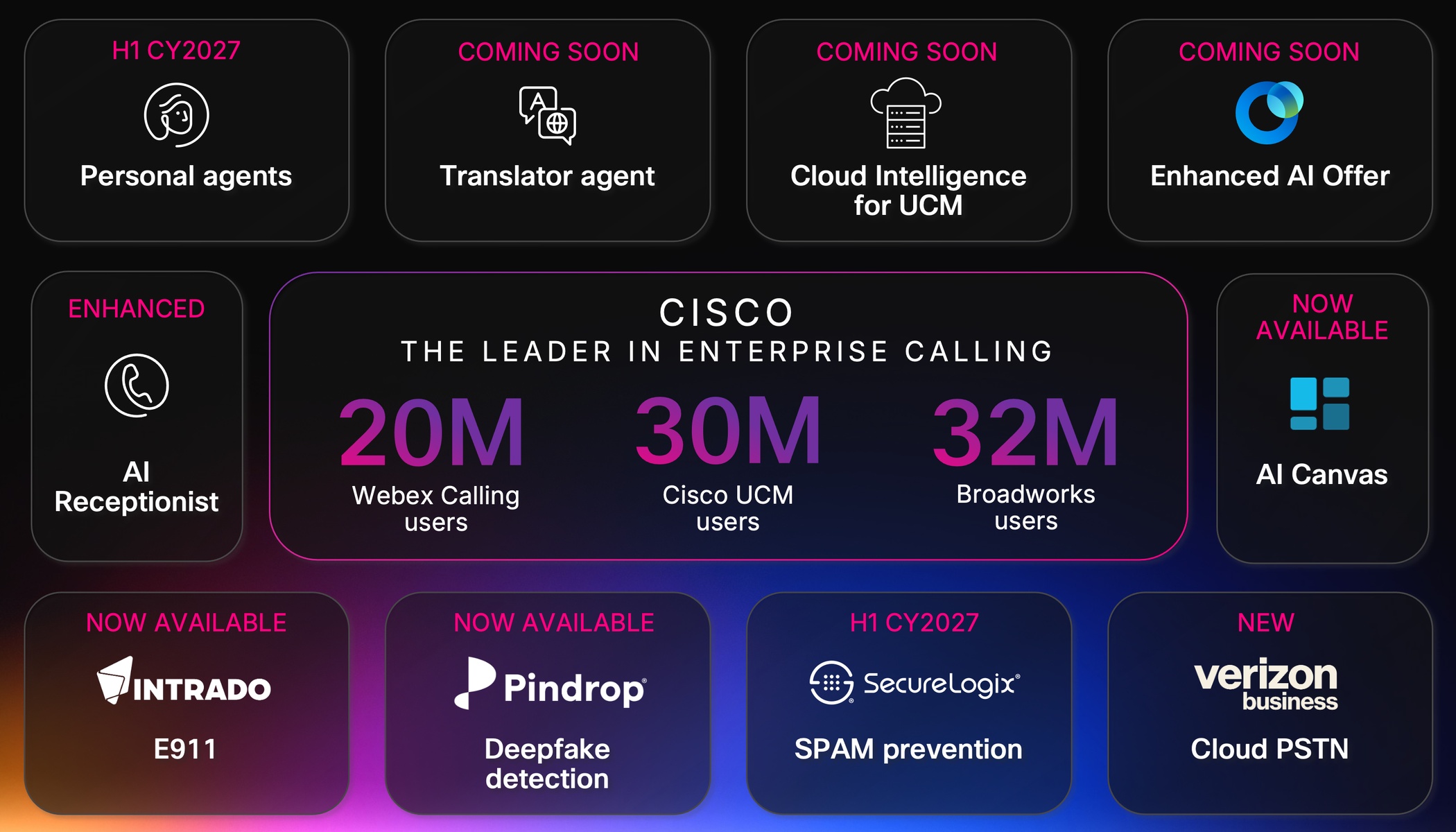
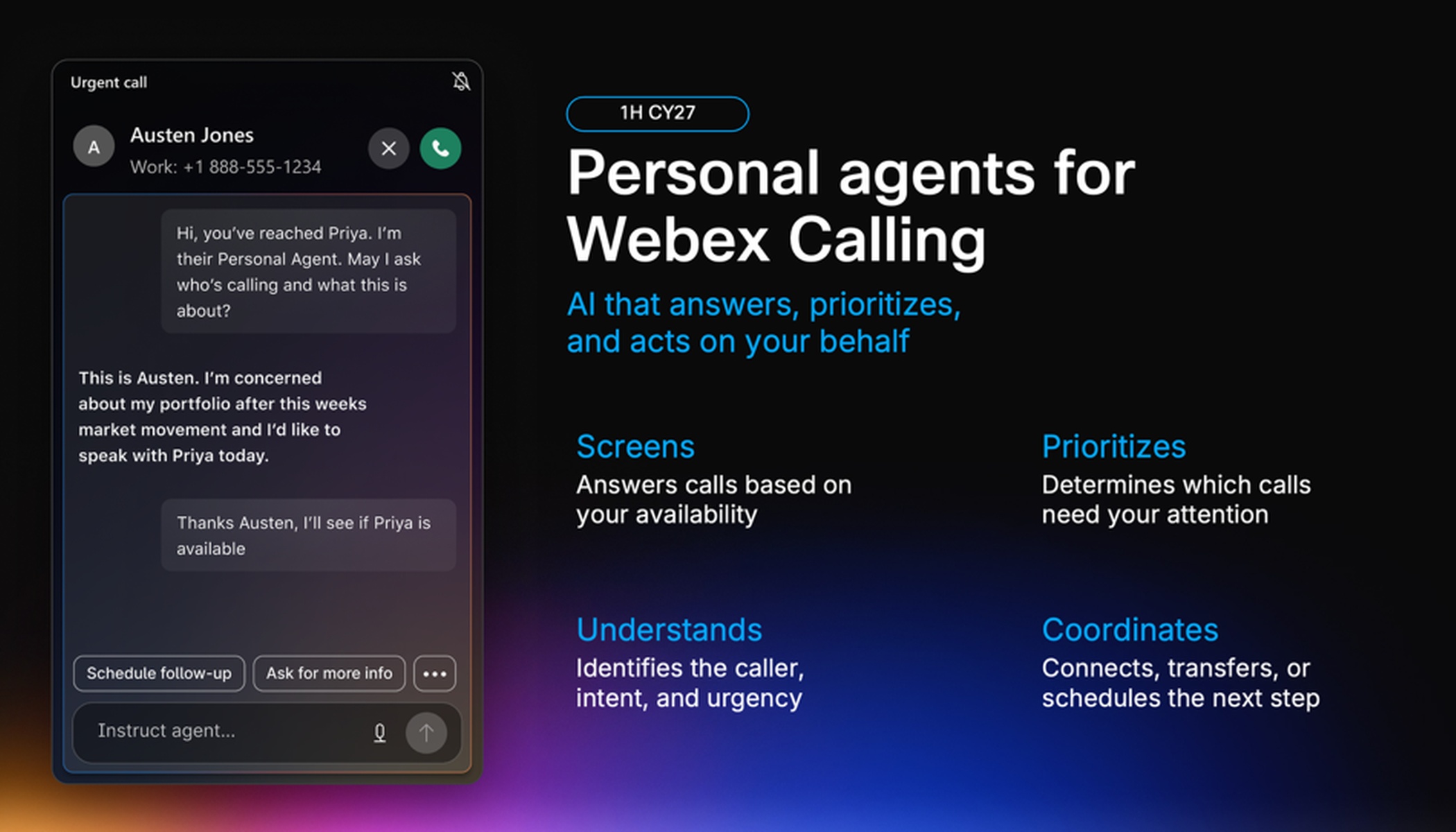
At WebexOne 2026, we unveiled personal agents for Webex Calling, designed to bring intelligent, personalized call handling to individual employees. Personal agents can answer and screen calls on your behalf, understand who is calling and why, recognize urgent requests, and take action. Callers get the response they need, while you get the context and control to decide what happens next.
From contact center intelligence to personal assistance
Webex AI agents are already transforming the contact center, helping businesses manage customer conversations, answer questions, and automate routine workflows. Now, we’re bringing that intelligence to every employee.
At Cisco Live 2026, we introduced the first step in that evolution: AI Agents for Collaboration, bringing the agent orchestration technology behind Webex Contact Center into the collaboration experiences employees use every day. Organizations can create agents that understand context, connect with business systems, follow company-specific rules, and take action across voice, video, and digital interactions, extending AI from answering questions to getting work done.
At WebexOne 2026, we’re extending this innovation to individual employees with personal agents. Instead of building an agent for a specific business process or team, employees can have an agent tailored to how they work, who matters to them, and how they want their calls handled.
Make your personal agent work the way you do
For personal agents to become part of everyday work, they must be easy to configure and adaptable to each person. A guided setup experience in the Webex App makes it easy to personalize your agent, with no coding, technical expertise, or separate development environment required.
1. Choose when your agent steps in
Screen every call or have your personal agent step in only when you’re unavailable, such as during meetings, calls, Do Not Disturb, away status, or quiet hours.
2. Tell your agent what matters
Your personal agent automatically detects signals of urgency during conversations. You can further personalize what gets your attention by identifying important people, topics, or keywords, helping the agent recognize the calls that matter most to you.
3. Decide what your agent can do
Choose the actions your personal agent can take on your behalf, from notifying you about an urgent call and scheduling a follow-up to capturing information in your CRM or answering questions using knowledge you provide.
4. Make the experience your own
Customize the greeting, voice, and conversational style so callers receive an experience that reflects how you want to engage with them.
5. Let your agent go to work
Once configured, your personal agent works in the background, answering calls when needed, understanding what callers want, and helping ensure important people and urgent requests get the appropriate response.
From incoming call to informed action
Let’s check out how it works. In the video above, you can see how a personal agent handles an urgent call when you’re not available.
Priya is in a meeting when Austen calls. Because she’s busy, her personal agent automatically answers and begins a conversation with Austen to understand why he’s calling and what he needs.
As the conversation unfolds, the agent recognizes that Austen’s issue is urgent. Priya receives an alert with the context she needs to make a decision. She can see who is calling, why Austen needs her, and why the issue requires attention.
From there, Priya stays in control. She can ask her personal agent to gather more details, take a message, schedule a follow-up, or let Austen know she’ll call him back. She can also give the agent specific instructions to relay directly to Austen while she remains in her meeting.
In this case, Austen’s issue requires immediate attention. Priya already knows why he’s calling and what’s at stake, so she can put her meeting on hold and take the call.
The difference is simple: an important call doesn’t become just another missed call. Priya’s personal agent understands what’s happening and gives her the context and options to make sure it gets the right response.
Bringing personal AI assistance to everyday work
The next evolution of AI agents isn’t just about making them more capable. It’s about making those capabilities accessible and useful to everyone.
Personal agents for Webex Calling bring agentic AI into an experience employees already use every day. They can answer when you can’t, understand what callers need, recognize urgency, identify the people and topics that matter to you, and take action on your behalf.
That changes what it means to be unavailable. An important customer can still get an immediate response. An urgent issue can still reach you when it needs to. And the people who matter most don’t have to rely on leaving a message and hoping it gets noticed in time.
It’s a step toward a future where intelligent assistance helps ensure important calls are always recognized, understood, and acted on, regardless of whether you’re available the moment the phone rings. Personal agents for Webex Calling are planned to be available in the first half of calendar year 2027.
Learn more:
About The Author