At Cisco Live 2026, we shared a major step forward in how AI is transforming everyday work. With AI Agents for Collaboration, Cisco is bringing the powerful orchestration technology behind Webex Contact Center into the collaboration experiences businesses, teams, and users rely on every day.
These custom, intelligent agents can understand context, take action, and execute workflows in real time across voice, video, and digital interactions. Built and configured in AI Agent Studio through a simple, no-code experience, they enable businesses, teams, and individual users to create multimodal agents tailored to the way they work.
Extending Custom AI Agents Beyond the Contact Center

Contact centers have long used sophisticated orchestration to manage interactions and automate customer workflows. This same need also extends across the broader business, from retail stores checking inventory and clinics accessing medical information to financial services teams verifying account permissions and managing service requests.
These workflows require more than answering questions or routing calls. Employees may need to authenticate users, look up records, or complete multi-step processes tied to backend systems and business logic. Organizations need a way to automate these complex workflows while keeping employees focused on higher-value work that requires judgment, empathy, and expertise.
AI Agents for Collaboration: Built for How Work Gets Done
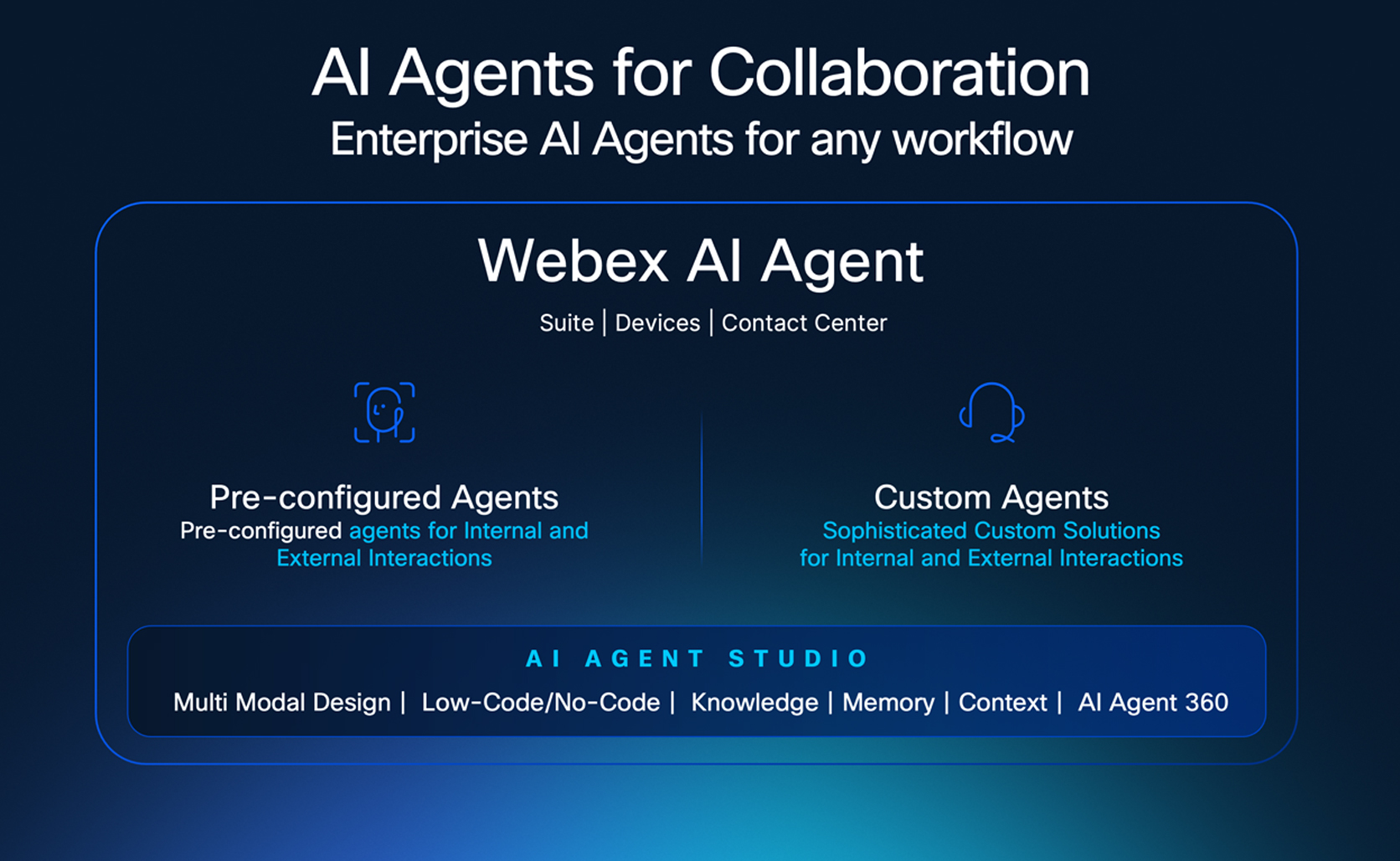
AI Agents for Collaboration solve this challenge by giving organizations a practical way to build, customize, and deploy intelligent agents for workflows across the business. Teams can create agents for specific use cases, connect them to the right systems, test and refine the experience, and deploy them across voice, video, and digital interactions. The result is automation that reflects each organization’s workflows, policies, brand, and customer experience goals, while helping employees focus on higher-value work.
AI Agents for Collaboration are built and configured in AI Agent Studio through a simple, conversational experience. They use the same powerful orchestration technology behind Webex Contact Center, reimagined for collaboration users. Organizations can start from templates or build from the ground up, defining the agent’s goals, tone, instructions, knowledge sources, business rules, integrations, escalation paths, and approved actions.
Above, we built a multi-channel AI Agent for Collaboration for an electronics store. The agent greets callers, uses connected knowledge bases to answer customer questions, and integrates with third-party systems to look up inventory, create support cases, check purchase history, review repair tickets, and confirm payment status. In just minutes, the agent is ready to take calls.
Next, let’s check out our agent in action. When a customer calls to check availability for a product, the agent understands the request, confirms inventory in real time, and helps arrange pickup. It can also use customer context, such as purchase history, to recommend a complementary product, turning a routine call into a more helpful and personalized experience.
Connected Intelligence: Pre-Built and Custom Agents Working Side by Side
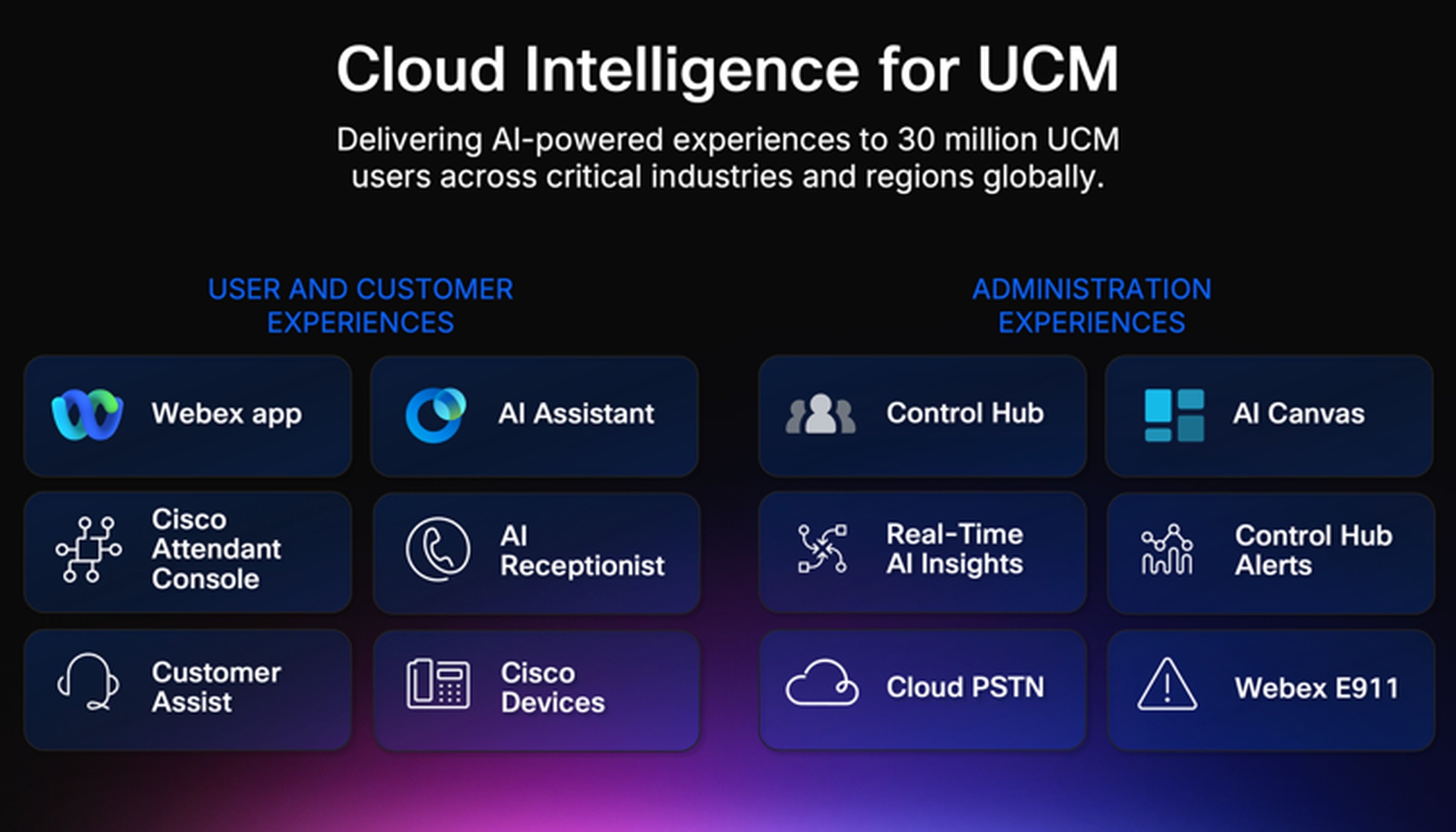
Webex Calling already offers pre-built agents like AI Receptionist that address common business needs, like answering calls and responding to routine customer inquiries. AI Agents for Collaboration build on that foundation by enabling organizations to create custom agents that work together with pre-built agents, extending automation to workflows unique to each business.
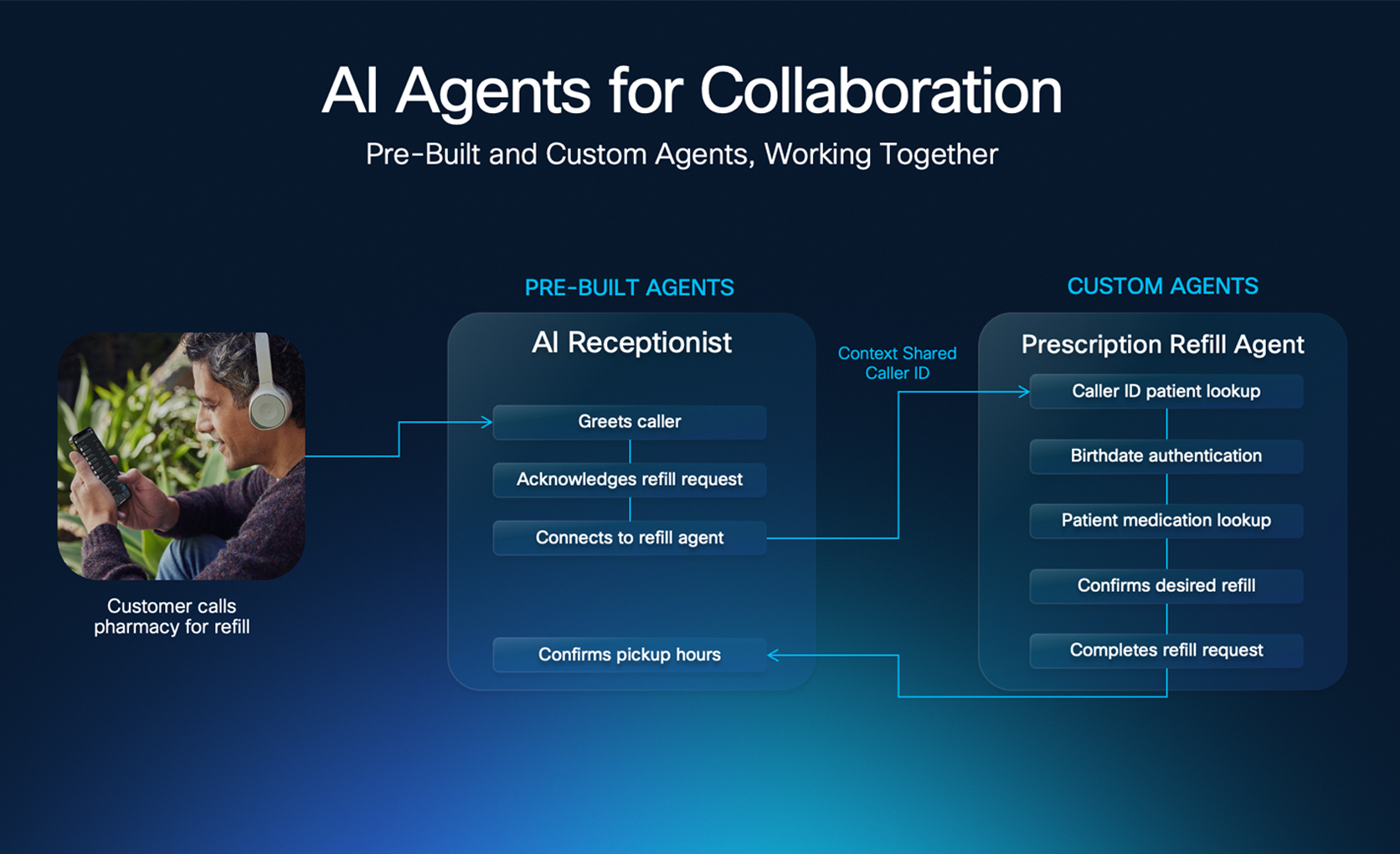
Imagine a pharmacy that handles hundreds of calls each day. AI Receptionist can answer routine calls and respond to common questions like business hours and location. Customized AI Agents for Collaboration can then take the interaction further by integrating with backend systems to authenticate patients, identify medications, check prescription records, and complete refill requests.
Working together, these agents help ensure callers are served quickly while staff spend less time on repetitive administrative work. Most importantly, it means pharmacists can spend more time counseling patients, answering medication questions, and helping ensure medications are used safely and effectively.
Limitless Possibilities Across Industries and Users

The possibilities for our agents are limitless. Across retail, healthcare, financial services, branch operations, and beyond, organizations can use pre-built agents for common needs like answering questions and routing callers, then extend with custom AI Agents for Collaboration that connect to business systems, authenticate users, update records, schedule follow-ups, check inventory, or standardize service across locations.
AI Agents for Collaboration can also support personal productivity. A personal call coordinator could screen incoming calls, identify urgency, surface key messages, and help users answer, respond, or schedule a follow-up without disrupting important meetings or focused work.
The Future of Collaboration Is Action
The future of collaboration is about more than communication. As employees increasingly work with AI assistants and agents, collaboration platforms must evolve into intelligent environments that connect context, automation, workflows, and business systems to help work move forward naturally.
With AI Agents for Collaboration, Cisco is helping organizations move from conversation to action, from simple automation to intelligent workflow execution, and from one-size-fits-all tools to agents built for the way each business works. AI Agents for Collaboration will be available in the second half of calendar 2026.
Learn more:
About The Author